
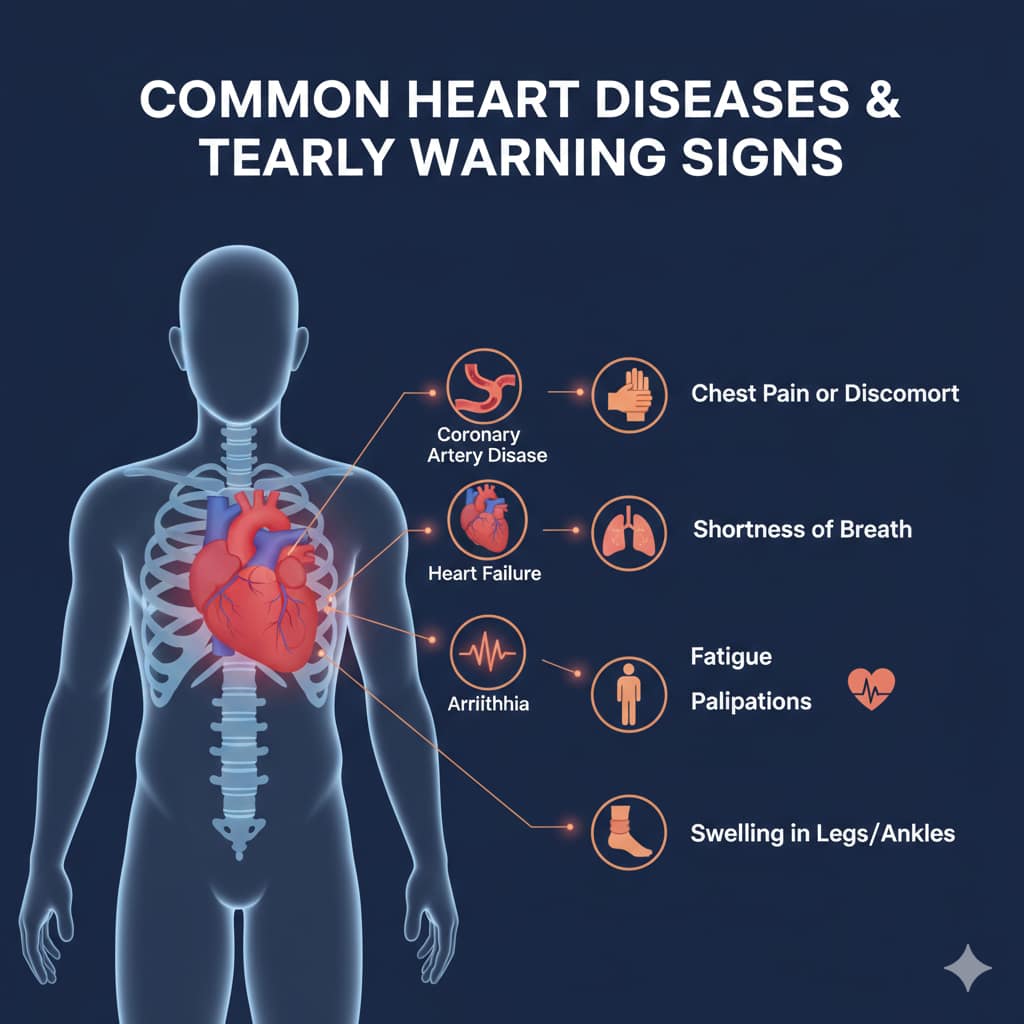
Common Heart Diseases and Their Early Warning Signs
Cardiovascular disease remains the leading cause of global mortality, affecting millions of individuals across all demographics. The heart is a remarkable muscular pump that sustains life by circulating oxygen-rich blood to every cell in the body. However, its complex anatomy and constant workload make it susceptible to various pathological conditions. At Mediquickinfo, we recognize that the greatest tragedy of heart disease is that many its symptoms are ignored until a catastrophic event—such as a myocardial infarction (heart attack)—occurs. Understanding the early warning signs and the clinical nature of common heart diseases is essential for proactive intervention. This 2000+ word comprehensive guide provides a clinical deep-dive into the biological foundations of cardiac health and the critical markers that signal a heart in distress.
1. Coronary Artery Disease (CAD): The Silent Buildup
From a clinical perspective, Coronary Artery Disease (CAD) is the most common heart condition. It is characterized by **Atherosclerosis**—the progressive accumulation of plaque (fat, cholesterol, and calcium) within the coronary arteries that supply blood to the heart muscle itself. At Mediquickinfo, we analyze how this buildup narrows the vessel lumen, restricting blood flow and oxygen delivery. When the demand for oxygen exceeds the supply, especially during physical exertion, the heart signals distress.
The earliest warning sign of CAD is often **Angina Pectoris**—chest pain or discomfort that may feel like pressure, squeezing, or fullness. At Mediquickinfo, we stress that angina is not just “indigestion”; it is a clinical marker of myocardial ischemia. If a plaque ruptures, it can trigger a sudden blood clot, leading to a complete blockage and a heart attack. Recognizing the subtle onset of chest tightness can allow for clinical interventions like lifestyle modifications or statin therapy before permanent damage occurs.
2. Heart Failure: A Decline in Pumping Efficiency
Heart failure does not mean the heart has stopped working; rather, it means the heart is not pumping efficiently enough to meet the body’s metabolic needs. At Mediquickinfo, we identify two primary types: systolic failure (the heart can’t pump with enough force) and diastolic failure (the heart is too stiff to fill with blood). This condition is often the “End-Stage” of other unmanaged issues like long-term hypertension or previous heart attacks.
Early warning signs of heart failure are often fluid-related. Patients may experience **Shortness of Breath (Dyspnea)**, especially when lying flat or during minor activity. Another critical sign is **Edema**—swelling in the ankles, feet, or legs—caused by the heart’s inability to efficiently move blood back from the lower extremities. Mediquickinfo clinical data warns that sudden weight gain (due to fluid retention) and persistent fatigue are red flags that require immediate cardiac evaluation.
3. Arrhythmias and Valvular Diseases
The heart relies on a precise electrical system to coordinate its beat. An **Arrhythmia** occurs when this electrical signaling is disrupted. **Atrial Fibrillation (AFib)** is a common arrhythmia where the upper chambers of the heart quiver instead of beating effectively. Signs include heart palpitations, a “fluttering” sensation in the chest, or a sudden feeling of lightheadedness. AFib significantly increases the risk of stroke, as blood can pool and clot in the heart.
**Valvular Heart Disease** involves damage to one of the heart’s four valves (aortic, mitral, tricuspid, or pulmonary). These valves act as one-way gates; if they leak (regurgitation) or narrow (stenosis), the heart must work significantly harder. Warning signs include heart murmurs—audible only during a clinical exam—and dizziness. At Mediquickinfo, we prioritize the awareness that these electrical and structural issues often coexist with vascular diseases, requiring a holistic clinical approach.
4. Preventive Screening and Lifestyle Architecture
The best way to manage heart disease is to prevent it. Mediquickinfo clinical protocols advocate for regular monitoring of the “Big Four” markers: Blood Pressure, Cholesterol (LDL/HDL), Blood Sugar (HbA1c), and Body Mass Index (BMI). Additionally, understanding your **C-Reactive Protein (CRP)** levels can indicate systemic inflammation, which is a primary driver of heart disease. Lifestyle architecture—specifically tobacco cessation, a Mediterranean-style diet, and consistent aerobic exercise—remains the most powerful clinical tool for cardiovascular resilience.
Conclusion: Listening to the Rhythm of Life
Heart disease is a formidable challenge, but it is one that can be managed through clinical literacy and early detection. By understanding the signs of angina, the markers of fluid retention, and the sensation of arrhythmias, you can take control of your cardiovascular future. At Mediquickinfo, we believe that every heartbeat is a gift that requires vigilance. Don’t ignore the subtle signals your heart is sending; your life depends on your ability to listen. Trust Mediquickinfo for the clinical literacy you need to navigate heart health with confidence. A healthy heart is the foundation of a vibrant life.

