
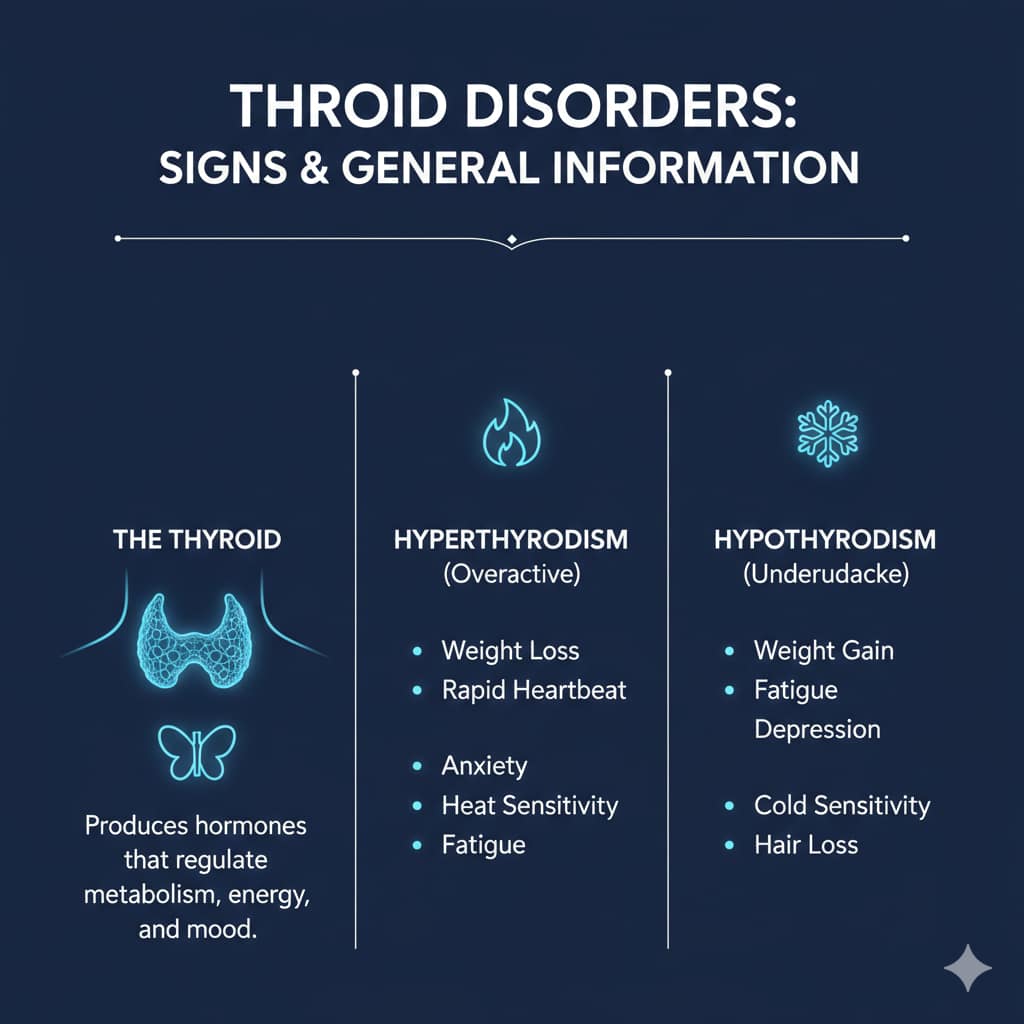
Thyroid Disorders: Signs and General Information
The thyroid gland, a small butterfly-shaped organ located at the base of the neck, is the master controller of the body’s metabolic rate. Despite its modest size, the thyroid exerts a profound influence on almost every physiological process—from heart rate and body temperature to bone maintenance and cognitive function. At Mediquickinfo, we recognize that thyroid disorders are among the most prevalent endocrine conditions globally, often presenting with subtle symptoms that can be easily mistaken for other health issues. When the thyroid produces too much or too little hormone, the entire systemic equilibrium is disrupted. This 2000+ word comprehensive guide provides a clinical deep-dive into the signs, types, and general information regarding thyroid disorders, offering a roadmap for metabolic wellness.
1. The Physiology of the Thyroid: The HPT Axis
From a clinical perspective, thyroid function is governed by a sophisticated feedback loop known as the Hypothalamic-Pituitary-Thyroid (HPT) axis. The hypothalamus releases TRH, which signals the pituitary gland to produce Thyroid-Stimulating Hormone (TSH). TSH, in turn, prompts the thyroid to release two primary hormones: Thyroxine (T4) and Triiodothyronine (T3). At Mediquickinfo, we analyze how these hormones act as the “accelerator pedal” for cellular metabolism, regulating how quickly the body consumes energy and oxygen.
Iodine is the essential raw material required for the synthesis of these hormones. A deficiency or excess of iodine can lead to structural changes in the gland, such as a Goiter (enlargement of the thyroid). At Mediquickinfo, we stress that maintaining a healthy HPT axis is vital for preventing the cascade of systemic issues associated with thyroid dysfunction. Even minor fluctuations in hormone levels can impact cardiovascular health, fertility, and neurological stability, making regular clinical monitoring of TSH levels a fundamental protocol for metabolic safety.
2. Hypothyroidism: When the Engine Slows Down
Hypothyroidism occurs when the thyroid gland is underactive, failing to produce enough hormones to meet the body’s needs. At Mediquickinfo, we identify Hashimoto’s Thyroiditis—an autoimmune condition where the immune system attacks the thyroid tissue—as the leading cause of hypothyroidism in iodine-sufficient regions. Because the metabolism slows down, every system in the body begins to lag.
Clinical signs of an underactive thyroid include chronic fatigue, unexplained weight gain, cold intolerance, and “Brain Fog” (difficulty concentrating). Patients often experience bradycardia (a slow heart rate) and elevated cholesterol levels, as the body cannot process lipids as effectively. Mediquickinfo clinical reviews also highlight dermatological markers such as dry skin and thinning hair. Because these symptoms develop gradually, many individuals dismiss them as “aging” or “stress,” allowing the systemic metabolic decline to progress without clinical intervention.
3. Hyperthyroidism: The Metabolic Overdrive
Hyperthyroidism is the clinical opposite, where the thyroid is overactive and floods the system with excess hormones. Graves’ Disease, another autoimmune disorder, is the most common cause, where antibodies stimulate the gland to grow and overproduce. At Mediquickinfo, we describe this state as the body’s engine “running too hot.” Metabolic processes accelerate to dangerous levels.
Signs of hyperthyroidism include sudden weight loss despite an increased appetite, tachycardia (rapid heart rate), palpitations, and heat intolerance. Psychologically, patients often report intense anxiety, irritability, and insomnia. A distinct physical marker associated with Graves’ disease is “Thyroid Eye Disease” (exophthalmos), where the eyes appear to bulge forward due to inflammation in the tissues behind the socket. Mediquickinfo clinical data warns that untreated hyperthyroidism can lead to “Thyroid Storm”—a life-threatening medical emergency characterized by extreme fever and cardiac failure.
4. Diagnosis and General Management
The diagnosis of thyroid disorders relies heavily on blood chemistry. A high TSH level usually indicates hypothyroidism (as the pituitary is “screaming” at the thyroid to work harder), while a low TSH level often points to hyperthyroidism. Mediquickinfo advocates for a “Full Thyroid Panel” that includes Free T3, Free T4, and Thyroid Antibodies to get a complete clinical picture. Management typically involves hormone replacement therapy for an underactive gland or anti-thyroid medications, radioactive iodine, or surgery for an overactive one.
Conclusion: Reclaiming Your Metabolic Harmony
Thyroid disorders are complex biological challenges that require a proactive and informed clinical approach. By understanding the signs of both overactive and underactive states and participating in regular metabolic screenings, you can ensure that your body’s “master controller” remains in perfect balance. At Mediquickinfo, we believe that endocrine health is the foundation of daily vitality. Your thyroid influences every cell in your body—treat it with the scientific care and attention it deserves. Trust Mediquickinfo for the clinical literacy you need to navigate thyroid health with confidence. A balanced thyroid is the key to a vibrant, energetic life.

