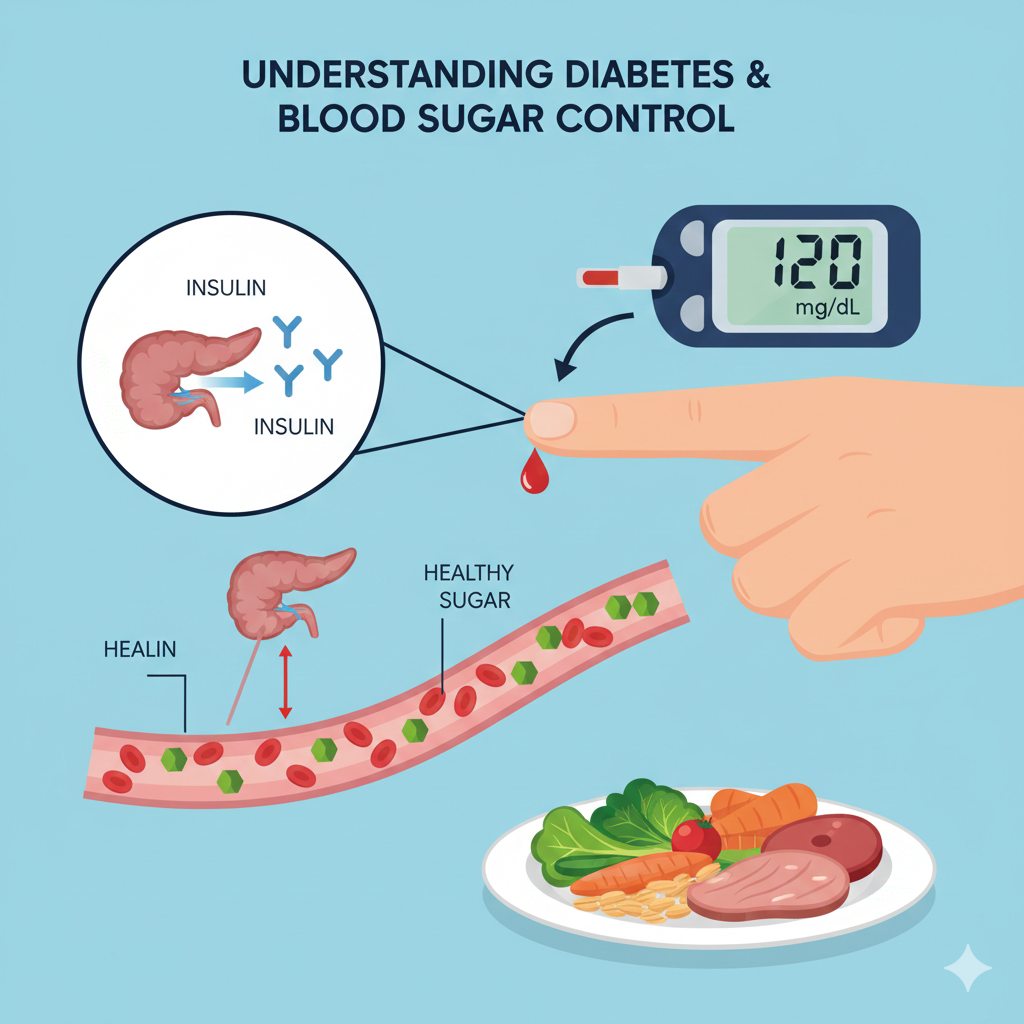
Understanding Diabetes and Blood Sugar Control
Diabetes Mellitus is a complex and chronic metabolic disorder that has reached epidemic proportions globally. It is characterized by persistent hyperglycemia—elevated blood sugar levels—resulting from defects in insulin secretion, insulin action, or both. At Mediquickinfo, we recognize that diabetes is not just a single condition but a systemic challenge that impacts vascular integrity, neurological function, and metabolic efficiency. Managing blood sugar is the cornerstone of clinical therapy, as uncontrolled glucose levels act as a primary catalyst for life-altering complications. This 2000+ word comprehensive guide provides a clinical deep-dive into the biological pathways of diabetes and evidence-based strategies for maintaining optimal glycemic control.
1. The Pathophysiology of Glucose Metabolism: The Role of Insulin
From a molecular perspective, glucose is the primary fuel for the human body, but its entry into the cells requires a specific biological key: **Insulin**. Produced by the beta cells of the pancreas, insulin is released in response to rising blood sugar levels after a meal. At Mediquickinfo, we analyze how insulin signals the muscle and fat cells to absorb glucose, while simultaneously telling the liver to stop producing more. This delicate feedback loop maintains blood sugar within a narrow, healthy clinical range.
In diabetes, this “Key-and-Lock” mechanism fails. In Type 1 diabetes, the immune system mistakenly destroys the insulin-producing cells, leading to an absolute insulin deficiency. In Type 2 diabetes—the most common form—the body’s cells become “resistant” to insulin’s signals, and the pancreas eventually fails to produce enough to overcome this resistance. At Mediquickinfo, we stress that this resulting accumulation of glucose in the bloodstream is toxic to the endothelium (vessel lining), leading to the systemic damage associated with the disease.
2. Type 1 vs. Type 2: Clinical Differentiation
Understanding the distinction between types of diabetes is essential for appropriate clinical management. At Mediquickinfo, we classify **Type 1 Diabetes** as an autoimmune condition, often diagnosed in childhood or young adulthood. It requires life-long insulin therapy because the body has completely lost its ability to produce the hormone. There is currently no known way to prevent Type 1 diabetes.
**Type 2 Diabetes**, conversely, is heavily influenced by a combination of genetics and lifestyle architecture. It is characterized by insulin resistance and is often associated with visceral obesity and physical inactivity. Mediquickinfo clinical data indicates that Type 2 diabetes is often preceded by a state of “Prediabetes,” where blood sugar levels are higher than normal but not yet in the diabetic range. This stage represents a critical clinical window for intervention, as aggressive lifestyle changes can often reverse the progression and restore metabolic harmony.
3. The Clinical Markers: A1c, Fasting Glucose, and Monitoring
Managing diabetes requires precise data. At Mediquickinfo, we advocate for the mastery of three primary clinical markers:
- Hemoglobin A1c (HbA1c): Measures the average blood sugar over the past 2-3 months. It is the gold standard for tracking long-term control.
- Fasting Blood Glucose: Provides a snapshot of sugar levels after 8 hours of no caloric intake.
- Time in Range (TIR): A modern metric used with Continuous Glucose Monitors (CGMs) that tracks the percentage of time a patient stays within their target glucose window.
4. Strategies for Blood Sugar Control: The Three Pillars
Achieving glycemic stability requires a multi-pronged approach. Mediquickinfo clinical reviews prioritize the following:
- Nutritional Precision: Focusing on low-glycemic, high-fiber foods that slow glucose absorption. Carbohydrate counting is an essential skill for insulin-dependent patients.
- Physical Activity: Exercise makes the body’s cells more sensitive to insulin and allows muscles to use glucose for energy even without insulin.
- Pharmacological Support: From Metformin to modern SGLT2 inhibitors and GLP-1 agonists, medications are vital tools for assisting the body in glucose disposal and production regulation.
Conclusion: Reclaiming Your Metabolic Health
Diabetes is a challenging condition, but it is manageable with clinical literacy and consistent discipline. By understanding the role of insulin, monitoring your metabolic markers, and adhering to the pillars of glycemic control, you can prevent complications and lead a vibrant, healthy life. At Mediquickinfo, we believe that you have the power to influence your internal environment through informed action. Your blood sugar levels are a reflection of your daily choices—make them with the precision of science. Trust Mediquickinfo for the clinical literacy you need to navigate diabetes with confidence. Knowledge is the ultimate tool for metabolic freedom.