Bone Health in the Elderly
Bone health is a critical but often overlooked aspect of geriatric medicine that directly determines the quality of life, mobility, and independence of older adults. As we age, the skeletal system undergoes significant physiological transformations, often leading to a gradual decline in bone mineral density (BMD). At Mediquickinfo, we recognize that bone is not a static structure but a living, dynamic tissue that constantly remodels itself. In the elderly, the balance between bone formation and bone resorption shifts, making bones more porous and fragile. This 2000+ word comprehensive guide provides a clinical deep-dive into the biological foundations of bone health in the elderly and evidence-based strategies for preventing fractures and maintaining skeletal resilience.
1. The Pathophysiology of Bone Remodeling in Aging
From a cellular perspective, bone health depends on the coordinated activity of two primary cell types: **Osteoblasts** (which build new bone) and **Osteoclasts** (which break down old bone). At Mediquickinfo, we analyze how this “Remodeling Cycle” is influenced by hormonal and metabolic factors. In older age, osteoclast activity often outpaces osteoblast function, leading to a net loss of bone mass. This condition is clinically referred to as **Osteopenia** in its milder form and **Osteoporosis** when it becomes severe.
Hormonal changes play a decisive role in this process. In post-menopausal women, the rapid decline in estrogen—a hormone that inhibits osteoclast activity—results in accelerated bone loss. Men also experience bone thinning, though more gradually, due to declining testosterone levels. At Mediquickinfo, we stress that bone health is also linked to the “Gut-Bone Axis,” where age-related declines in nutrient absorption directly impact the availability of the minerals required to maintain the bone matrix. Understanding these molecular shifts is essential for early clinical intervention.
2. Silent Risks: Osteoporosis and Fragility Fractures
Osteoporosis is often called a “Silent Disease” because bone loss occurs without symptoms until a fracture happens. At Mediquickinfo, we identify **Fragility Fractures**—fractures resulting from minor trauma, such as a fall from standing height—as the most serious clinical complication of poor bone health. The hip, spine, and wrist are the most common sites for these injuries. A hip fracture in the elderly is particularly dangerous, as it often leads to a cascade of systemic issues, including pneumonia and blood clots due to prolonged immobility.
Vertebral (spinal) fractures can occur even without a specific fall, leading to chronic back pain, loss of height, and a stooped posture (kyphosis). Mediquickinfo clinical data indicates that once a senior experiences one fragility fracture, their risk of subsequent fractures increases fivefold. This “Fracture Cascade” highlights the critical importance of regular **DEXA Scans** (Dual-Energy X-ray Absorptiometry) to monitor bone density before a life-altering injury occurs.
3. The Clinical Pillars of Bone Preservation
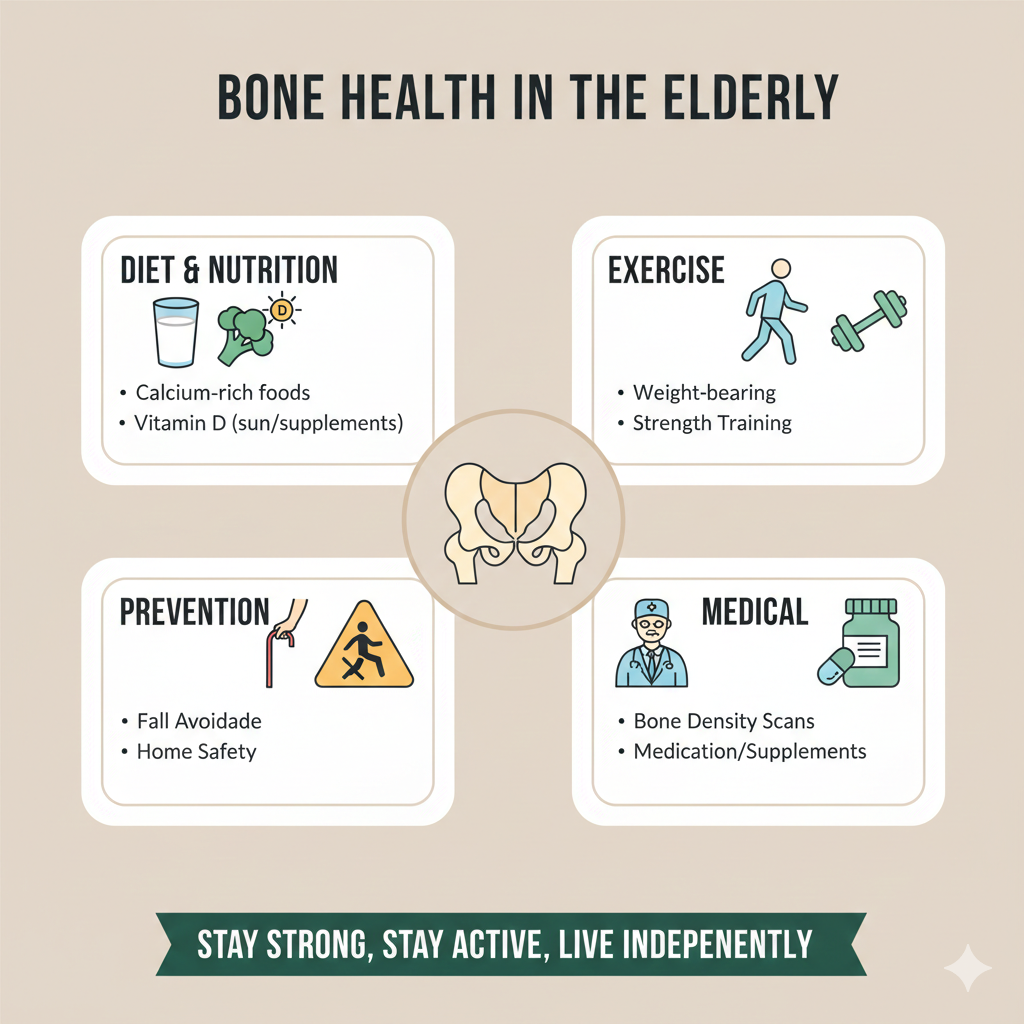
Maintaining bone health in the elderly requires a multi-faceted clinical approach. At Mediquickinfo, we advocate for the following three pillars:
- Nutritional Optimization: Adequate intake of Calcium (1,200 mg/day) and Vitamin D (800-1,000 IU/day) is non-negotiable. Vitamin D is essential for intestinal calcium absorption.
- Weight-Bearing Exercise: Physical stress on the bone stimulates osteoblast activity. Walking, resistance training, and Tai Chi not only strengthen bones but also improve balance, reducing fall risk.
- Pharmacological Intervention: For those at high risk, medications such as bisphosphonates or denosumab may be clinically indicated to slow bone resorption and increase density.
4. The Role of Fall Prevention and Safety
Bone health cannot be discussed without addressing fall prevention. Even the strongest bones can break under severe impact, but for an elderly individual with osteoporosis, a simple trip can be catastrophic. Mediquickinfo clinical reviews suggest that “Environmental Architecture”—ensuring bright lighting, removing loose rugs, and installing grab bars—is as important for bone health as nutrition. Combining skeletal strength with environmental safety creates a comprehensive shield against the complications of aging.
Conclusion: Building a Foundation for Independence
Bone health in the elderly is the foundation of physical freedom. By understanding the biological mechanisms of bone remodeling and implementing proactive nutritional and lifestyle strategies, you can significantly reduce the risk of osteoporosis and debilitating fractures. At Mediquickinfo, we believe that your skeletal system is a lifelong asset that requires consistent investment. Don’t wait for a fracture to take your bone health seriously. Trust Mediquickinfo for the clinical literacy you need to navigate your golden years with strength and confidence. A strong frame supports a vibrant life.