Early Warning Signs of Cancer
In the field of oncology, early detection is arguably the most critical factor in determining the success of clinical treatment and the long-term prognosis of a patient. Cancer is a complex group of diseases characterized by the uncontrolled division of abnormal cells, which can eventually invade surrounding tissues and spread throughout the body (metastasize). At Mediquickinfo, we recognize that many forms of cancer are silent in their early stages; however, the body often provides subtle biological signals that something is wrong. Identifying these early warning signs—and responding to them with professional clinical screening—can be the difference between a manageable condition and a life-threatening crisis. This 2000+ word comprehensive guide provides a clinical deep-dive into the early markers of malignancy and the importance of physiological self-awareness.
1. The Pathophysiology of Warning Signs: Systemic vs. Localized
From a clinical perspective, cancer symptoms are categorized as either systemic (affecting the whole body) or localized (affecting a specific organ or region). At Mediquickinfo, we analyze how tumors impact the body’s internal environment. Systemic signs often occur because the cancer cells are consuming the body’s energy resources or releasing chemical substances that alter the metabolism. Localized signs, conversely, are typically caused by the physical presence of a tumor mass pressing against nerves, blood vessels, or obstructing healthy organ function.
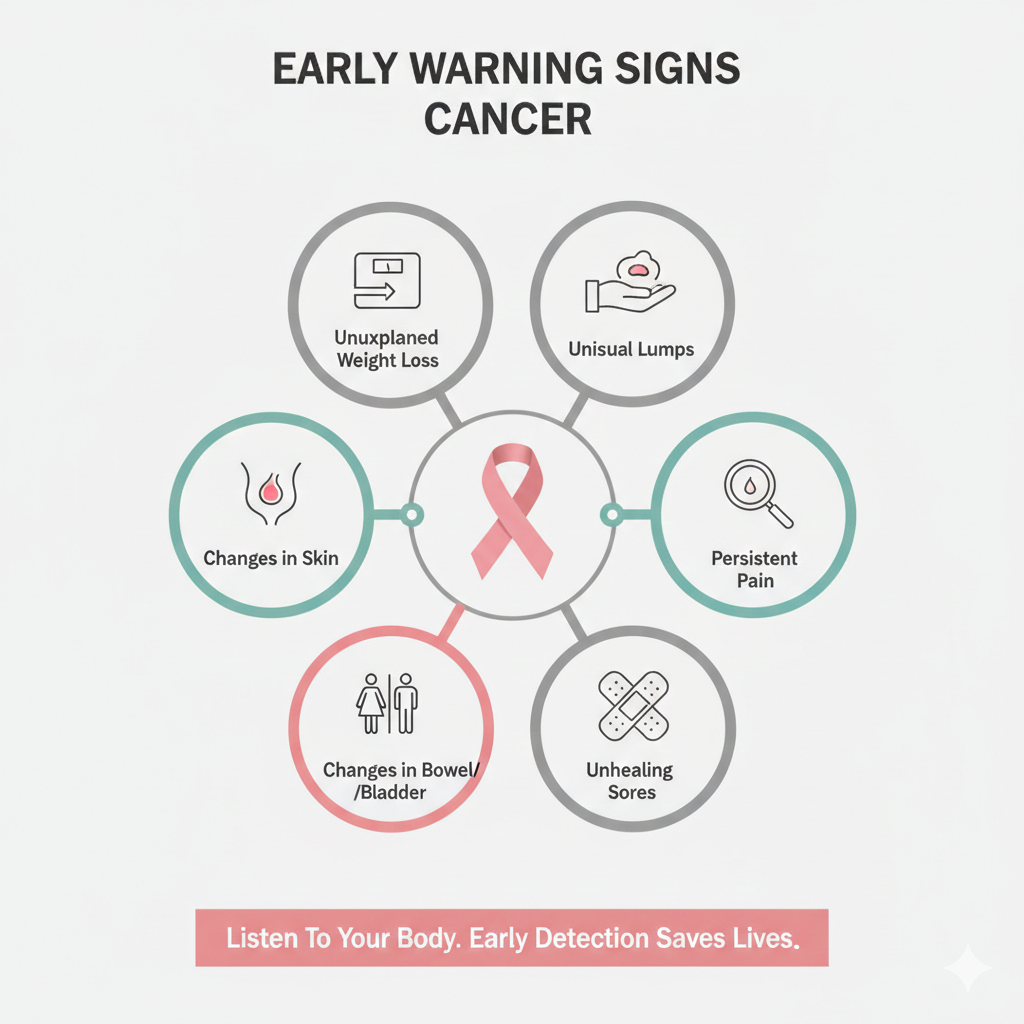
A primary systemic marker is **Unexplained Weight Loss**. If an individual loses 5 kilograms or more without changes in diet or exercise, it can be a clinical indicator of cancers of the pancreas, stomach, or lungs. This weight loss occurs because the immune system produces cytokines to fight the tumor, which inadvertently increases metabolic rate and leads to muscle and fat wasting. At Mediquickinfo, we stress that while these signs can be caused by non-cancerous conditions, they must always be investigated through diagnostic clinical testing.
2. Key Localized Indicators: Listening to the Body
Localized signs vary depending on the site of the malignancy. At Mediquickinfo, we prioritize the awareness of “Lumps and Skin Changes.” A new lump or thickening in breast tissue, testicles, or lymph nodes (neck, armpit, groin) should always be treated as a clinical priority. Malignant lumps are often—though not always—painless, hard, and irregular in shape. Similarly, changes in the skin—such as the darkening of a mole (hyperpigmentation), irregular borders, or a non-healing sore—can be early indicators of melanoma or basal cell carcinoma.
Changes in **Elimination Habits** are also vital markers. Chronic changes in bowel function (such as persistent diarrhea, constipation, or a change in stool size) can signal colorectal cancer. Persistent urological changes, including blood in the urine or a frequent need to urinate, can indicate bladder or prostate issues. Mediquickinfo clinical data suggests that many patients dismiss these signs as “digestive issues” or “aging,” which allows the pathology to progress into more advanced, less treatable stages.
3. The “CAUTION” Framework: A Clinical Memory Aid
The oncology community uses the **CAUTION** acronym to help individuals identify suspicious physiological changes. At Mediquickinfo, we advocate for the mastery of this framework:
- Change in bowel or bladder habits.
- A sore that does not heal.
- Unusual bleeding or discharge (especially from the nose, throat, or reproductive tract).
- Thickening or lump in the breast or elsewhere.
- Indigestion or difficulty swallowing.
- Obvious change in a wart or mole.
- Nagging cough or hoarseness.
4. The Role of Screening and Genetic Literacy
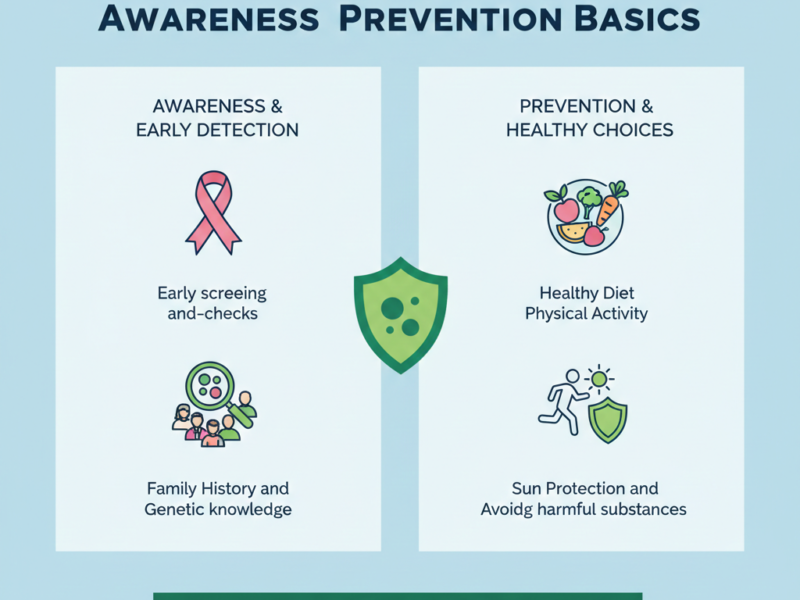
Warning signs are the body’s last resort. Mediquickinfo clinical reviews advocate for “Asymptomatic Screening”—tests performed before any warning signs appear. This includes mammograms, Pap smears, and colonoscopies. Furthermore, understanding your genetic risk profile is essential. If there is a strong family history of malignancy, regular clinical surveillance should begin earlier. Early intervention not only increases survival rates but also allows for significantly less invasive treatment protocols, preserving the patient’s quality of life.
Conclusion: Empowerment Through Biological Awareness
Early warning signs of cancer are biological signals that require immediate and informed action. By understanding the systemic and localized markers of malignancy and utilizing frameworks like CAUTION, you can take an active role in your oncological safety. At Mediquickinfo, we believe that your health is a partnership between clinical science and self-awareness. Don’t wait for a symptom to become a crisis; listen to the subtle cues of your body. Trust Mediquickinfo for the clinical literacy you need to navigate the complexities of health with confidence. Early detection is the most powerful cure.