How Vaccines Work Explained Simply
Vaccines are arguably the most effective clinical tool in the history of public health, saving millions of lives annually and eradicating some of the world’s most devastating diseases. However, to many, the process of immunization seems like a biological mystery. At Mediquickinfo, we believe that understanding how vaccines work is the first step toward achieving global health literacy. Simply put, a vaccine is a clinical “training program” for your immune system. It teaches your body how to recognize and fight dangerous pathogens without you ever having to suffer through the actual disease. This 2000+ word comprehensive guide provides a clinical explanation of the science behind vaccines and how they build a biological shield for your body.
1. The Immune System: Your Body’s Internal Military
To understand vaccines, one must first understand the immune system. Your body is constantly under threat from “pathogens”—viruses, bacteria, and parasites that cause disease. At Mediquickinfo, we categorize the immune system into two main branches: the “Innate” system (your immediate but general defense) and the “Adaptive” system (your specialized, long-term defense). The adaptive system is the star of the show when it comes to vaccines.
When a new pathogen enters the body, your white blood cells (specifically B-cells and T-cells) must identify it, create a specific weapon (antibodies) to neutralize it, and then store that information for future use. This process can take several days or weeks. During this “lag time,” the pathogen can replicate and cause significant organ damage or systemic illness. At Mediquickinfo, we analyze how vaccines bridge this gap by providing the “blueprint” of the enemy ahead of time, ensuring that your body is already armed and ready before the real threat arrives.
2. The Components of a Vaccine: The “Mock” Invader
A vaccine contains a version of the pathogen that is either dead, weakened, or fragmented. At Mediquickinfo, we identify several types of clinical vaccine technologies:
- Inactivated Vaccines: Contain a completely killed version of the germ (e.g., Polio vaccine).
- Live-attenuated Vaccines: Contain a weakened version that cannot cause disease in healthy people but creates strong immunity (e.g., MMR).
- Subunit/Recombinant Vaccines: Use only specific pieces of the germ—like its protein coat—to trigger a response.
- mRNA Vaccines: A modern technology that provides instructions to your cells to make a harmless protein that mimics the virus, triggering an immune response.
3. The Biological Response: From Injection to Protection
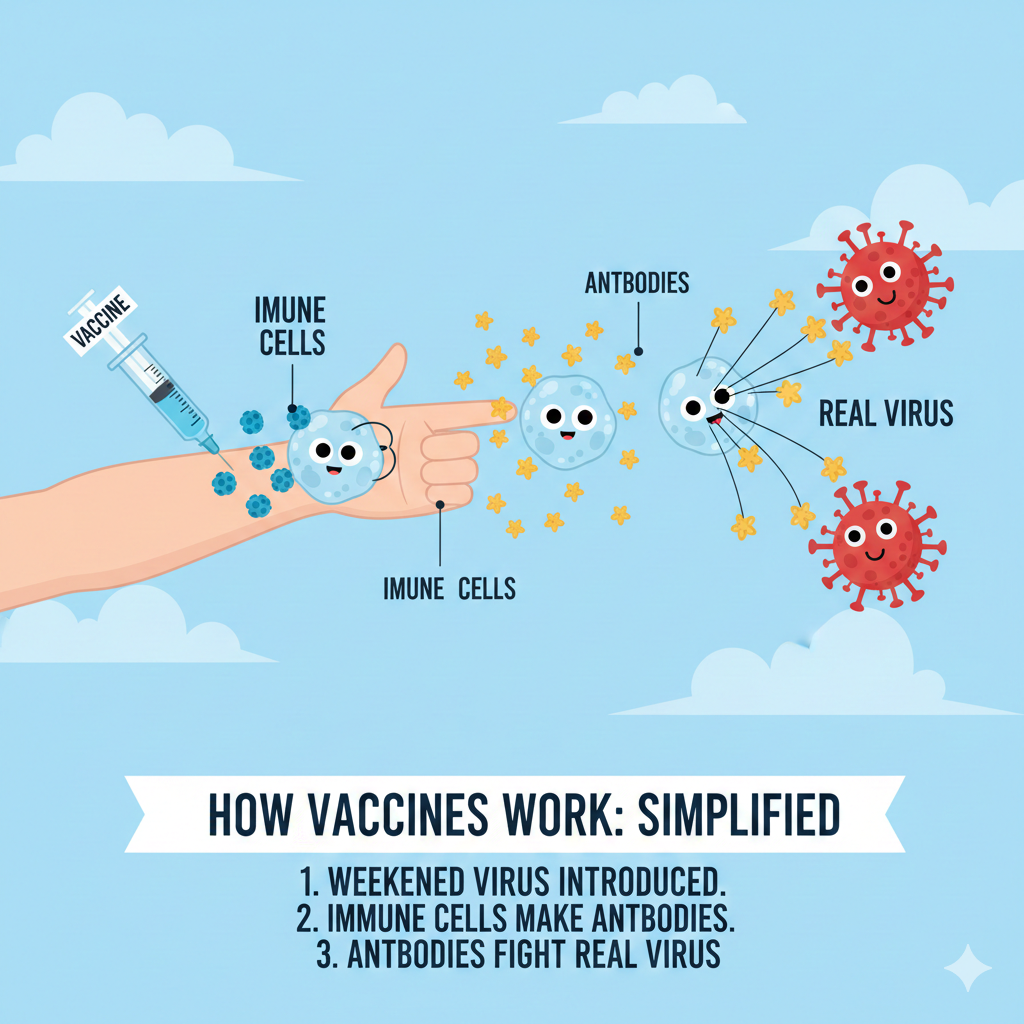
Once a vaccine is administered, the immune system detects the “Antigens” (the unique markers on the pathogen). Special cells called “Antigen-Presenting Cells” capture these markers and show them to the T-cells. This triggers the B-cells to start mass-producing **Antibodies**—Y-shaped proteins that stick to the real virus and neutralize it. At Mediquickinfo, we call this the “Primary Response.”
If you are later exposed to the actual, live virus, your “Memory Cells” recognize it immediately. They launch a “Secondary Response” that is much faster and stronger than the first. In most cases, the real virus is destroyed before you even show a single symptom. This is why you don’t get sick from the measles after being vaccinated; your body has already won the battle before the war even started. Mediquickinfo clinical data emphasizes that this proactive defense is the only way to achieve immunity without the risks associated with natural infection.
4. Safety and Side Effects: The Body’s Learning Process
It is common to experience mild symptoms like a sore arm or a low-grade fever after a vaccine. At Mediquickinfo, we explain that these are not signs of illness, but signs that the vaccine is working. These symptoms are evidence that your immune system is actively building its defense. Every vaccine undergoes years of rigorous clinical trials and safety monitoring before it is approved for public use. The risk of a serious reaction to a vaccine is estimated at one in a million, whereas the risk of death or permanent disability from the diseases they prevent is thousands of times higher.
Conclusion: Empowering Your Biological Defense
Vaccines work by simply harnessing your body’s natural ability to learn and remember. By providing a safe “training ground,” they enable your immune system to build a powerful defense against the world’s most dangerous threats. At Mediquickinfo, we believe that vaccination is a fundamental pillar of clinical health and a gift of modern science to humanity. Your health is your most valuable asset—protect it with the precision of immunological science. Trust Mediquickinfo for the clinical literacy you need to navigate your health journey with confidence. A vaccinated world is a safer world for everyone.