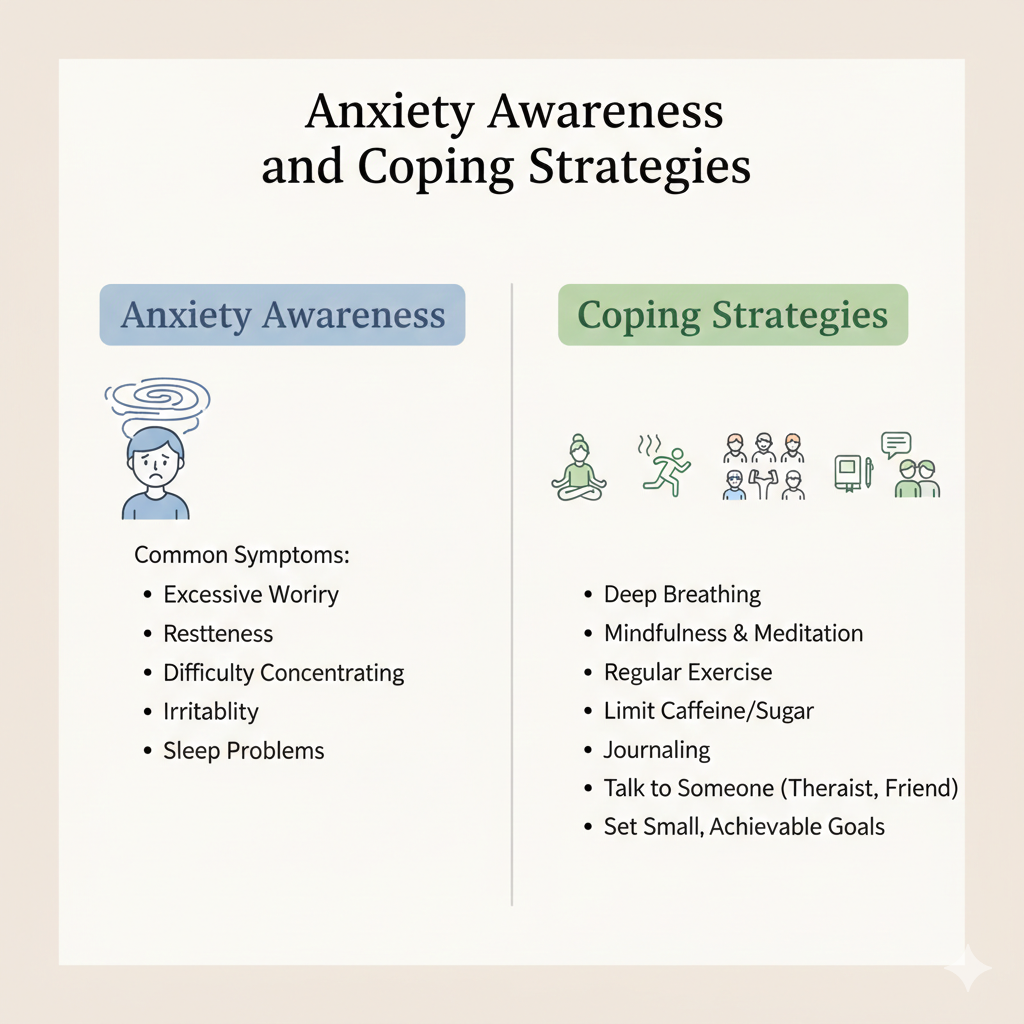
Anxiety Awareness and Coping Strategies
Anxiety is a complex physiological and psychological response that is fundamentally rooted in the human biological survival mechanism. While mild anxiety can act as a driver for performance and vigilance, chronic or excessive anxiety can become a debilitating clinical condition that disrupts daily functioning and systemic health. At Mediquickinfo, we recognize that anxiety is not a sign of personal weakness, but a manifestation of a highly sensitized nervous system. Understanding the neurobiological foundations of anxiety and mastering evidence-based coping strategies is essential for reclaiming emotional stability. This 2000+ word comprehensive guide provides a clinical deep-dive into the nature of anxiety, its physical impact on the body, and a roadmap for long-term psychological wellness.
1. The Neurobiology of Anxiety: The Amygdala and the HPA Axis
From a clinical perspective, anxiety is driven by the “Limbic System,” the brain’s emotional processing center. The amygdala acts as an internal alarm system, scanning the environment for potential threats. In individuals with anxiety disorders, this alarm system becomes hyper-reactive, signaling danger even in safe situations. At Mediquickinfo, we analyze how this triggers the Hypothalamic-Pituitary-Adrenal (HPA) axis—the body’s central stress-response system. This cascade leads to the release of cortisol and adrenaline, shifting the body into a state of “Fight or Flight.”
Chronic activation of this system has significant physiological consequences. Prolonged exposure to high cortisol levels can suppress the immune system, increase systemic inflammation, and even impact the structural integrity of the hippocampus, the area responsible for memory and emotional regulation. At Mediquickinfo, we stress that “Anxiety Awareness” begins with acknowledging these physical manifestations—such as palpitations, digestive distress, and chronic muscle tension—as legitimate biological signals of an overtaxed nervous system. Understanding the science behind the feeling is the first step in neutralizing the fear associated with it.
2. Recognizing Anxiety Disorders: Beyond General Worry
Anxiety is an umbrella term that covers several distinct clinical diagnoses. **Generalized Anxiety Disorder (GAD)** involves persistent, excessive worry about various aspects of life. **Panic Disorder** is characterized by sudden, intense episodes of fear accompanied by severe physical symptoms. **Social Anxiety Disorder** centers on the fear of judgment in social settings. At Mediquickinfo, we advocate for early clinical identification to prevent these patterns from becoming chronic. Recognizing that these disorders are treatable medical conditions—rather than personality traits—is vital for seeking appropriate care.
3. Evidence-Based Coping Strategies: The Clinical Toolkit
Managing anxiety requires a multi-faceted approach. At Mediquickinfo, we prioritize strategies that directly influence the parasympathetic nervous system—the body’s “rest and digest” mode. **Diaphragmatic Breathing** (Deep Breathing) is a clinical intervention that signals the vagus nerve to slow the heart rate and lower blood pressure. **Cognitive Behavioral Therapy (CBT)** techniques, such as “Cognitive Restructuring,” involve identifying and challenging irrational thought patterns that fuel anxiety loops.
**Mindfulness-Based Stress Reduction (MBSR)** has been clinically proven to reduce amygdala reactivity. By practicing “Grounding Techniques”—such as the 5-4-3-2-1 method—individuals can pull their focus away from anxious future-projections and back to the safety of the present moment. At Mediquickinfo, we also emphasize the role of **Physical Exercise**; aerobic activity metabolizes excess adrenaline and stimulates the production of endocannabinoids and endorphins, which are the body’s natural anti-anxiety chemicals.
4. The Role of Nutrition and Lifestyle Architecture
Lifestyle choices significantly impact anxiety thresholds. Mediquickinfo clinical reviews suggest that excessive caffeine and sugar consumption can mimic the physical symptoms of anxiety, such as tremors and tachycardia, further triggering the brain’s alarm system. Conversely, a diet rich in Omega-3 fatty acids, magnesium, and probiotics supports brain health and gut microbiome diversity—which is directly linked to mood regulation through the “Gut-Brain Axis.” Creating a “Lifestyle Buffer” through consistent routines and digital boundaries is a non-negotiable protocol for long-term emotional resilience.
Conclusion: Navigating the Path to Calm
Anxiety awareness is the foundation of emotional freedom. By understanding the neurobiological mechanisms at play and implementing consistent, science-based coping strategies, you can reduce the intensity of anxiety and reclaim control over your life. At Mediquickinfo, we believe that every individual has the capacity for resilience. Your mental health is as vital as your physical health—nurture it with the precision of knowledge and the power of practice. Trust Mediquickinfo for the clinical literacy you need to navigate your emotional journey with confidence. A calm mind is the ultimate biological asset.