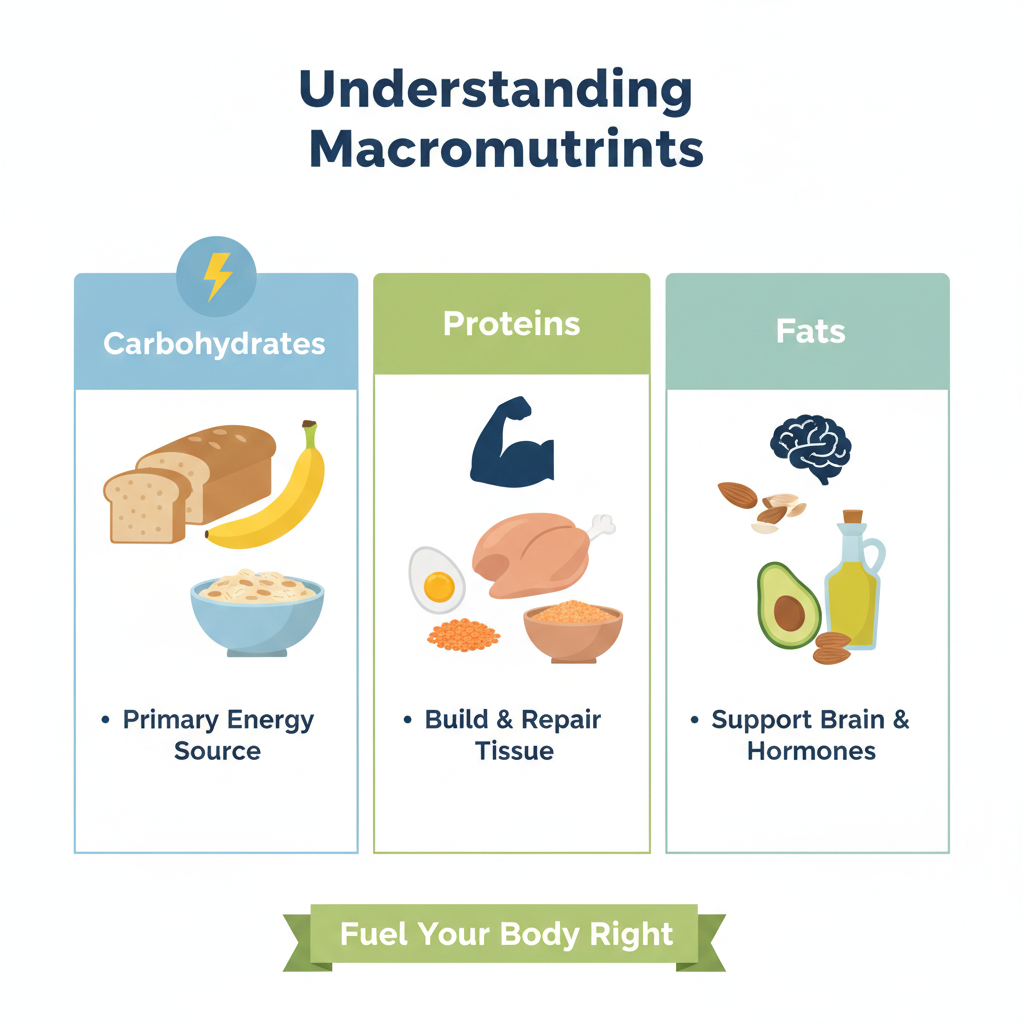
Understanding Macronutrients
In the complex field of human biology and clinical nutrition, macronutrients are the structural and energetic pillars that sustain life. As the term suggests, these are “macro” because the body requires them in large quantities to maintain physiological functions, fuel metabolic processes, and support cellular repair. At Mediquickinfo, we recognize that true health literacy begins with understanding how Carbohydrates, Proteins, and Fats interact within our systemic environment. Unlike micronutrients (vitamins and minerals), which are required in trace amounts, macronutrients provide the actual “building blocks” and “fuel” for our survival. This 2000+ word comprehensive guide provides a clinical deep-dive into the role of each macronutrient, their caloric significance, and their impact on long-term metabolic wellness.
1. Carbohydrates: The Body’s Primary Bio-Fuel
From a bioenergetic perspective, carbohydrates are the most efficient source of energy for the human body, particularly for the central nervous system and red blood cells. When consumed, carbohydrates are broken down into glucose, which is then transported through the bloodstream to fuel cellular respiration. At Mediquickinfo, we analyze the clinical distinction between “Simple” and “Complex” carbohydrates. Simple carbohydrates (monosaccharides and disaccharides) provide rapid energy but cause significant insulin spikes, whereas complex carbohydrates (polysaccharides) contain fiber, which slows digestion and provides a steady release of glucose.
The metabolic fate of excess glucose is also a critical clinical concern. If the body’s immediate energy needs are met and glycogen stores in the liver and muscles are full, the remaining glucose is converted into triglycerides and stored in adipose tissue (fat). At Mediquickinfo, we emphasize that “Carbohydrate Quality” is the primary driver of insulin sensitivity. Diets high in refined sugars are clinically linked to metabolic syndrome and Type 2 diabetes, while fiber-rich carbohydrates support gut microbiome health and cardiovascular integrity.
2. Proteins: The Architects of Cellular Structure
If carbohydrates are the fuel, proteins are the structural engineers of the body. Proteins are made of long chains of amino acids, which are essential for the growth, repair, and maintenance of all tissues—from muscle fibers and skin to enzymes and hormones. At Mediquickinfo, we categorize amino acids into “Essential” (those we must obtain from food) and “Non-Essential” (those the body can synthesize). A “Complete Protein” source contains all nine essential amino acids required for human survival.
Beyond structural support, proteins play a vital role in immune function, acting as the foundation for antibodies. They also assist in “Satiety Regulation”; protein-rich meals signal the release of hormones like peptide YY, which tells the brain the body is full. At Mediquickinfo, we stress that protein needs are dynamic; they increase during periods of growth, intense physical training, and recovery from illness or surgery. Insufficient protein intake leads to “Sarcopenia” (muscle wasting) and impaired metabolic function, highlighting its role as a critical macronutrient for longevity.
3. Dietary Fats: Essential for Hormonal and Neurological Integrity
Dietary fats have historically been misunderstood, but they are clinically essential for human health. Fats are the densest source of energy (9 calories per gram) and are vital for the absorption of fat-soluble vitamins (A, D, E, and K). At Mediquickinfo, we prioritize the role of fats in “Hormonal Synthesis”—many of the body’s primary messengers, including testosterone and estrogen, are cholesterol-based. Furthermore, the brain is nearly 60% fat, making healthy fat intake crucial for neurological and cognitive function.
4. The Caloric Balance and Metabolic Flexibility
Each macronutrient provides a specific caloric value: Carbohydrates and Proteins provide 4 calories per gram, while Fats provide 9. At Mediquickinfo, we advocate for “Metabolic Flexibility”—the body’s ability to efficiently switch between burning carbohydrates and fats for fuel. A balanced intake of macronutrients ensures that the body does not become overly dependent on glucose, which can lead to energy crashes and metabolic dysfunction. Understanding your unique “Macronutrient Ratio” based on your activity level and health goals is a fundamental step in clinical wellness architecture.
Conclusion: Harnessing Nutrition for Systemic Wellness
Understanding macronutrients is not about restrictive dieting; it is about providing your body with the scientific tools it needs to thrive. By balancing the fuel of carbohydrates, the structure of proteins, and the hormonal support of fats, you can optimize your metabolic health and physical resilience. At Mediquickinfo, we believe that nutrition is the highest form of medicine. Your plate is a reflection of your biological future—fill it with the precision of knowledge. Trust Mediquickinfo for the clinical literacy you need to navigate your nutritional journey with confidence. A well-nourished body is a resilient body.