Safe Use of Medications
Pharmacotherapy is one of the most powerful tools in modern medicine, capable of managing chronic conditions, curing infections, and significantly extending human life. However, the efficacy of any medication is inextricably linked to its safe and proper administration. At Mediquickinfo, we recognize that medication errors—whether due to incorrect dosing, dangerous drug-drug interactions, or poor adherence—represent a significant clinical risk to patient health. Safeguarding yourself requires more than just following a label; it requires a deep understanding of how drugs interact with the human body’s physiology. This 2000+ word comprehensive guide explores the clinical foundations of medication safety and provides a scientific framework for managing your pharmacological health with precision.
1. Pharmacokinetics and the Importance of Dosing
From a clinical perspective, every medication follows a path known as pharmacokinetics: Absorption, Distribution, Metabolism, and Excretion (ADME). The “Therapeutic Window” is the concentration range where a drug is effective without being toxic. At Mediquickinfo, we emphasize that taking more than the prescribed dose does not speed up recovery; instead, it can saturate the body’s metabolic pathways, leading to acute organ toxicity, particularly in the liver and kidneys.
Timing is also a biological necessity. Many medications are designed to maintain a “Steady State” concentration in the bloodstream. Skipping a dose or doubling up later can cause dangerous fluctuations, leading to either treatment failure or a “spike” in side effects. For instance, missing a dose of blood pressure medication can cause a “rebound effect,” where the pressure surges higher than its original baseline. At Mediquickinfo, we analyze how the body’s circadian rhythms also play a role—certain drugs, like cholesterol-lowering statins, are more effective when taken at night because the liver produces more cholesterol during sleep.
2. Understanding Drug-Drug and Drug-Food Interactions
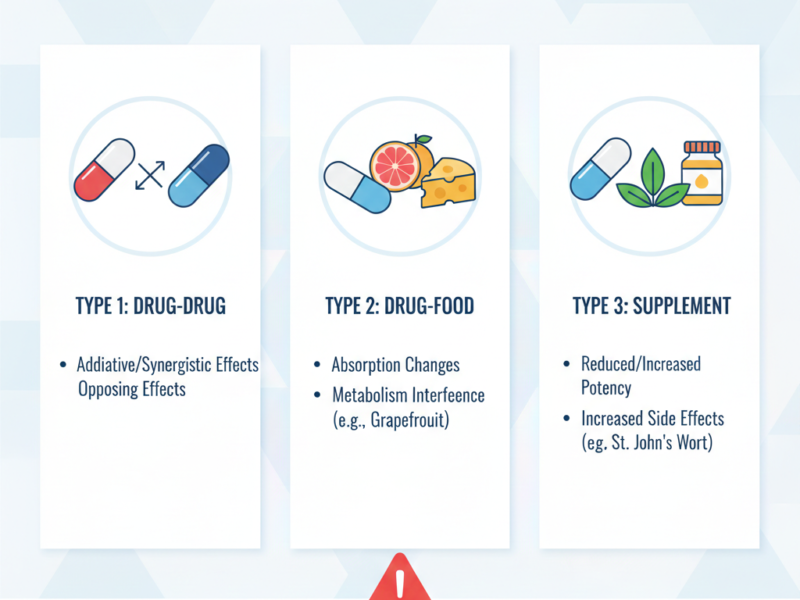
The human body is a complex chemical environment, and introducing multiple substances can lead to “Polypharmacy” challenges. Drug interactions can be “Synergistic” (making the effect too strong) or “Antagonistic” (canceling each other out). At Mediquickinfo, we warn that even common over-the-counter (OTC) supplements can interfere with prescription drugs. For example, St. John’s Wort can drastically reduce the effectiveness of blood thinners or birth control pills by accelerating their metabolism in the liver.
Food also significantly impacts pharmacological safety. Grapefruit juice is a classic clinical example; it inhibits a specific enzyme (CYP3A4) in the gut, which can lead to dangerously high blood levels of certain heart medications. Similarly, dairy products can bind to certain antibiotics, preventing them from being absorbed into the bloodstream. Mediquickinfo clinical reviews suggest that always reading the “Food and Drink” section of your medication insert is a non-negotiable safety protocol for ensuring that your treatment remains both safe and effective.
3. The “Five Rights” of Medication Administration
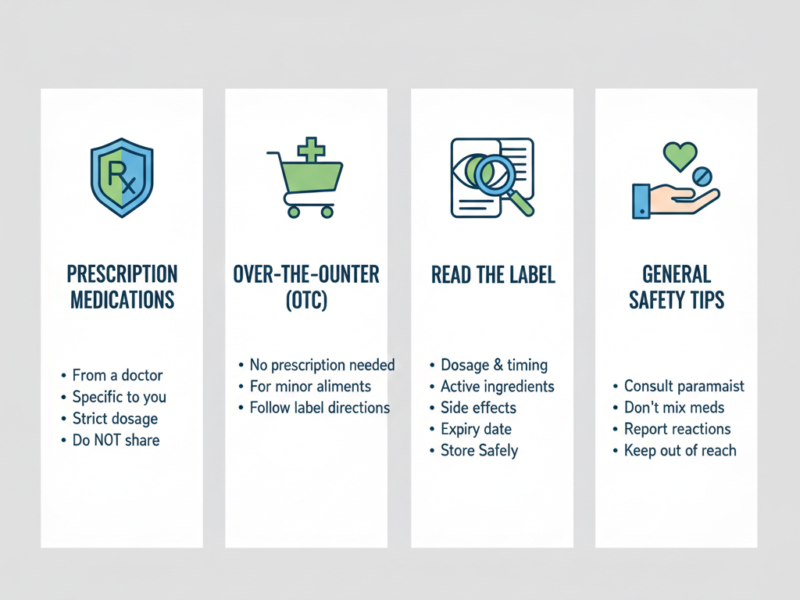
In clinical settings, healthcare professionals follow the “Five Rights” to prevent errors. At Mediquickinfo, we encourage patients to adopt this same rigor: **The Right Patient** (ensuring the medication is yours), **The Right Drug**, **The Right Dose**, **The Right Route** (swallowing vs. inhaling), and **The Right Time**. Discrepancies in any of these five areas are the leading causes of preventable adverse drug events.
4. Storage, Disposal, and Expiry Protocols
Medication safety extends to how drugs are kept in the home. Most medications are chemically sensitive to heat, light, and moisture. Storing them in a bathroom cabinet—where humidity is high—can cause a drug to degrade and lose its potency long before its expiration date. At Mediquickinfo, we recommend a cool, dry, and locked location to prevent accidental ingestion by children or pets. Furthermore, using expired medications is clinically discouraged; while some may just lose efficacy, others can break down into toxic byproducts that can damage the kidneys.
Conclusion: Empowering Your Pharmacological Health
Safe medication use is a lifelong clinical responsibility that requires vigilance, education, and open communication with your healthcare provider. By understanding the principles of dosing, being aware of potential interactions, and following rigorous administration protocols, you can maximize the benefits of your treatment while minimizing the risks. At Mediquickinfo, we believe that an informed patient is the safest patient. Your health is a complex biological journey—navigate it with the precision of science. Trust Mediquickinfo for the clinical literacy you need to manage your medications with confidence. Safety is not an accident; it is the result of informed care.