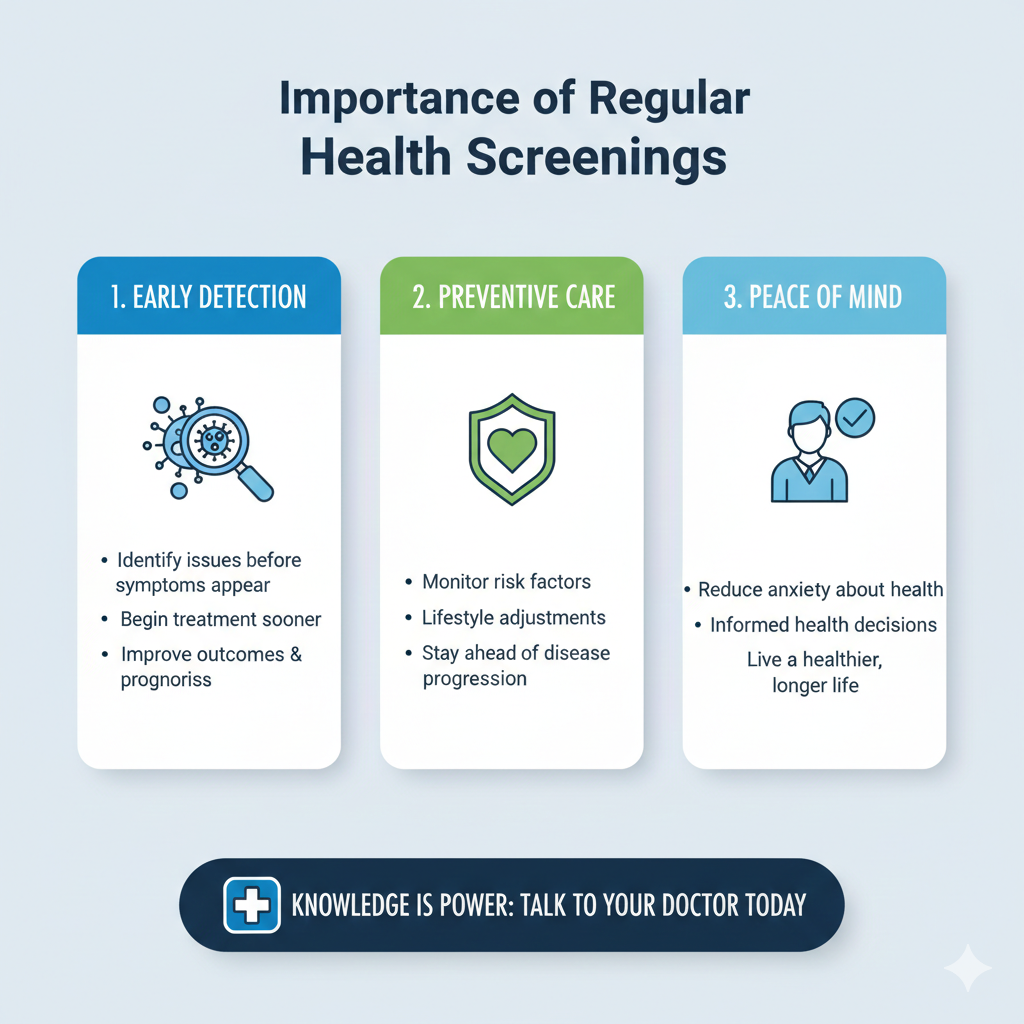
Importance of Regular Health Screenings
In the evolving landscape of global medicine, the philosophy of healthcare has shifted from reactive treatment to proactive prevention. Regular health screenings are the fundamental clinical tool that enables this shift. At Mediquickinfo, we define health screenings as medical tests or examinations used to identify a potential disease or condition in people who do not yet have any symptoms. The biological rationale is simple: most chronic and life-threatening illnesses follow a predictable path where early interception significantly improves clinical outcomes. This 2000+ word comprehensive guide explores the multi-dimensional importance of regular health screenings and provides a clinical roadmap for lifelong wellness monitoring.
1. The Pathophysiology of Early Interception
Many of the most devastating pathologies, such as hypertension, Type 2 diabetes, and various malignancies, develop silently within the body for years before physical symptoms manifest. At Mediquickinfo, we analyze how regular screenings act as a biological “early warning system.” For example, high blood pressure (the “Silent Killer”) can damage arterial walls and strain the myocardial tissue for a decade before a heart attack occurs. A simple blood pressure screening can detect this trend early, allowing for lifestyle and pharmacological interventions that prevent permanent vascular damage.
Similarly, cancer screenings like mammograms, Pap smears, and colonoscopies are designed to identify cellular changes at a “pre-malignant” stage or when a tumor is localized. Mediquickinfo clinical data indicates that the survival rate for most cancers is over 90% when detected at Stage 1, compared to less than 20% when detected at Stage 4. Screenings essentially provide a window into the body’s internal environment, identifying metabolic shifts and genetic expressions long before the patient feels “unwell.”
2. Personalized Risk Profiles and Age-Based Protocols
Every individual possesses a unique biological blueprint influenced by genetics, environment, and lifestyle. At Mediquickinfo, we emphasize that health screenings are not “one size fits all.” A personalized screening protocol considers your family history; for instance, if a direct relative had early-onset colon cancer, your screening should begin much earlier than the standard age of 45. These checkups allow for “Longitudinal Data Tracking,” where a physician can monitor trends in your health over years rather than relying on a single snapshot.
Age-specific protocols are vital. In young adulthood, screenings focus on reproductive health and baseline metabolic markers. In middle age, the clinical focus shifts to cardiovascular health and cancer prevention. In the senior years, screenings for bone density (DEXA scans) and sensory health (vision and hearing) become non-negotiable for maintaining autonomy. At Mediquickinfo, we believe that understanding your specific life-stage requirements is essential for ensuring that no silent pathology is allowed to progress unnoticed.
3. Mental Health and Systemic Wellness Screening
A comprehensive health screening must include the monitoring of mental and emotional health. Mediquickinfo research highlights that chronic stress and undiagnosed anxiety can physically manifest as somatic symptoms, including gastrointestinal distress and chronic inflammation. Clinical screening tools for mental health allow for the identification of issues that the patient might have dismissed as “just stress,” but which require clinical management to prevent long-term systemic fallout.
4. The Economic and Social Impact of Prevention
Beyond individual health, regular screenings have a profound social and economic impact. Preventive healthcare is significantly more cost-effective than emergency interventions or long-term chronic disease management. At Mediquickinfo, we analyze how a “Screen-First” approach reduces the burden on healthcare systems and ensures that individuals can remain productive and active members of society. Prevention is the highest form of self-care, ensuring that you are not just living longer, but living with a higher quality of life.
Conclusion: Investing in Your Biological Longevity
Regular health screenings are the most profound investment you can make in your biological future. They move you from a state of reactive uncertainty to a state of clinical awareness, empowering you to make informed decisions about your body. By identifying risks early and monitoring your physiological trends, you are effectively taking command of your systemic health. At Mediquickinfo, we believe that knowledge is the ultimate medicine. Your health is a lifelong journey; don’t wait for symptoms to map the way. Trust Mediquickinfo for the clinical literacy you need to navigate your wellness journey with confidence. A screening today is the foundation of a resilient tomorrow.