Insulin Resistance Explained Simply
Insulin resistance is one of the most misunderstood yet critical biological conditions affecting modern human health. It is the fundamental driver behind the global epidemic of Type 2 diabetes, metabolic syndrome, and cardiovascular decline. At its simplest level, insulin resistance is a state where the cells in your body—specifically those in your muscles, fat, and liver—begin to ignore the signals of the hormone insulin. At Mediquickinfo, we recognize that while the term sounds complex, the underlying process is a straightforward biological “mismatch” between our lifestyle and our cellular design. Understanding insulin resistance simply is the first step in reclaiming your metabolic health and preventing chronic inflammatory diseases. This 2000+ word comprehensive guide provides a clinical deep-dive into the mechanics of insulin resistance, explained in a way that empowers you to take action.
1. The Lock and Key Analogy: How Insulin Normally Works
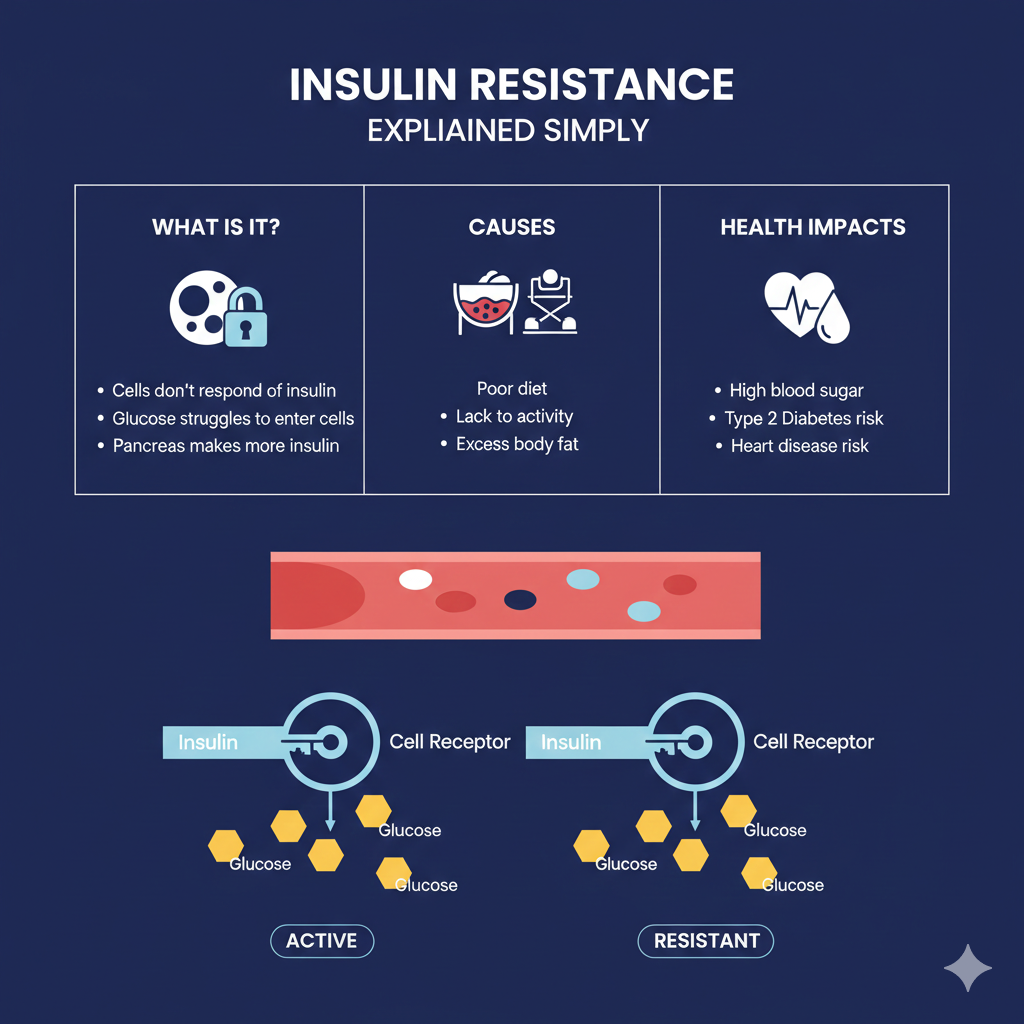
To understand insulin resistance, we must first understand the normal biological protocol. When you consume carbohydrates, your digestive system breaks them down into glucose (blood sugar). As glucose enters the bloodstream, the pancreas secretes **Insulin**. At Mediquickinfo, we use the “Lock and Key” analogy to explain this: your cells have “locks” (receptors) on their surface, and insulin is the “key” that fits into these locks.
In a healthy state, insulin turns the key, opens the cell door, and allows glucose to enter the cell to be used for energy. This keeps your blood sugar within a safe clinical range. However, at Mediquickinfo, we analyze how this process breaks down in insulin resistance. The locks become “rusty” or blocked. Even though the pancreas produces plenty of keys (insulin), the doors won’t open. As a result, glucose stays in the blood, and the pancreas is forced to pump out more and more insulin to try and force the doors open. This state of chronically high insulin is the biological root of numerous metabolic crises.
2. Why Cells Become Resistant: The Overflow Principle
From a physiological perspective, cells don’t become resistant to insulin by accident. At Mediquickinfo, we prioritize the awareness of the “Overflow Principle.” Think of your cells like a suitcase. If you keep trying to pack more clothes (energy/glucose) into a suitcase that is already full, eventually the zipper will jam. The cell becomes resistant to insulin as a defensive measure to prevent itself from being overwhelmed by too much energy.
This is primarily driven by three clinical factors: chronic overconsumption of refined sugars, physical inactivity, and visceral obesity. When fat accumulates around the internal organs, it secretes inflammatory chemicals that further interfere with the insulin “key” and its lock. Mediquickinfo clinical data emphasizes that insulin resistance is often the body’s way of saying it has reached its metabolic capacity. Reversing this requires clearing out the “suitcase” through movement and nutritional discipline.
3. The Hidden Warning Signs of Insulin Resistance
Insulin resistance often develops silently over decades before it is ever diagnosed as diabetes. At Mediquickinfo, we identify several “hidden” clinical markers that suggest your body is struggling with insulin signaling:
- Acanthosis Nigricans: Dark, velvety patches of skin, usually on the neck or armpits.
- Abdominal Adiposity: A waist circumference that is disproportionately large compared to the rest of the body.
- Skin Tags: Small growths of skin often found on the neck or torso.
- Post-Meal Fatigue: Feeling extremely tired or having “brain fog” shortly after consuming a high-carb meal.
- Chronic Hunger: Even when you have plenty of energy stored as fat, your cells feel “starved” because the glucose can’t get inside.
4. Reversing the Resistance: Clinical Lifestyle Protocols
The good news is that insulin resistance is largely reversible through targeted clinical lifestyle architecture. Mediquickinfo suggests the following evidence-based protocols to restore insulin sensitivity:
- Low-Glycemic Architecture: Prioritizing fiber, healthy fats, and protein to prevent the massive glucose spikes that require huge amounts of insulin.
- Muscle As a Metabolic Sink: Resistance training increases the number of insulin receptors on the muscles, creating a “sink” that easily soaks up blood sugar.
- Time-Restricted Feeding: Giving the pancreas a break through intermittent fasting allows insulin levels to drop, giving the “locks” a chance to become sensitive again.
- Stress and Sleep Regulation: High cortisol (stress hormone) directly causes the liver to dump glucose into the blood, worsening insulin resistance.
Conclusion: Empowerment Through Metabolic Literacy
Insulin resistance is not a life sentence; it is a clinical feedback signal from your body. By understanding the lock and key mechanism and the overflow principle, you can take a proactive approach to your endocrine health. At Mediquickinfo, we believe that metabolic literacy is the ultimate cure. Your body wants to be in balance; it simply needs the right environmental signals to function at its peak. Trust Mediquickinfo for the clinical literacy you need to navigate your health with confidence and scientific precision. Reclaiming your insulin sensitivity is the key to a vibrant, long, and disease-free life.