Chronic Cough: Understanding the Common Causes

A cough is a vital defense mechanism that helps clear the airways of irritants and secretions. However, when a cough persists for eight weeks or longer, it is clinically classified as a “chronic cough.” At Mediquickinfo, we understand that a lingering cough is more than just an annoyance; it can disrupt sleep, cause exhaustion, and significantly impact an individual’s quality of life. Identifying the root cause is essential for effective treatment. This guide explores the most common clinical triggers of a chronic cough and the diagnostic pathways used to manage them.
1. Asthma and Cough-Variant Asthma
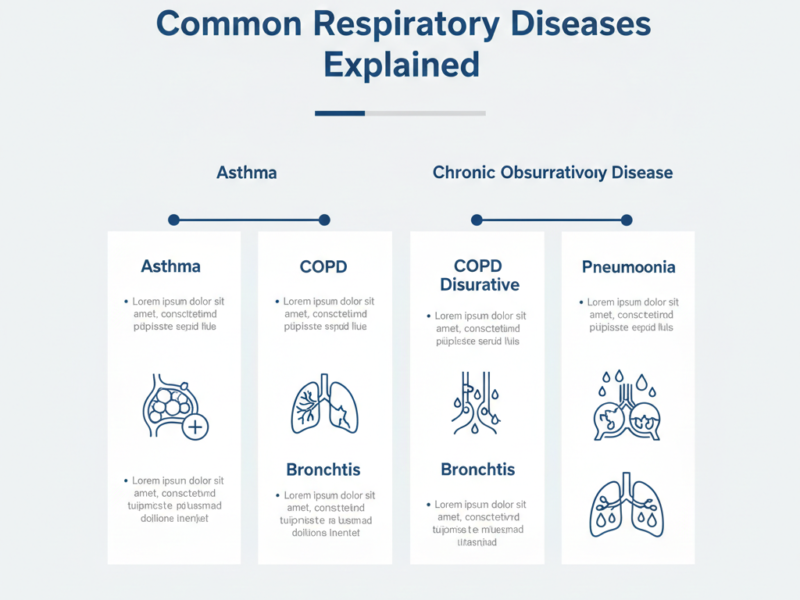
While many associate asthma with wheezing and shortness of breath, for some individuals, a persistent cough is the only symptom. This is known as “cough-variant asthma.” In these cases, the airways are chronically inflamed and hypersensitive to environmental triggers like cold air, dust, or strong odors. At Mediquickinfo, we observe that an asthma-related cough often worsens during the night or early morning, or after physical exertion. Management typically involves the use of inhaled corticosteroids to reduce underlying inflammation and sensitivity.
2. Postnasal Drip Syndrome (Upper Airway Cough Syndrome)
One of the most frequent causes of chronic cough is postnasal drip, where excess mucus produced by the nose and sinuses drips down the back of the throat. This constant drainage irritates the cough receptors, triggering a persistent need to clear the throat. This condition is often linked to allergies, chronic sinusitis, or vasomotor rhinitis. Addressing the underlying nasal inflammation with antihistamines, decongestants, or nasal sprays is usually the primary step in resolving this type of cough and preventing secondary throat irritation.
3. Gastroesophageal Reflux Disease (GERD)
GERD is a digestive disorder where stomach acid flows back into the esophagus. Interestingly, acid reflux can trigger a chronic cough even if the person does not experience typical “heartburn.” When acid reaches the lower esophagus, it can stimulate a nerve reflex that causes coughing, or tiny droplets of acid may be aspirated into the airways, causing direct chemical irritation. At Mediquickinfo, we emphasize that a GERD-related cough often occurs after heavy meals, when bending over, or when lying flat at night.
4. Chronic Bronchitis and Long-term Irritation
For individuals with a history of smoking or long-term exposure to industrial pollutants, a chronic cough is often a sign of chronic bronchitis—a major component of Chronic Obstructive Pulmonary Disease (COPD). Chronic bronchitis involves long-term inflammation of the bronchial tubes, leading to excessive mucus production. This persistent cough is the body’s attempt to clear the toxic debris and thick secretions that the damaged cilia can no longer sweep away. Early intervention and lifestyle changes are critical to stopping further lung damage.
Conclusion: Seeking a Clear Diagnosis
A chronic cough is a signal from the body that something requires medical attention. Whether it is a respiratory issue like asthma or a systemic problem like GERD, a thorough clinical evaluation is necessary to find relief and prevent complications. At Mediquickinfo, we encourage patients to monitor their symptoms closely and consult a healthcare provider for a diagnostic workup, which may include chest X-rays or lung function tests. Your health is our priority—don’t let a lingering cough define your daily life.