Breathing Exercises for Lung Health

Breathing is a fundamental biological process, but its quality directly impacts our overall health and longevity. At Mediquickinfo, we believe that respiratory health can be actively improved through scientific breathing exercises. Just as we exercise our skeletal muscles, our primary respiratory muscle—the diaphragm—requires training to function efficiently. This clinical guide explores the most effective breathing techniques to enhance lung capacity, improve oxygenation, and support recovery from respiratory illnesses.
1. The Importance of Diaphragmatic Breathing
Most individuals utilize only a fraction of their total lung capacity by engaging in shallow chest breathing. This pattern utilizes accessory neck and shoulder muscles, which is inefficient and increases stress. Diaphragmatic breathing, often called “belly breathing,” focuses on engaging the large muscle at the base of the lungs. By training the diaphragm to contract and move downward effectively, we create a stronger vacuum that pulls air deep into the lower lobes of the lungs, where the most oxygen exchange occurs.
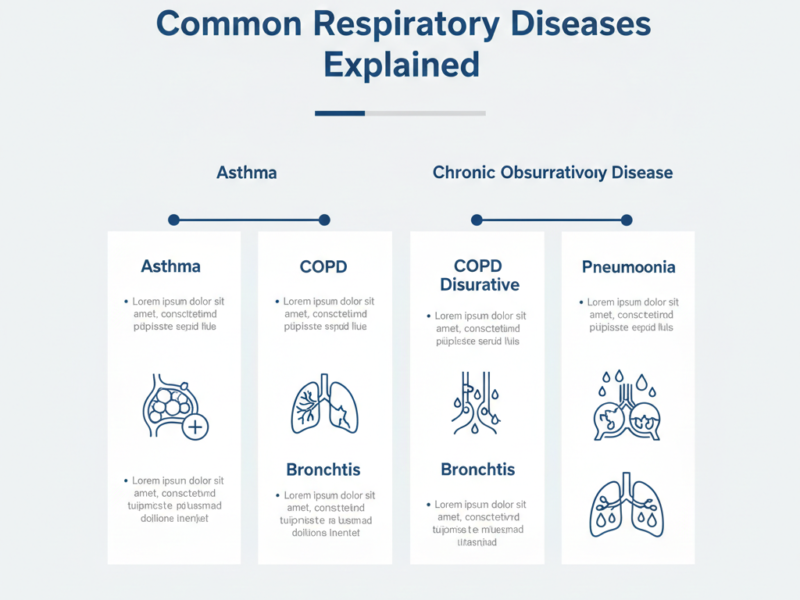
Scientific studies show that consistent diaphragmatic breathing reduces the “work of breathing,” allowing the body to take in more oxygen with less effort. This is particularly crucial for individuals with chronic conditions like asthma or COPD, where the airways are often compromised. By shifting from chest to belly breathing, patients can significantly reduce feelings of breathlessness and improve their exercise tolerance.
2. Pursed-Lip Breathing Technique
Pursed-lip breathing is a highly effective technique for managing acute shortness of breath. It involves inhaling slowly through the nose and exhaling with control through tightly pressed (pursed) lips. At Mediquickinfo, we teach this as a “rescue” technique because it creates back-pressure in the airways, preventing them from collapsing during exhalation. This allows more trapped air to leave the lungs, making room for the next fresh breath.
This exercise is especially helpful during physical activities like climbing stairs or lifting objects. By extending the exhalation phase—ideally making it twice as long as the inhalation—individuals can lower their respiratory rate and maintain higher oxygen saturation levels. It is a vital tool for anyone suffering from obstructive lung diseases who needs to regain control over their breathing during exertion.
3. Deep Breathing for Alveolar Health
Deep breathing serves as a form of “internal stretching” for the lung tissue. It helps to keep the tiny air sacs, known as alveoli, fully inflated and functional. When we take shallow breaths, the lower parts of the lungs may not be used, leading to the accumulation of fluid or a condition called atelectasis (collapsed air sacs). Mediquickinfo advocates for at least 5 to 10 minutes of deep breathing daily to maintain the natural elasticity of the pulmonary tissue.
Conclusion: Building Pulmonary Resilience
Improving lung health through exercise is a drug-free and highly effective way to enhance your quality of life. By incorporating these techniques into your daily routine, you build a “respiratory reserve” that can protect you during times of stress or infection. Trust Mediquickinfo for evidence-based insights into your health. Every breath is an opportunity to strengthen your body—practice correctly and breathe freely.