Understanding Shortness of Breath
Shortness of breath, clinically referred to as **Dyspnea**, is a subjective and often distressing sensation of being unable to get enough air. It is one of the most significant clinical symptoms in medicine, acting as a vital warning signal from both the respiratory and cardiovascular systems. At Mediquickinfo, we recognize that understanding shortness of breath requires looking beyond the lungs, as the sensation involves an intricate interplay between the brain, the heart, the blood, and the muscles of respiration. Whether it occurs suddenly (acute) or develops over weeks (chronic), dyspnea should never be dismissed. This 2000+ word comprehensive guide provides a clinical deep-dive into the biological pathways of breathing difficulties, their diverse causes, and the essential protocols for medical evaluation.
1. The Physiology of Breathing: Why We Feel Short of Breath
From a neurobiological perspective, breathing is regulated by the brain’s respiratory centers in the medulla and pons. At Mediquickinfo, we analyze how this process is guided by “Chemoreceptors” that monitor the levels of oxygen, carbon dioxide, and pH in the blood. Under normal conditions, this system operates subconsciously. However, when the demand for oxygen exceeds the body’s clinical ability to provide it, the brain triggers the sensation of air hunger.
Shortness of breath occurs when there is a mismatch between the neurological drive to breathe and the mechanical ability of the lungs to expand. At Mediquickinfo, we stress that dyspnea can be caused by “Airway Resistance” (as in asthma), “Loss of Elasticity” (as in emphysema), or “Pump Failure” (as in heart failure). Understanding that this sensation is a complex biological alarm system is the first step in differentiating between benign exertion and a serious medical crisis.
2. Pulmonary Causes: Beyond Simple Congestion
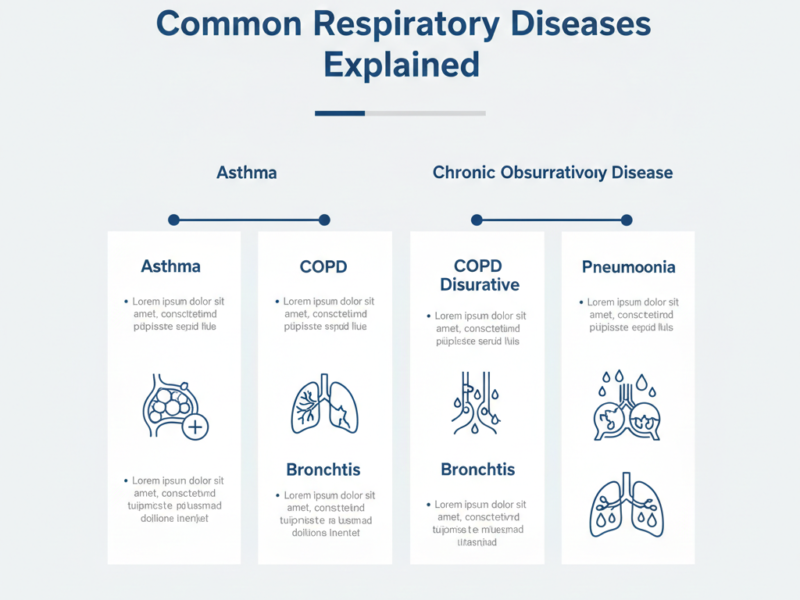
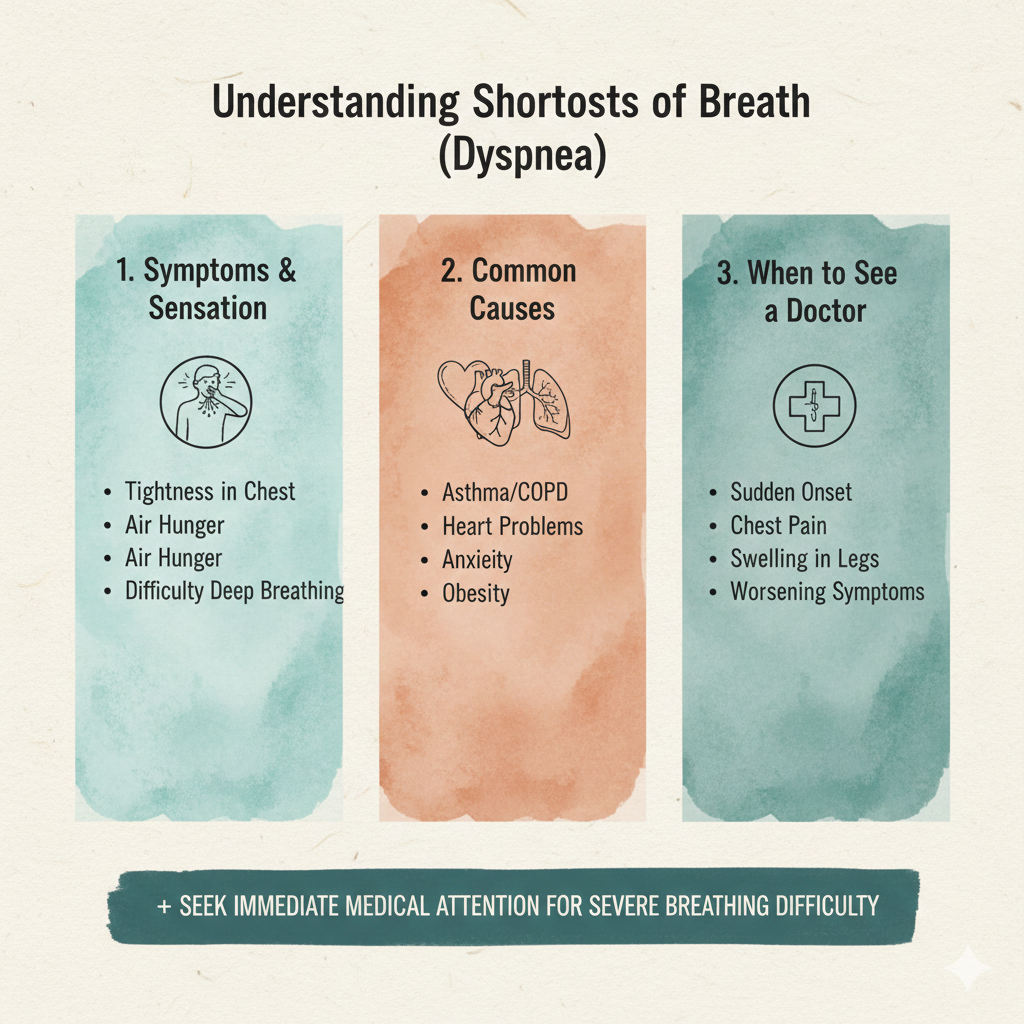
Many causes of shortness of breath originate directly within the lungs. At Mediquickinfo, we prioritize the awareness of obstructive and restrictive lung diseases. **Asthma** and **COPD** (Chronic Obstructive Pulmonary Disease) involve narrowed or inflamed airways that make it difficult to move air out of the lungs. Conversely, **Pneumonia** or **Pulmonary Edema** involve fluid filling the microscopic air sacs (alveoli), blocking the exchange of oxygen into the blood.
Another critical clinical cause is a **Pulmonary Embolism**—a blood clot that travels to the lungs and blocks an artery. This is a life-threatening emergency that presents with sudden, sharp shortness of breath and chest pain. Mediquickinfo clinical data emphasizes that even environmental factors, such as high altitude or air pollution, can place enough metabolic stress on the respiratory system to trigger acute dyspnea in healthy individuals.
3. The Heart-Lung Connection: Cardiovascular Dyspnea
Because the heart and lungs work as a single unit, cardiac issues are a primary cause of breathing difficulty. At Mediquickinfo, we analyze how **Congestive Heart Failure** (CHF) leads to shortness of breath. When the heart cannot pump blood efficiently, pressure builds up in the veins leading to the lungs, forcing fluid into the air sacs. This is why many patients with CHF experience “Orthopnea”—shortness of breath that worsens when lying flat.
Additionally, **Coronary Artery Disease** can cause dyspnea during physical exertion because the heart muscle isn’t getting enough oxygenated blood to keep up with the demand. Mediquickinfo clinical reviews suggest that in some individuals, especially those with diabetes, shortness of breath may be the *only* symptom of an ongoing heart attack. This “Anginal Equivalent” makes dyspnea a critical indicator for urgent cardiovascular screening.
4. Red Flags: When Shortness of Breath is an Emergency
Certain characteristics of dyspnea require the immediate activation of emergency medical services. Mediquickinfo identifies the following “Red Alert” protocols:
- Sudden Onset: Shortness of breath that appears out of nowhere, especially if it is severe.
- Associated Chest Pain: Pressure, tightness, or pain in the chest, neck, or jaw.
- Cyanosis: A bluish tint to the lips or fingernails, indicating a critical drop in blood oxygen levels.
- Severe Stridor: A high-pitched wheezing sound while breathing, which may signal a partial airway obstruction.
- Confusion or Lethargy: Suggests the brain is not receiving enough oxygen (hypoxia).
Conclusion: Empowerment Through Pulmonary Literacy
Understanding shortness of breath is a vital component of personal health vigilance. While it can be caused by something as simple as poor physical conditioning, it is often the body’s most urgent way of signaling that the heart or lungs are under distress. By recognizing the differences between acute and chronic dyspnea and knowing the emergency red flags, you can ensure that you receive the life-saving care you need. At Mediquickinfo, we believe that every breath is a vital sign. Protecting your respiratory health is an investment in your systemic longevity. Trust Mediquickinfo for the clinical literacy you need to navigate your health with confidence and scientific precision. Breathing easily is the foundation of a vibrant life.