Acne Causes & Skin Care Tips
Acne vulgaris is one of the most prevalent skin conditions globally, affecting not only adolescents but an increasing number of adults. Far from being a mere aesthetic concern, acne is a complex inflammatory disorder of the pilosebaceous unit—comprising the hair follicle and its associated oil gland. At Mediquickinfo, we recognize that acne can have a profound impact on psychological well-being and self-esteem. Understanding the underlying biological causes and implementing a clinically sound skin care regimen is essential for managing breakouts and preventing permanent scarring. This 2000+ word comprehensive guide explores the multi-factorial nature of acne and provides evidence-based tips for professional-grade daily care.
1. The Four Pillars of Acne Pathogenesis
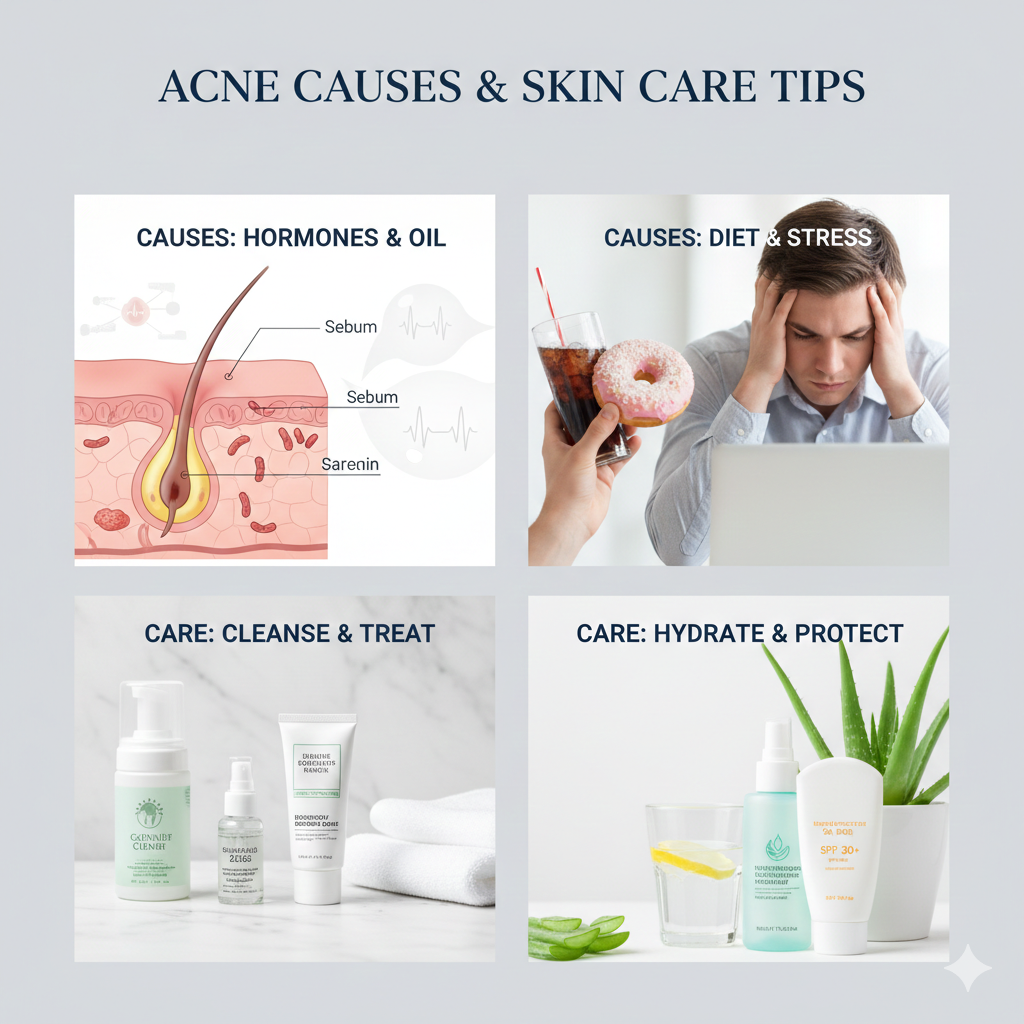
Acne development is not a single event but a sequence of biological changes. Mediquickinfo clinical data points to four primary “pillars” that lead to a breakout. The first is **Follicular Hyperkeratinization**, where dead skin cells do not shed properly and instead clog the opening of the hair follicle. This creates a “microcomedone”—the precursor to all acne lesions. The second pillar is **Excessive Sebum Production**, often driven by hormonal shifts (androgens) that signal the sebaceous glands to produce more oil than the skin requires.
The third factor is the proliferation of Cutibacterium acnes (formerly P. acnes), a bacterium that thrives in the oil-rich, oxygen-poor environment of a clogged pore. Finally, these bacteria trigger an **Inflammatory Response**. The body’s immune system attempts to fight the bacterial overgrowth, leading to the redness, swelling, and pus formation characteristic of inflammatory acne. Understanding these four stages is vital, as effective clinical treatments must target at least two or more of these pillars simultaneously to achieve long-term skin clearance.
2. Identifying Your Acne Type: From Comedonal to Cystic
At Mediquickinfo, we stress that not all acne is treated the same. **Comedonal Acne** consists primarily of blackheads (open comedones) and whiteheads (closed comedones), which are non-inflammatory. **Papulopustular Acne** involves the classic red bumps and pus-filled pimples. The most severe form is **Nodulocystic Acne**, which presents as deep, painful, fluid-filled lumps beneath the skin’s surface. This type carries the highest risk of permanent scarring and often requires systemic medical intervention, such as oral retinoids or antibiotics, rather than topical treatments alone.
3. Clinical Skin Care Tips: The Mediquickinfo Protocol
Effective acne management requires a structured daily routine. First, **Gentle Cleansing** is mandatory. Using harsh scrubs or alkaline soaps can damage the skin’s acidic mantle, leading to increased inflammation. We recommend a pH-balanced, non-comedogenic cleanser. Second, **Targeted Actives** like Salicylic Acid (a BHA that dissolves oil) or Benzoyl Peroxide (which kills bacteria) should be used. However, at Mediquickinfo, we warn against “over-treating,” as this can lead to a compromised skin barrier and “reactive seborrhea.”
Third, never skip **Moisturization**. Many people believe that oily, acne-prone skin does not need moisture, but dehydrated skin actually produces more oil to compensate. Opt for oil-free, ceramide-rich moisturizers. Finally, **Sun Protection** is essential. Many acne treatments, especially retinoids and acids, make the skin highly sensitive to UV light. Furthermore, unprotected sun exposure can darken acne marks, leading to long-lasting post-inflammatory hyperpigmentation (PIH).
4. The Role of Diet and Lifestyle
While poor hygiene does not cause acne, certain lifestyle factors can exacerbate it. Mediquickinfo reviews suggest a link between high-glycemic diets (sugary foods and white bread) and acne severity. High insulin levels can stimulate androgen production, further fueling the oil glands. Additionally, stress-induced cortisol can trigger flare-ups. Maintaining a balanced diet and managing stress are secondary but vital components of a comprehensive acne management plan.
Conclusion: Achieving Dermatological Balance
Acne is a manageable condition, but it requires patience and a clinical understanding of your skin’s unique needs. By targeting the root causes—oil, bacteria, and inflammation—and adhering to a gentle, consistent routine, you can achieve and maintain clear skin. Trust Mediquickinfo to provide the medical literacy required to navigate your skin care journey with confidence. Your skin is a living organ; treat it with the scientific care it deserves for a healthier, more vibrant life.