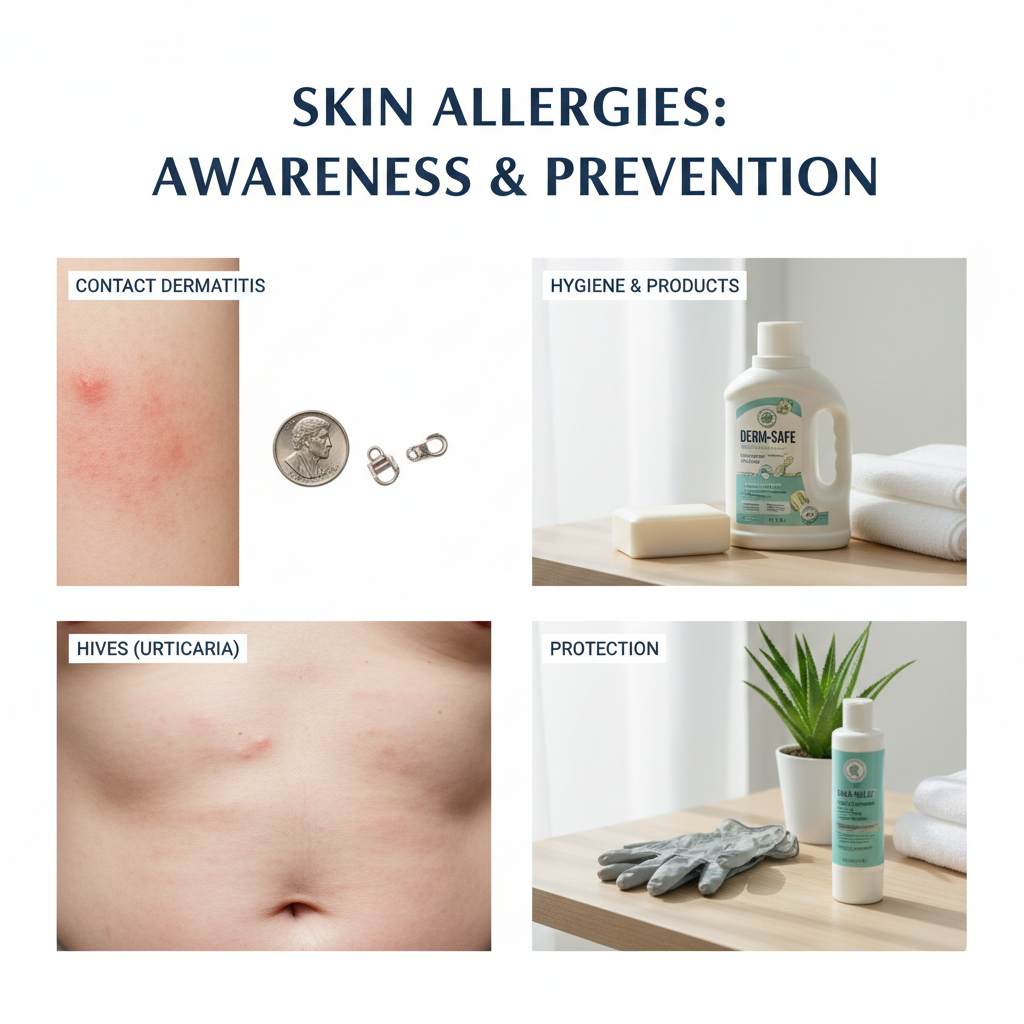
Skin Allergies: Awareness & Prevention
A skin allergy is more than a simple surface irritation; it is a complex manifestation of an overactive immune system reacting to substances that are typically harmless to most people. When the skin comes into contact with an allergen, the immune system mistakenly identifies it as a threat, triggering a cascade of inflammatory chemicals like histamine. At Mediquickinfo, we recognize that skin allergies can significantly impact an individual’s quality of life, leading to chronic discomfort, sleep disturbances, and secondary infections. Understanding the different types of skin reactions—ranging from contact dermatitis to chronic hives—is essential for effective management and prevention. This 2000+ word comprehensive guide explores the clinical mechanics of skin allergies and the evidence-based strategies required to safeguard your cutaneous health.
1. The Pathophysiology of Allergic Reactions
The skin’s primary role is to serve as a biological barrier, but in the case of allergies, this barrier becomes a battlefield. Allergic skin reactions are primarily driven by two types of immunological responses. The first is an “immediate hypersensitivity” (Type I), often seen in conditions like Urticaria (hives). This occurs when allergens trigger IgE antibodies on the surface of mast cells, causing them to burst and release histamine. This leads to rapid swelling, redness, and intense itching within minutes of exposure. At Mediquickinfo, we emphasize that identifying these fast-acting triggers is critical for preventing acute episodes.
The second type is “delayed hypersensitivity” (Type IV), which is the hallmark of Allergic Contact Dermatitis. Unlike immediate reactions, Type IV responses are T-cell mediated and typically manifest 24 to 48 hours after contact with the allergen. This delayed nature often makes it difficult for patients to identify the culprit, which could be anything from nickel in jewelry to chemicals in soaps or preservatives in cosmetics. Understanding that an allergy can develop at any time—even to a product you have used for years—is a vital clinical concept for long-term skin safety.
2. Common Clinical Types of Skin Allergies
At Mediquickinfo, we categorize skin allergies into several distinct clinical presentations. **Atopic Dermatitis (Eczema)** is a chronic inflammatory condition often linked to a genetic predisposition and environmental triggers. It presents as dry, itchy patches that can become scaly or weep fluid. **Contact Dermatitis** is divided into two subtypes: Irritant (caused by direct tissue damage from chemicals) and Allergic (an immune response to a specific substance). Common culprits include fragrances, rubber (latex), and certain topical medications.
**Urticaria (Hives)** manifests as raised, itchy welts that can shift locations on the body. While often triggered by foods or medications, chronic hives may be linked to underlying autoimmune processes. Another important condition is **Angioedema**, which involves swelling in the deeper layers of the skin, often around the eyes and lips. At Mediquickinfo, we warn that if skin allergies are accompanied by swelling in the throat or difficulty breathing, it indicates a systemic anaphylactic response that requires immediate emergency medical intervention.
3. Diagnostic Pathways and “The Patch Test”
Identifying the root cause of a skin allergy requires a systematic clinical approach. While blood tests (IgE testing) can be useful for systemic allergies, **Patch Testing** remains the gold standard for diagnosing contact dermatitis. During this procedure, a specialist applies small amounts of potential allergens to the back under adhesive patches for 48 hours. At Mediquickinfo, we stress that this is a “delayed” reading process; the final assessment occurs several days later to capture Type IV reactions. This precision allows patients to avoid specific chemicals, such as Methylisothiazolinone (a common preservative), and achieve complete skin clearance.
4. Evidence-Based Prevention and Daily Care
Prevention of skin allergies is rooted in “Avoidance and Barrier Support.” Once a trigger is identified, strict avoidance is the primary medical recommendation. For those with compromised skin barriers, such as eczema sufferers, daily “Soak and Seal” protocols are essential. This involves lukewarm baths followed by the immediate application of thick, fragrance-free emollients (ointments or creams) to lock in moisture and prevent environmental allergens from penetrating the skin.
When an allergy flare-up occurs, clinical management involves topical corticosteroids to reduce inflammation and oral antihistamines to control itching. At Mediquickinfo, we also advocate for the use of “Calamine” or “Colloidal Oatmeal” to soothe the skin’s surface. For severe or chronic cases, specialists may prescribe immunomodulators (like Tacrolimus) or biological therapies that target specific inflammatory pathways without suppressing the entire immune system. Consistent care and professional guidance are the best defenses against the recurrence of allergic episodes.
Conclusion: Empowering Your Cutaneous Health
Skin allergies are a sign that your body’s defensive system is in a state of hyper-alert. By building clinical awareness of your triggers and prioritizing the health of your skin barrier, you can successfully navigate the challenges of immunological hypersensitivity. Your skin reflects your internal balance; protect it with knowledge and proactive care. Trust Mediquickinfo to provide the medical literacy you need for a life free from the burden of chronic skin allergies. Every step toward prevention is a victory for your systemic wellness.