Childhood Fever Awareness
Childhood fever is perhaps the most common reason for parental anxiety and pediatric clinical consultations worldwide. While frequently perceived as a disease in itself, fever is actually a vital physiological symptom—a defensive mechanism deployed by the body’s immune system to combat infections. At Mediquickinfo, we recognize that “fever phobia” often leads to unnecessary medical interventions. Understanding the biological role of fever, recognizing clinical red flags, and implementing safe home-care protocols are essential for parental literacy. This 2000+ word comprehensive guide explores the clinical mechanics of thermal regulation in children and provides an evidence-based framework for identifying when a fever is a protective friend and when it requires urgent medical attention.
1. The Physiology of Pyrexia: Why the Body Heats Up
Fever, clinically known as pyrexia, is regulated by the hypothalamus—the body’s internal thermostat located in the brain. When a child’s immune system detects a pathogen, such as a virus or bacterium, it releases chemicals called “pyrogens.” These substances signal the hypothalamus to raise the body’s “set point” temperature. At Mediquickinfo, we analyze how this elevated temperature serves a dual purpose: it accelerates the activity of white blood cells and creates an environment that is less hospitable for many heat-sensitive microbes to replicate.
It is crucial for parents to understand that the height of the fever does not always correlate with the severity of the illness. A child with a high-grade fever of 104°F (40°C) may have a simple viral cold, while an infant with a mild 100.4°F (38°C) fever might be battling a serious bacterial infection. The focus of clinical assessment at Mediquickinfo is always on the child’s overall appearance, activity level, and hydration status, rather than just the numerical reading on the thermometer. A fever is a sign that the “engine” of the immune system is running, but monitoring the “fuel” (hydration) and “steering” (neurological status) is what ensures safety.
2. Clinical Thresholds and Age-Specific Guidelines
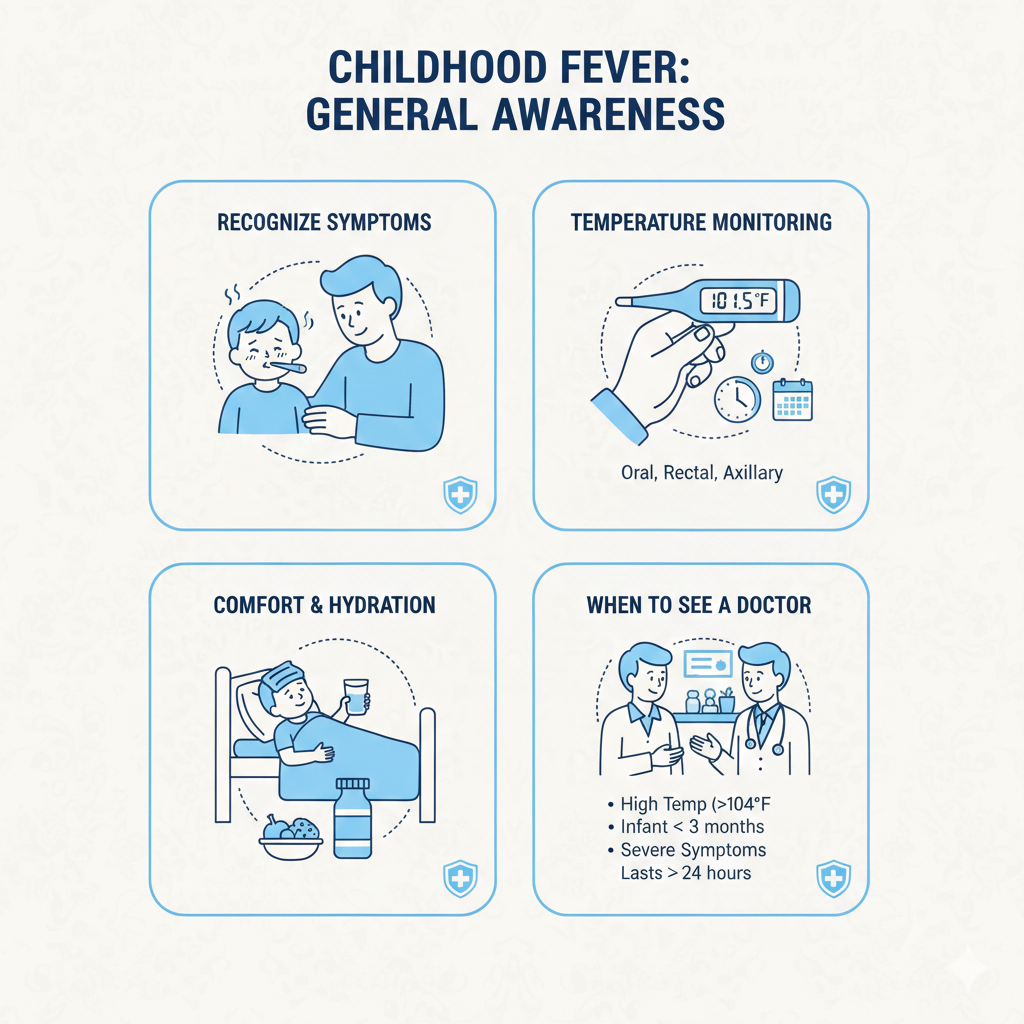
The medical significance of a fever depends heavily on the child’s age. At Mediquickinfo, we follow the “Rule of Three” for neonatal and infant care. **Infants under 3 months** of age with any rectal temperature above 100.4°F (38°C) are considered a medical emergency. Because their immune systems are immature, they cannot localize infections well, making them susceptible to rapid systemic spread. For these infants, a fever is often the only sign of a life-threatening bacterial infection.
For **children aged 3 months to 3 years**, a fever over 102.2°F (39°C) warrants a call to a pediatrician, especially if the child is lethargic or refuses fluids. In older children, the duration of the fever becomes more important than the peak temperature. A fever that lasts more than three consecutive days should be evaluated to rule out secondary bacterial complications like ear infections, pneumonia, or urinary tract infections. Understanding these age-specific thresholds allows parents to move from generalized anxiety to targeted clinical vigilance.
3. Home Management: Comfort vs. Temperature Control
The primary goal of managing a fever at home is not to bring the temperature down to 98.6°F, but to make the child comfortable. At Mediquickinfo, we recommend the use of antipyretics like Acetaminophen (Paracetamol) or Ibuprofen, but only according to weight-based dosing and pediatric guidance. We strictly warn against the use of Aspirin in children due to the risk of Reye’s Syndrome—a rare but potentially fatal condition affecting the liver and brain.
Environmental management is equally important. Ensure the child is dressed in lightweight clothing and the room is kept at a comfortable temperature. “Tepid sponging”—using lukewarm (not cold) water—can be helpful, but it should be stopped if the child starts to shiver. Shivering is the body’s way of generating heat, which will inadvertently drive the internal temperature even higher. Hydration remains the most critical component of home care; a febrile child loses fluid rapidly through their skin and breath, making frequent sips of oral rehydration solutions a clinical necessity.
4. Recognizing Red Flags: When Awareness Saves Lives
While most fevers are benign, certain signs indicate a critical situation. At Mediquickinfo, we advocate for immediate medical attention if a child with a fever exhibits a “stiff neck,” severe headache, or a purple rash that does not fade when pressed (non-blanching rash). These are classic symptoms of meningococcal disease. Additionally, if a child is “inconsolable”—crying without stop even when held—or shows significant “lethargy”—being difficult to wake or unable to make eye contact—immediate clinical intervention is required.
Conclusion: Balanced Awareness for Child Safety
Childhood fever is a powerful biological tool that, when understood through a clinical lens, becomes less intimidating. By recognizing that fever is a sign of an active immune system and focusing on the child’s behavior and hydration rather than just the thermometer, parents can provide better care. At Mediquickinfo, we believe that health literacy is the best antidote to parental fear. Your vigilance, combined with evidence-based knowledge, is the best safeguard for your child’s health. Trust Mediquickinfo for the clinical literacy you need to navigate childhood illnesses with confidence. A well-informed parent is a child’s best first-responder.