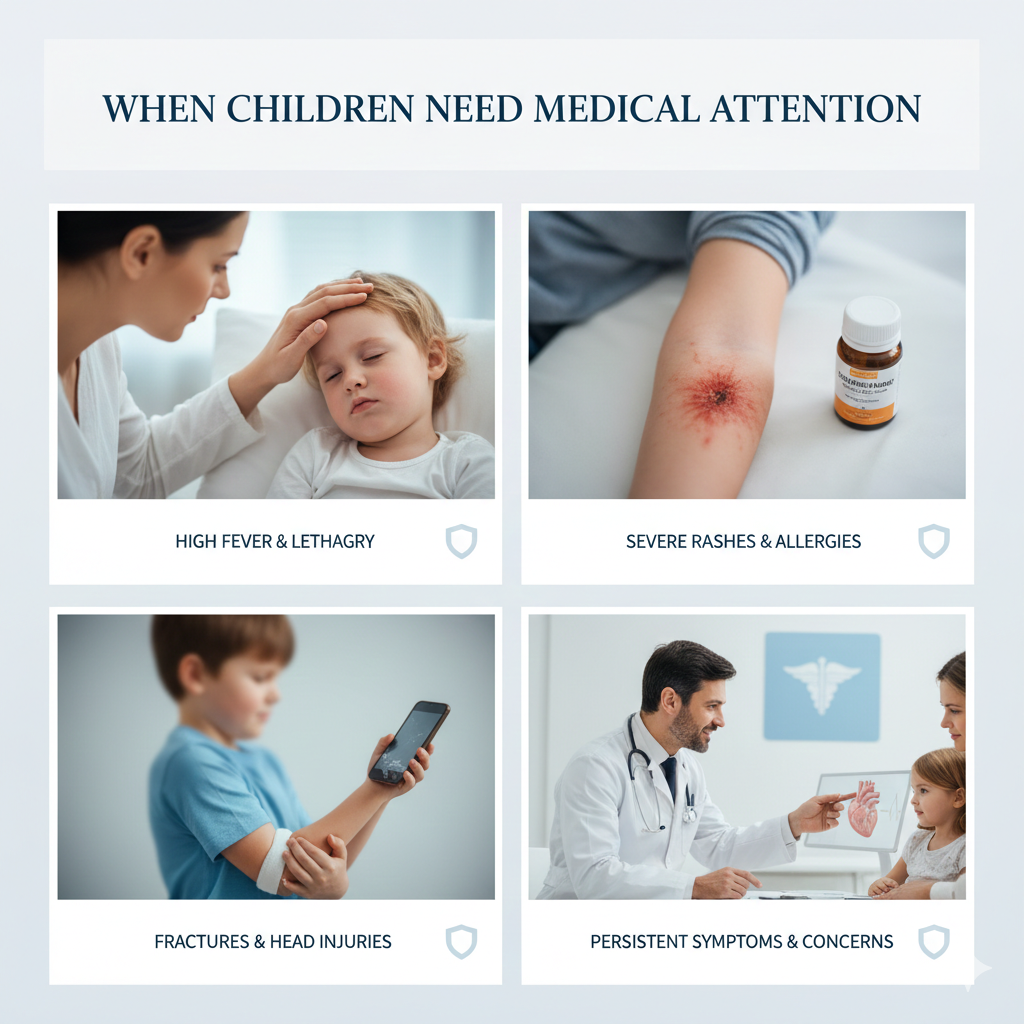
When Children Need Medical Attention
Parenting is a journey filled with minor coughs, scrapes, and sniffles, but distinguishing between a routine childhood illness and a critical medical emergency is one of the most vital skills for any caregiver. At Mediquickinfo, we recognize that children’s physiological systems are fundamentally different from those of adults; they can compensate for illness remarkably well until they suddenly cannot. This rapid transition from stable to critical status makes timely clinical intervention essential. Understanding the “red flags”—symptoms that indicate a deep-seated pathology—is the foundation of pediatric safety. This 2000+ word comprehensive guide explores the clinical indicators across various body systems that signal when a child requires immediate medical attention.
1. Respiratory Distress: Evaluating Breathing Patterns
Respiratory issues are among the most common reasons for pediatric emergency visits. However, not all coughs are created equal. At Mediquickinfo, we advise parents to look beyond the sound of a cough and evaluate the effort of breathing. Clinical signs of respiratory distress include “retractions,” where the skin pulls in around the ribs, collarbone, or the base of the neck with every breath. If you notice “nasal flaring”—the nostrils widening to draw in more air—it indicates that the child is working significantly harder than normal to oxygenate their body.
Another critical indicator is the respiratory rate. Tachypnea (rapid breathing) can be a sign of pneumonia, bronchiolitis, or severe asthma. If a child’s breathing becomes noisy, presenting with a high-pitched sound on inhalation (stridor) or exhalation (wheezing), it indicates an airway obstruction or narrowing. Furthermore, if a child’s lips or fingernails develop a bluish tint (cyanosis), it is a sign of profound oxygen deprivation and constitutes an immediate medical emergency. Consistent monitoring of these physical markers can be the difference between a controlled treatment and an acute respiratory failure.
2. Fever Thresholds and Neurological Changes
Fever is the body’s natural response to infection, but its significance varies greatly by age. At Mediquickinfo, we follow strict clinical guidelines: any infant under 3 months of age with a rectal temperature of 100.4°F (38°C) or higher requires immediate evaluation, as they are at high risk for serious bacterial infections. For older children, the behavior of the child during a fever is often more telling than the number on the thermometer. A child who remains alert and hydrated is generally less concerning than one who is lethargic even after the fever drops.
Neurological symptoms are always high-priority. A child who is unusually drowsy, difficult to wake, or exhibits extreme irritability (inconsolable crying) needs medical assessment. More critically, a “stiff neck” combined with a high fever and a purple, blotchy rash that doesn’t fade when pressed (non-blanching rash) are classic markers of meningitis. Seizures, even those triggered by a rapid rise in temperature (febrile seizures), should always be evaluated by a professional to rule out underlying neurological disorders or acute infections of the central nervous system.
3. Dehydration and Gastrointestinal Warning Signs
Vomiting and diarrhea are frequent childhood occurrences, but the primary danger lies in the resulting fluid loss. Children, especially infants, have a much higher surface-area-to-volume ratio than adults, making them susceptible to rapid dehydration. Mediquickinfo clinical data identifies key markers of dehydration: a dry mouth, lack of tears when crying, and significantly fewer wet diapers (less than four in 24 hours). In infants, a “sunken soft spot” (fontanelle) on the head is a late and serious sign of dehydration.
Beyond dehydration, the nature of abdominal pain is critical. Persistent, severe pain, especially if localized to the lower right quadrant, may indicate appendicitis. If vomiting becomes “bilious” (bright green) or if there is blood in the stool (resembling currant jelly), it could signal a surgical emergency like intussusception or bowel obstruction. At Mediquickinfo, we stress that any child who cannot keep even small sips of water down for several hours requires intravenous fluid support to prevent metabolic imbalances.
4. Allergic Reactions and Anaphylaxis
While mild rashes are common, acute allergic reactions can escalate into anaphylaxis—a life-threatening systemic response. Signs that a child needs immediate attention include sudden swelling of the face, lips, or tongue, and a widespread hive-like rash. If the child complains of a “tight throat,” a “funny feeling in the mouth,” or begins to wheeze shortly after eating a new food or being stung by an insect, it is an emergency. At Mediquickinfo, we emphasize that anaphylaxis requires epinephrine and immediate transport to a hospital, even if symptoms seem to improve initially.
Conclusion: Trusting Clinical Indicators & Parental Instinct
Protecting a child’s health requires a synergy of clinical knowledge and parental intuition. While most childhood illnesses can be managed at home, recognizing the red flags—respiratory distress, neurological changes, and severe dehydration—is non-negotiable for safety. At Mediquickinfo, we advocate for a proactive approach: when in doubt, consult a pediatric specialist. Your child’s physiological resilience is high, but early intervention is the best tool for ensuring a full and rapid recovery. Trust Mediquickinfo for the evidence-based literacy you need to safeguard your family’s future. Your vigilance today is the foundation of your child’s healthy tomorrow.