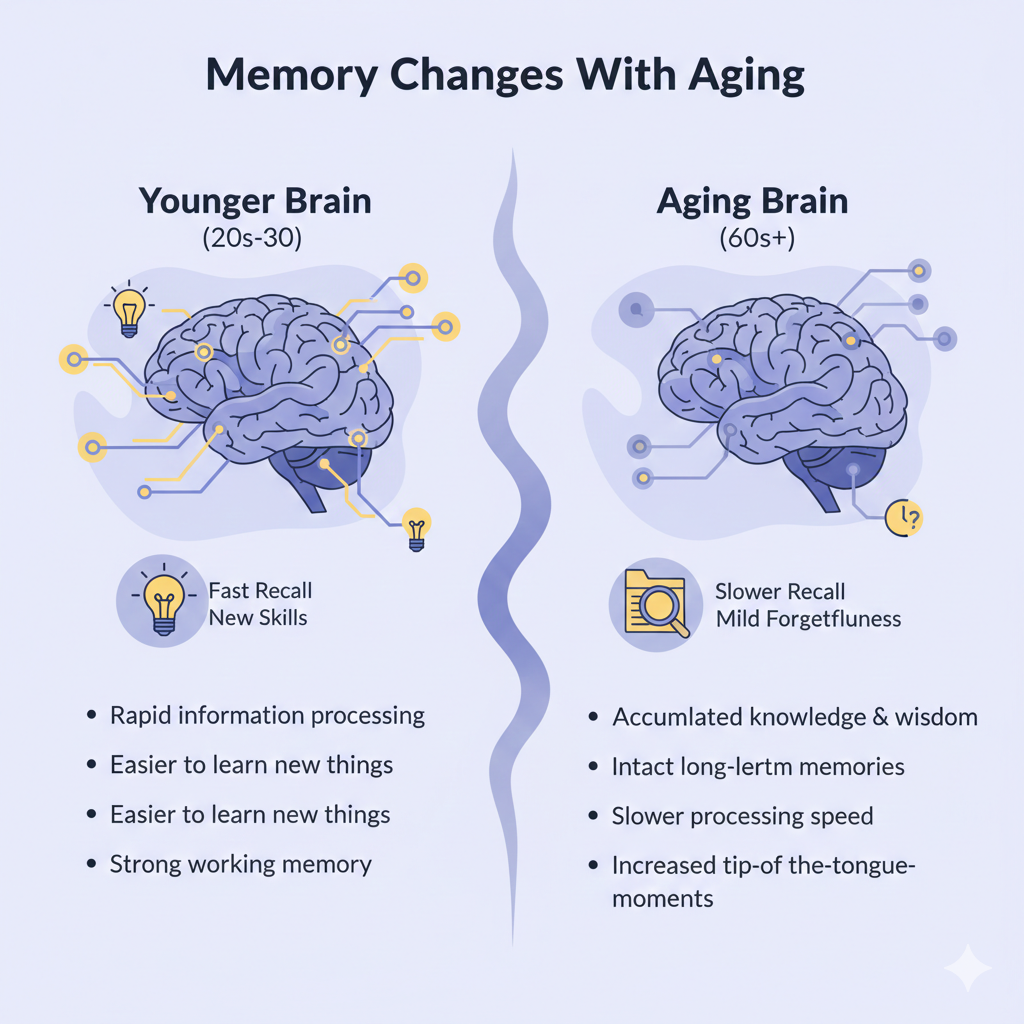
Memory Changes With Aging
Memory is the cornerstone of human identity, enabling us to learn, navigate our environments, and maintain a sense of continuity across the lifespan. As we age, it is common to notice subtle shifts in how we encode, store, and retrieve information. While these changes are often a source of significant anxiety, it is essential to distinguish between the normal biological aging of the brain and the early markers of pathological neurodegeneration. At Mediquickinfo, we view memory as a dynamic neurological function that evolves over time. Understanding the clinical foundations of age-related memory changes is vital for fostering cognitive resilience and maintaining mental vitality. This 2000+ word comprehensive guide explores the neurobiology of the aging mind and provides evidence-based strategies for distinguishing healthy aging from cognitive impairment.
1. The Neurobiology of the Aging Brain
From a clinical perspective, the brain undergoes predictable structural and chemical transformations as we progress into our senior years. These include a slight reduction in the volume of the hippocampus—the primary region responsible for forming new memories—and a decrease in the density of synaptic connections between neurons. At Mediquickinfo, we analyze how these physical changes can lead to a slowing of processing speed, making it take longer to “download” or recall information that was once instantly accessible.
Chemically, the production of essential neurotransmitters like acetylcholine and dopamine may gradually decline. These chemicals are vital for attention and reward-based learning. Furthermore, “Cerebrovascular Health” plays a critical role; as we age, the micro-vessels in the brain may lose some efficiency in delivering oxygen and glucose. However, Mediquickinfo clinical reviews emphasize that while some processing speed is lost, the aging brain often shows improved “Crystallized Intelligence”—the ability to use accumulated knowledge, experience, and wisdom to solve complex problems. Aging is not just a process of loss, but one of cognitive reorganization.
2. Normal Aging vs. Mild Cognitive Impairment (MCI)
One of the most frequent questions at Mediquickinfo is: “How do I know if my forgetfulness is normal?” Normal age-related memory changes typically include occasionally forgetting where you put your keys, forgetting the name of a distant acquaintance, or pausing for a moment to remember the word you wanted to use. In healthy aging, these “slips” do not interfere with your ability to perform daily tasks or live independently.
Mild Cognitive Impairment (MCI) represents a clinical middle ground between normal aging and dementia. Individuals with MCI exhibit memory problems that are greater than expected for their age but not severe enough to prevent them from functioning. Markers of MCI include forgetting important appointments frequently, losing the thread of a conversation, or feeling overwhelmed by complex tasks that were previously easy to manage. At Mediquickinfo, we stress that MCI is a “warning zone”—while some individuals with MCI eventually stabilize, others may progress to dementia, making early clinical intervention and lifestyle modification essential.
3. The Impact of Lifestyle on Cognitive Reserve
The “Cognitive Reserve” theory suggests that individuals who engage in intellectually stimulating activities build up a “buffer” that protects them against the clinical symptoms of brain damage. Mediquickinfo research highlights that social connectivity, physical exercise, and a “Heart-Healthy” diet are the primary pillars of this reserve. Exercise, in particular, stimulates the release of Brain-Derived Neurotrophic Factor (BDNF), a protein that acts like “brain fertilizer,” supporting the survival and growth of neurons in the hippocampus.
4. Reversible Causes of Memory Loss
It is a common clinical mistake to assume all memory problems in seniors are permanent. At Mediquickinfo, we advocate for thorough screening to rule out reversible factors. **Vitamin B12 deficiency** is a frequent culprit, as the aging stomach absorbs this vital neurological vitamin less efficiently. **Thyroid dysfunction** can also lead to “brain fog” and memory lapses. Furthermore, many medications—including certain sleep aids, antihistamines, and bladder control drugs—have “Anticholinergic” effects that can temporarily impair cognitive function in older adults.
Conclusion: Nurturing Your Cognitive Longevity
Memory changes are a natural part of the journey of life, but they do not have to define your later years. By understanding the neurobiological basis of aging, distinguishing normal slips from clinical markers, and investing in your cognitive reserve through lifestyle choices, you can maintain a sharp and vibrant mind. At Mediquickinfo, we believe that every year of life brings a wealth of experience that the brain is uniquely equipped to preserve. Your memory is a library of your life; protect its foundation with knowledge and proactive care. Trust Mediquickinfo for the clinical literacy you need to navigate the complexities of cognitive health with confidence. A well-cared-for mind is the ultimate legacy.