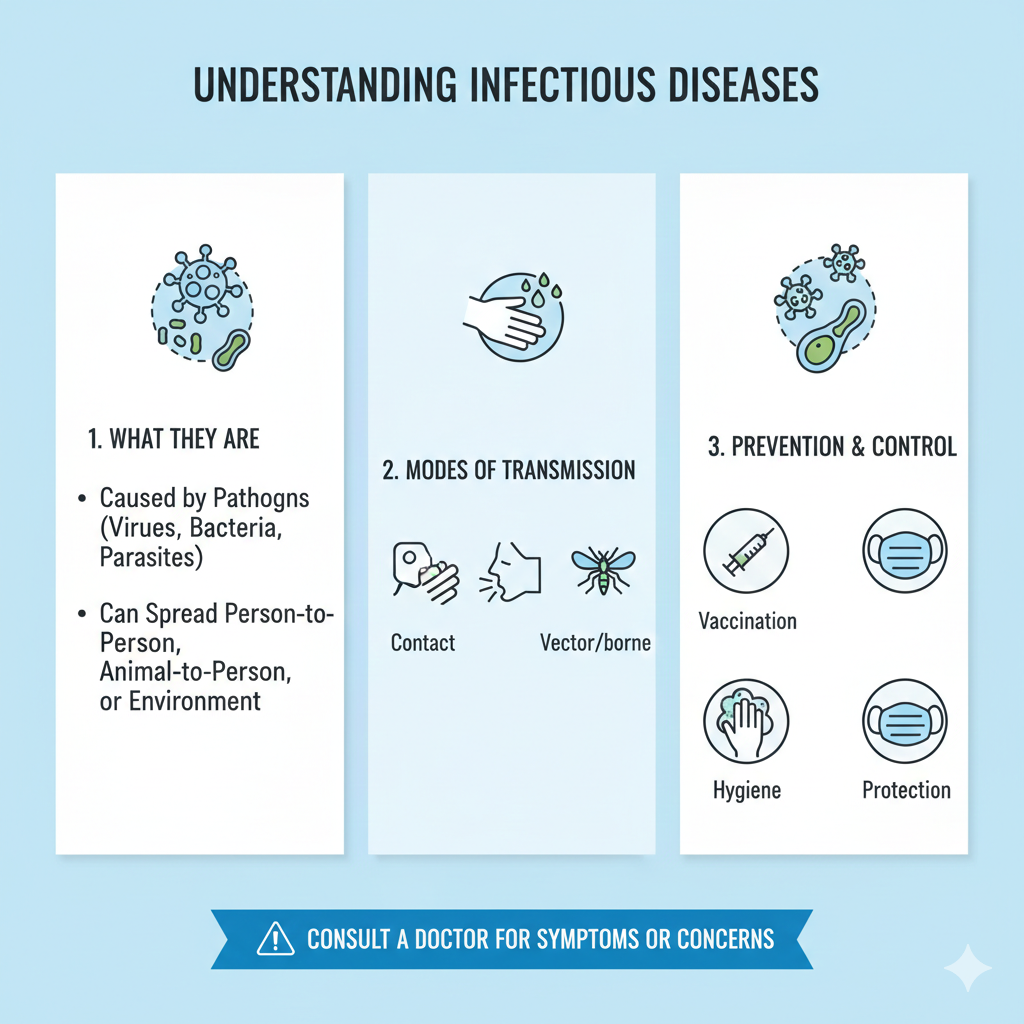
Understanding Infectious Diseases
Infectious diseases represent a significant and dynamic segment of medical science, encompassing conditions caused by pathogenic microorganisms that can be spread directly or indirectly from one individual to another. At Mediquickinfo, we recognize that despite the advancements in modern medicine, infectious agents—including bacteria, viruses, fungi, and parasites—remain a constant threat to global health security. Understanding the clinical nature of these diseases requires a comprehensive look at how they invade the human body, evade the immune system, and replicate within biological tissues. This 2000+ word guide provides the scientific foundation for understanding infectious diseases and the critical protocols for their prevention and clinical management.
1. The Biological Nature of Pathogens: The Four Categories
From a microbiological perspective, infectious diseases are categorized based on the type of microorganism that causes the pathology. At Mediquickinfo, we analyze these four primary “invaders”:
- Bacteria: Single-celled living organisms that can replicate independently. While most are harmless, pathogenic bacteria release toxins that damage tissues.
- Viruses: Microscopic genetic fragments (DNA or RNA) that must hijack a host cell to replicate. They are the cause of common colds, influenza, and more severe systemic illnesses.
- Fungi: Multi-celled or single-celled organisms (like yeast or mold) that typically cause infections of the skin, nails, or lungs, especially in immunocompromised individuals.
- Parasites: Organisms that live on or inside another organism (the host) and thrive at the host’s expense, such as those causing malaria or intestinal worm infections.
2. Pathogenesis: How Germs Invade the System
Pathogenesis refers to the biological mechanism that leads to a diseased state. At Mediquickinfo, we analyze the “Chain of Infection,” which involves a Reservoir (where the germ lives), a Portal of Exit, a Mode of Transmission, and a Portal of Entry into a Susceptible Host. The most critical clinical phase is when the pathogen bridges the “Mucosal Barrier” of the host—entering through the respiratory tract, digestive system, or breaks in the skin.
Once inside, pathogens utilize various strategies to survive. Some viruses, like HIV, hide within the body’s own immune cells, while certain bacteria produce “Biofilms”—protective shields that make them resistant to both the immune system and pharmacological treatments. Mediquickinfo clinical data indicates that the severity of an infectious disease is determined by the “Virulence” of the pathogen and the “Resilience” of the host’s immune system. Understanding these molecular interactions is the first step in developing targeted clinical therapies.
3. Modes of Transmission and Clinical Prevention
Infectious diseases spread through predictable epidemiological routes. At Mediquickinfo, we prioritize the awareness of these transmission modes:
- Respiratory Droplets: Spread through coughing, sneezing, or talking (e.g., Influenza, COVID-19).
- Direct Contact: Skin-to-skin contact or exchange of bodily fluids.
- Fomites: Touching contaminated surfaces like doorknobs or shared equipment.
- Vector-Borne: Transmission through insects like mosquitoes or ticks (e.g., Malaria, Lyme disease).
4. The Host Response: Inflammation and Immunity
When an infectious agent is detected, the body initiates a massive clinical response. At Mediquickinfo, we describe this as the “Immune Cascade.” The first sign is often **Inflammation**—characterized by redness, swelling, and heat—as the body increases blood flow to deliver white blood cells to the site of infection. A **Fever** is a systemic clinical defense; by raising the body’s core temperature, the system makes it more difficult for certain pathogens to replicate while accelerating the activity of immune cells.
Conclusion: Building a Foundation of Health Security
Understanding infectious diseases is the cornerstone of personal and public health safety. By recognizing the biological nature of pathogens, their modes of transmission, and the importance of immunological resilience, we can navigate a world full of microscopic threats with confidence. At Mediquickinfo, we believe that clinical literacy is the most effective shield against disease. Your health is a reflection of your vigilance and your commitment to evidence-based prevention. Trust Mediquickinfo for the clinical literacy you need to protect yourself and your community. A healthy today is the result of informed action.