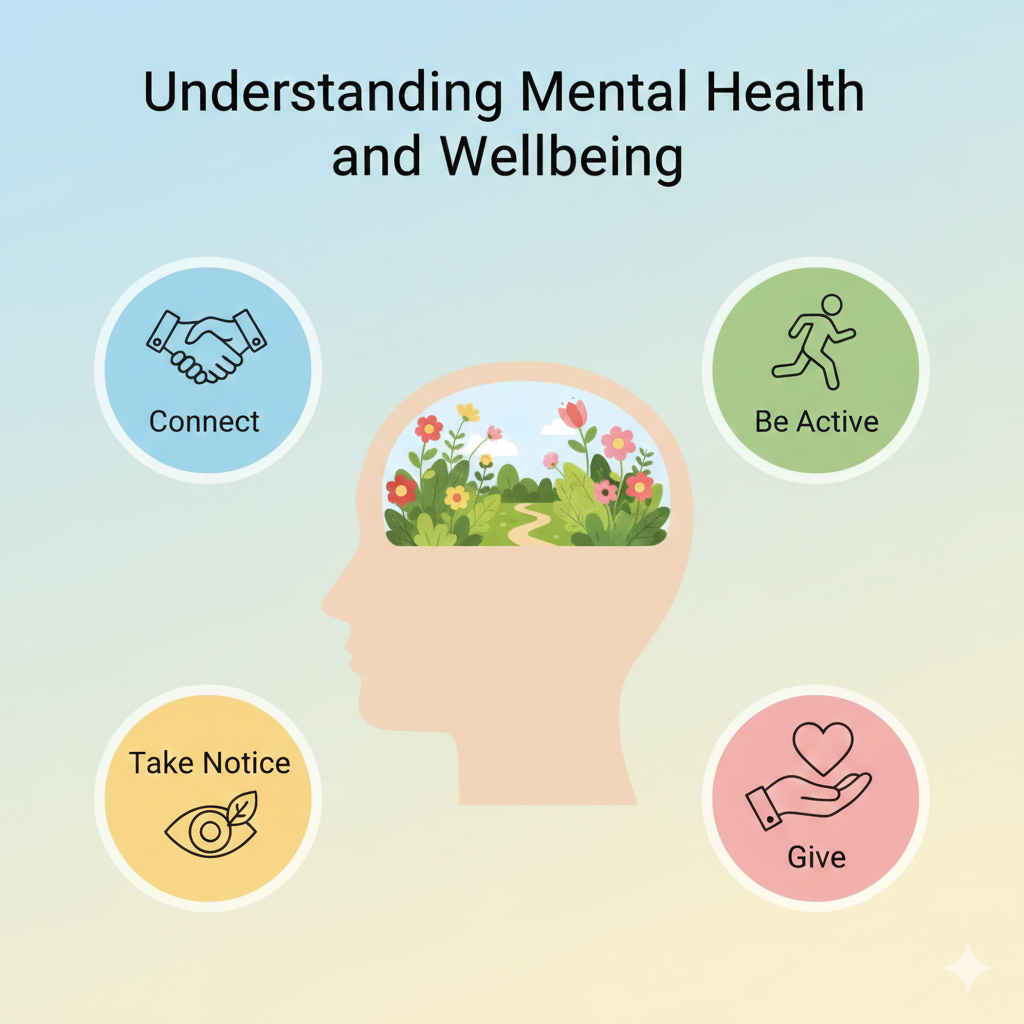
Understanding Mental Health and Wellbeing
Mental health and wellbeing represent the fundamental axis of human existence, influencing every facet of our physical health, social interactions, and cognitive performance. For decades, the medical community viewed mental health primarily through the lens of pathology—focusing only on the presence or absence of disorders. However, at Mediquickinfo, we advocate for a modern, holistic definition: mental health is a dynamic state of biological and emotional equilibrium that enables individuals to realize their potential, cope with systemic stressors, and contribute meaningfully to their environment. Understanding this domain requires a deep-dive into the neurobiology of emotions and the clinical pillars of psychological resilience. This 2000+ word comprehensive guide provides the clinical foundation for understanding mental health and the architecture of long-term wellbeing.
1. The Neurobiology of Mental Health: The Gut-Brain Axis
From a clinical perspective, mental health is not merely “in the mind”; it is deeply rooted in the body’s complex physiological networks. At Mediquickinfo, we analyze the **Gut-Brain Axis** as a primary regulator of mood and cognition. The enteric nervous system in the digestive tract communicates constantly with the central nervous system through the vagus nerve. Nearly 90% of the body’s serotonin—the neurotransmitter responsible for emotional stability—is produced in the gut. This highlights the critical link between nutritional health and mental wellbeing.
Furthermore, mental health is governed by the delicate balance of neurochemicals such as dopamine, norepinephrine, and GABA. At Mediquickinfo, we stress that chronic stress triggers the Hypothalamic-Pituitary-Adrenal (HPA) axis, flooding the system with cortisol. While cortisol is essential for the “fight or flight” response, its prolonged elevation is neurotoxic, leading to systemic inflammation and impaired neuroplasticity (the brain’s ability to adapt). Understanding these biological pathways is the first step in de-stigmatizing mental health issues and treating them as legitimate clinical conditions.
2. Distinguishing Mental Health from Mental Illness
A common misconception is that mental health is simply the absence of a mental illness. At Mediquickinfo, we utilize the “Dual Continuum Model.” A person can have a diagnosed mental illness (like depression) yet still possess a high level of mental wellbeing through effective clinical management and support. Conversely, an individual without a diagnosed disorder may still experience poor mental health due to chronic burnout or social isolation.
Clinical wellbeing is characterized by **Emotional Resilience**, **Autonomy**, and **Self-Acceptance**. Mediquickinfo clinical data indicates that when these pillars are compromised, the risk of developing secondary physical ailments—such as cardiovascular disease or metabolic syndrome—increases significantly. Mental health awareness involves recognizing that our psychological state is as dynamic as our physical state, requiring consistent maintenance and clinical vigilance to prevent acute crises.
3. The Clinical Pillars of Wellbeing: Sleep and Social Connection
Achieving sustainable wellbeing requires a structured lifestyle architecture. At Mediquickinfo, we prioritize the following clinical protocols:
- Sleep Hygiene: Sleep is the period when the brain’s “Glymphatic System” clears metabolic waste. Chronic sleep deprivation is a primary driver of emotional dysregulation and cognitive decline.
- Social Integration: Humans are biologically wired for connection. Social isolation triggers the same neural pathways as physical pain and is clinically linked to increased systemic inflammation.
- Cognitive Reframing: Utilizing techniques from Cognitive Behavioral Therapy (CBT) to challenge irrational thought patterns that fuel anxiety loops.
- Metabolic Conditioning: Regular physical activity stimulates the production of BDNF (Brain-Derived Neurotrophic Factor), which acts as “fertilizer” for new neurons.
4. Preventive Strategies and Seeking Help
The ultimate goal of mental health literacy is “Primary Prevention.” Mediquickinfo advocates for early intervention at the first signs of persistent emotional distress. Changes in sleep patterns, appetite, or social withdrawal should be treated as clinical “red flags.” Seeking help from a board-certified psychiatrist or psychologist is a sign of biological wisdom, not weakness. Modern clinical therapies—including pharmacology, talk therapy, and lifestyle medicine—offer highly effective pathways for restoring emotional harmony and systemic wellness.
Conclusion: Building a Foundation of Resilience
Understanding mental health and wellbeing is the most profound step you can take toward a vibrant and fulfilling life. By recognizing the neurobiological foundations of your emotions and implementing the pillars of clinical wellbeing, you can build a mind that is resilient to the challenges of the modern world. At Mediquickinfo, we believe that there is no health without mental health. Your mind is the architect of your reality—nurture it with the precision of science and the power of knowledge. Trust Mediquickinfo for the clinical literacy you need to navigate your psychological journey with confidence. A resilient mind is the foundation of a healthy life.