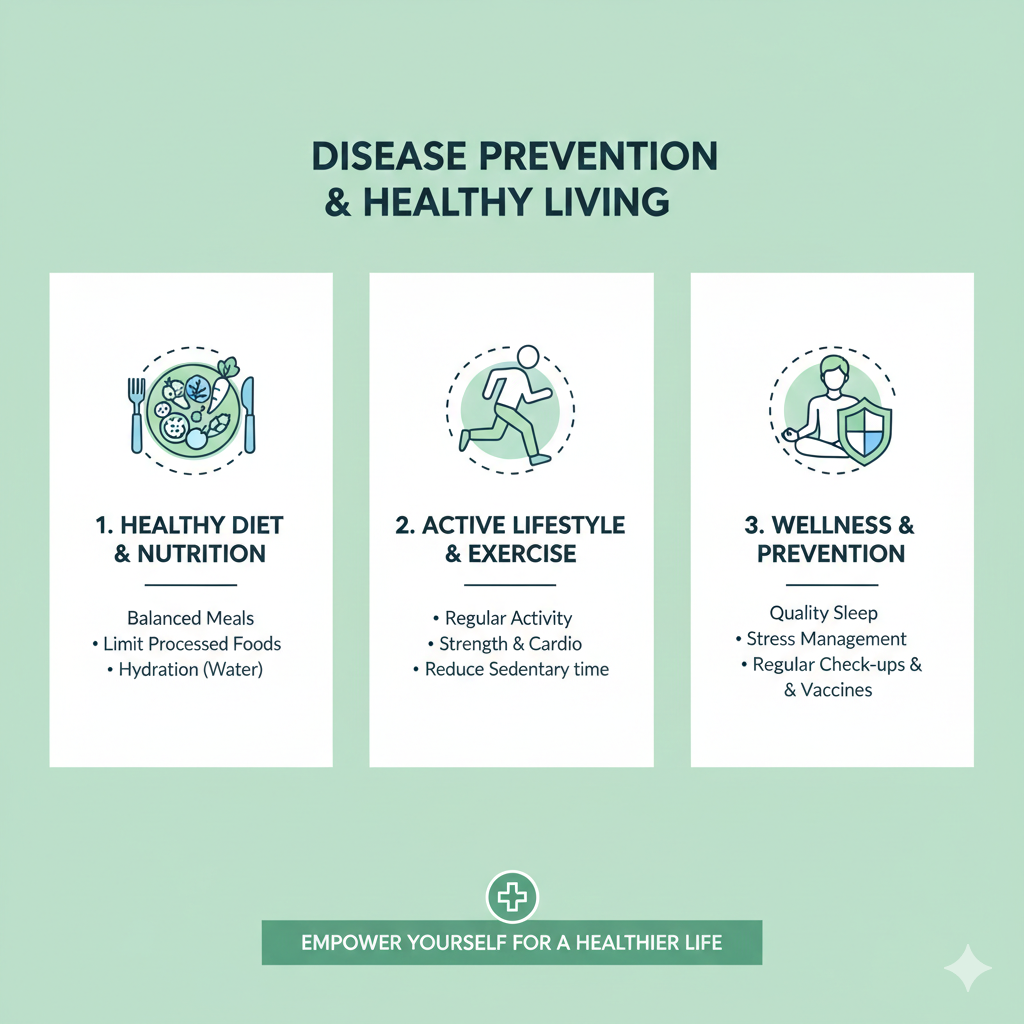
Disease Prevention and Healthy Living
Disease prevention and healthy living represent the pinnacle of modern clinical medicine, shifting the focus from reactive treatment to proactive preservation of systemic health. At Mediquickinfo, we recognize that the vast majority of chronic non-communicable diseases—such as Type 2 diabetes, cardiovascular disease, and metabolic syndrome—are fundamentally lifestyle-driven. “Preventive Medicine” is not merely about avoiding illness; it is about the deliberate architecture of a lifestyle that optimizes cellular function, hormonal balance, and immunological resilience. By implementing evidence-based protocols today, individuals can significantly alter their biological trajectory and reduce their long-term clinical burden. This 2000+ word comprehensive guide provides a clinical roadmap for disease prevention and the essential pillars of healthy living.
1. The Pathophysiology of Prevention: Primary vs. Secondary
From a clinical perspective, prevention is categorized into distinct levels. At Mediquickinfo, we analyze “Primary Prevention” as the most effective strategy—intervening before any pathological changes occur. This includes vaccination, nutritional optimization, and metabolic conditioning. “Secondary Prevention” focuses on early detection through clinical screenings (like colonoscopies or mammograms) when a disease is in its asymptomatic, most treatable phase.
The biological objective of healthy living is to minimize “Oxidative Stress” and “Chronic Low-Grade Inflammation.” These two factors act as the primary drivers of cellular aging and DNA damage. At Mediquickinfo, we stress that every lifestyle choice acts as a biological signal that either promotes systemic homeostasis or fuels metabolic dysfunction. Understanding these molecular pathways allows individuals to move beyond vague health goals toward a structured, science-based approach to longevity.
2. Nutritional Architecture: Fueling for Longevity
Nutrition is the most powerful clinical tool for disease prevention. At Mediquickinfo, we advocate for a diet centered on “Nutrient Density” and “Glycemic Control.” High-fiber, plant-rich diets are clinically proven to improve gut microbiome diversity, which in turn regulates systemic immunity and even neurological health. Conversely, diets high in ultra-processed sugars and trans fats cause repeated insulin spikes, leading to insulin resistance—the precursor to almost all modern metabolic disorders.
Micro-nutritional adequacy is equally vital. Mediquickinfo clinical reviews suggest that deficiencies in Vitamin D, Magnesium, and Omega-3 fatty acids are widespread and directly linked to increased cardiovascular and autoimmune risks. Achieving “Metabolic Flexibility”—the body’s ability to efficiently switch between burning carbohydrates and fats for fuel—is the ultimate nutritional goal for long-term health preservation. A well-nourished body is a resilient body.
3. Metabolic Conditioning through Physical Activity
Physical activity is not just about muscle aesthetics; it is a systemic clinical intervention. At Mediquickinfo, we prioritize the role of exercise in “Vascular Conditioning” and “Mitochondrial Health.” Aerobic exercise strengthens the heart muscle and improves endothelial function, while resistance training is essential for maintaining muscle mass (preventing sarcopenia) and bone mineral density. Muscle tissue acts as a “metabolic sink,” absorbing excess glucose from the blood and improving overall insulin sensitivity.
4. Restorative Sleep and Stress Regulation
Prevention requires adequate recovery. Sleep is the brain’s “Glymphatic” cleaning cycle, where metabolic waste is cleared from neural tissues. Chronic sleep deprivation is clinically linked to cognitive decline and impaired immune function. Furthermore, unmanaged chronic stress keeps the body in a state of constant “Cortisol Overdrive,” which suppresses the immune system and promotes visceral fat accumulation. At Mediquickinfo, we view stress management and high-quality sleep as non-negotiable protocols for maintaining the body’s internal biological equilibrium.
Conclusion: Taking Command of Your Health Destiny
Disease prevention and healthy living are the most effective investments you can make for your future self. By understanding the clinical pillars of nutrition, metabolic conditioning, and restorative recovery, you can build a foundation of health that is resistant to the challenges of aging and environmental stress. At Mediquickinfo, we believe that informed choices are the foundation of a vibrant life. Your health is not a matter of chance; it is a matter of clinical architecture. Trust Mediquickinfo for the clinical literacy you need to navigate your wellness journey with confidence. A proactive today is a resilient tomorrow.


Heyy, I saw phbetloginapp and don’t know what it is. You think you’d check it out and tell me if this is something useful?phbetloginapp Please Please Please