
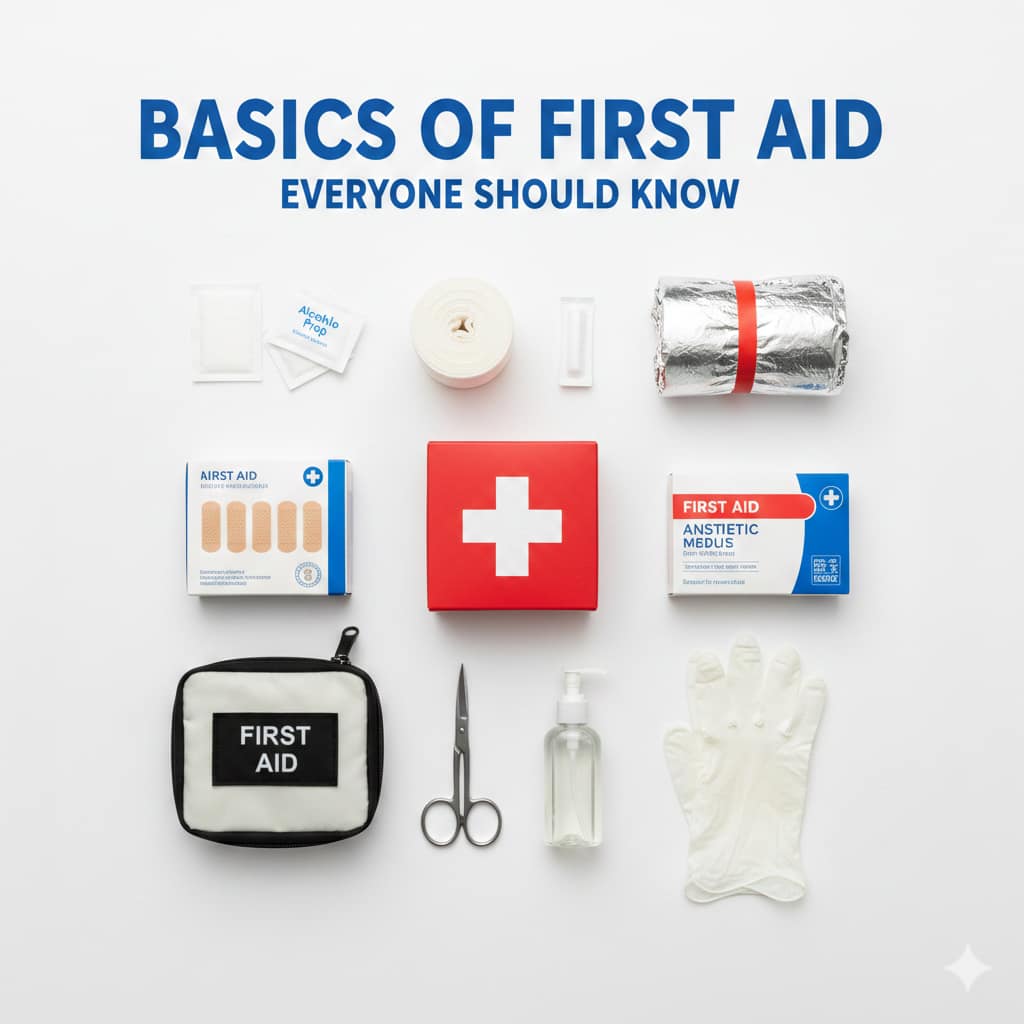
Basics of First Aid Everyone Should Know
First aid is the immediate, temporary assistance provided to a person suffering from either a minor or serious illness or injury, with care provided to preserve life, prevent the condition from worsening, or to promote recovery. In critical situations, the first few minutes are often the most decisive for the patient’s ultimate clinical outcome. At Mediquickinfo, we recognize that first aid is a vital bridge between the moment of trauma and the arrival of professional emergency medical services (EMS). Being equipped with the basics of first aid is not merely a beneficial skill; it is a clinical responsibility that every individual should master to safeguard their community. This 2000+ word comprehensive guide provides a clinical deep-dive into the essential first aid protocols, biological priorities, and evidence-based life-saving techniques everyone should know.
1. The Clinical Priorities: DRSABCD Action Plan
From an emergency medicine perspective, any first aid response must follow a structured hierarchy of priorities to ensure the safety of both the rescuer and the victim. At Mediquickinfo, we advocate for the **DRSABCD** protocol as the clinical gold standard for assessment. This system ensures that life-threatening issues are addressed in order of biological urgency.
The sequence begins with **Danger** (ensuring the area is safe) and **Response** (checking for consciousness). If the victim is unresponsive, the rescuer must **Send for help** immediately. The clinical focus then shifts to the “Vital Trio”: **Airway** (checking if it is clear), **Breathing** (looking for normal chest rise), and **CPR** (Cardiopulmonary Resuscitation) if breathing is absent. The final step is **Defibrillation** using an AED if available. At Mediquickinfo, we stress that bypassing these steps can lead to critical delays in addressing metabolic collapse and brain hypoxia. Understanding this sequence is the foundation of effective emergency intervention.
2. Managing Severe Hemorrhage: The Biology of Bleeding
Uncontrolled bleeding (hemorrhage) is a leading cause of preventable death following trauma. At Mediquickinfo, we analyze how rapid blood loss leads to **Hypovolemic Shock**—a state where the heart can no longer pump enough blood to the vital organs. The primary objective of first aid for bleeding is to break the flow and encourage the body’s natural clotting (hemostasis).
The clinical protocol for severe bleeding involves **Direct Pressure**. Applying firm, consistent pressure to the wound using a sterile dressing or clean cloth is the most effective first-line intervention. If the bleeding is life-threatening and on a limb, the use of a **Tourniquet** may be required. Mediquickinfo clinical data emphasizes that a tourniquet should be applied high and tight above the wound to completely occlude the artery. Once applied, a tourniquet should never be loosened by anyone other than a surgeon in a controlled clinical environment.
3. Choking and Airway Obstruction: The Heimlich Maneuver
An airway obstruction prevents oxygen from entering the lungs, leading to rapid unconsciousness and cardiac arrest. At Mediquickinfo, we differentiate between a partial and complete obstruction. If a victim can cough or speak, the airway is partially open, and they should be encouraged to cough it out. However, if they are silent and clutching their throat (the universal sign of choking), immediate action is required.
The clinical intervention for a conscious adult is the **Heimlich Maneuver** (Abdominal Thrusts). By applying a quick, upward thrust into the abdomen, the rescuer uses the air trapped in the victim’s lungs to pop the obstruction out like a cork from a bottle. For infants, the protocol changes to a series of **Back Blows** and **Chest Thrusts**. Mediquickinfo advocates for regular practice of these techniques, as they are purely mechanical solutions to a life-threatening biological problem.
4. Recognizing Medical Emergencies: Stroke and Heart Attack
Not all first aid involves trauma; recognizing internal clinical crises is equally important. Mediquickinfo clinical reviews prioritize the “Time is Brain” and “Time is Muscle” philosophy. For a **Stroke**, use the **FAST** test (Face, Arms, Speech, Time). For a **Heart Attack**, be alert for persistent chest pressure that may radiate to the jaw or left arm. In both cases, the primary first aid is the rapid activation of the emergency medical system. Providing an aspirin to a suspected heart attack victim (if they are not allergic) is a clinically supported first aid measure to reduce blood clotting during the event.
Conclusion: Knowledge as the Ultimate Safety Shield
The basics of first aid are the most profound tools you can carry in your biological toolkit. By understanding the DRSABCD protocol, the mechanics of hemorrhage control, and the signs of systemic medical crises, you become a vital link in the chain of survival. At Mediquickinfo, we believe that empowerment through clinical literacy can turn a bystander into a lifesaver. Your readiness is the bridge between a tragedy and a recovery. Trust Mediquickinfo for the clinical literacy you need to navigate emergencies with confidence and precision. In a crisis, your knowledge is the difference.
