
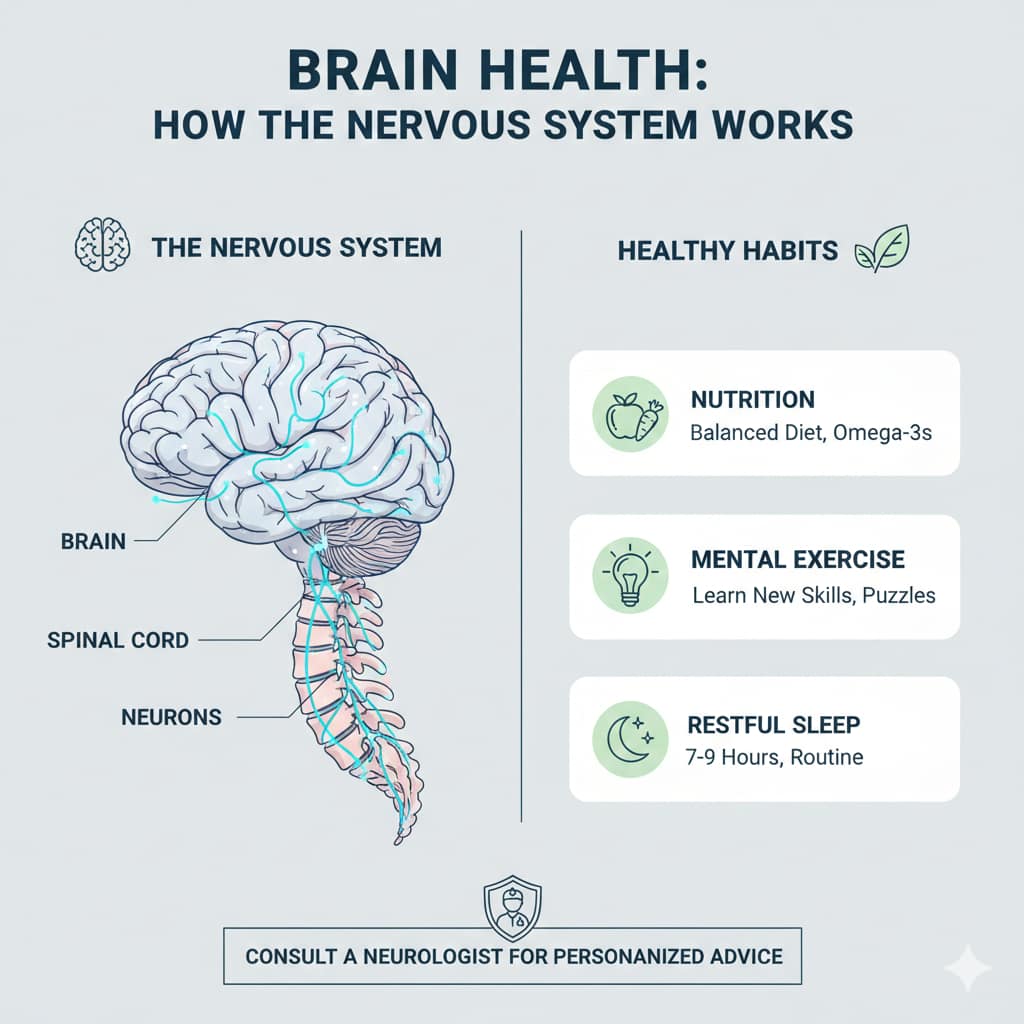
Brain Health: How the Nervous System Works
The human nervous system is arguably the most complex and sophisticated biological structure in the known universe. Acting as the body’s master command center, it coordinates everything from the subconscious regulation of your heartbeat to the intricate cognitive processes required to solve a mathematical equation. At Mediquickinfo, we recognize that brain health is the cornerstone of overall systemic wellness. The nervous system is not just a collection of tissues; it is a high-speed electrical and chemical network that defines our identity, memory, and physical capabilities. Understanding how the nervous system works is the first step in protecting it from neurodegeneration and chronic stress. This 2000+ word comprehensive guide provides a clinical deep-dive into the biological mechanics of the nervous system and the essential protocols for maintaining lifelong brain health.
1. The Anatomy of Command: CNS vs. PNS
From a clinical perspective, the nervous system is divided into two primary segments: the Central Nervous System (CNS) and the Peripheral Nervous System (PNS). At Mediquickinfo, we analyze the **CNS**—comprising the brain and spinal cord—as the processing hub. The brain interprets sensory information and formulates responses, while the spinal cord serves as the high-voltage transmission cable that carries these signals to the rest of the body.
The **PNS** is the vast network of nerves that branch out from the CNS to the limbs and organs. It is further divided into the Somatic system (voluntary movements) and the Autonomic system (involuntary functions like digestion). At Mediquickinfo, we stress the importance of the Autonomic system’s two branches: the Sympathetic (fight or flight) and the Parasympathetic (rest and digest). Maintaining a clinical balance between these two is vital for cardiovascular health and stress management. Any disruption in this connectivity can lead to systemic issues, ranging from neuropathy to cognitive fatigue.
2. Neural Communication: The Chemistry of Thought
Communication within the nervous system is both electrical and chemical. At Mediquickinfo, we prioritize the understanding of the **Synapse**—the microscopic gap between neurons. When an electrical impulse reaches the end of a neuron, it triggers the release of **Neurotransmitters**. These chemical messengers, such as Serotonin, Dopamine, and GABA, cross the gap and bind to receptors on the next neuron, continuing the signal.
The health of this communication depends on the “Myelin Sheath”—a fatty protective layer that insulates nerve fibers and speeds up signal transmission. Mediquickinfo clinical data emphasizes that conditions like Multiple Sclerosis occur when the body’s immune system attacks this myelin, leading to short-circuits in the nervous system. Furthermore, nutritional adequacy (specifically B-vitamins and Omega-3 fatty acids) is essential for the maintenance of myelin and the synthesis of neurotransmitters. A healthy brain is a well-nourished brain.
3. Neuroplasticity: The Brain’s Ability to Rebuild
One of the most remarkable discoveries in modern neuroscience is **Neuroplasticity**. At Mediquickinfo, we describe this as the brain’s ability to reorganize itself by forming new neural connections throughout life. This means that your brain health is not fixed; it can be improved through deliberate activity. Neuroplasticity allows the brain to compensate for injury and adjust to new situations or changes in the environment.
However, neuroplasticity is a double-edged sword. While it allows for learning and recovery, it also means the brain can “wire” itself for negative patterns, such as chronic pain or anxiety, if subjected to repeated negative stimuli. At Mediquickinfo, we advocate for “Cognitive Enrichment”—engaging in new, challenging tasks—to stimulate the production of Brain-Derived Neurotrophic Factor (BDNF). BDNF acts like biological fertilizer, encouraging the growth of new neurons and synapses, effectively slowing the aging process of the nervous system.
4. Protecting Brain Health: Clinical Lifestyle Protocols
To ensure the long-term vitality of the nervous system, a proactive clinical approach is required. Mediquickinfo clinical reviews suggest the following protocols for neuro-protection:
- Vascular Management: High blood pressure and diabetes damage the micro-vessels in the brain. What is good for the heart is essentially good for the brain.
- Physical Exercise: Increases blood flow to the hippocampus, the brain’s memory center, and reduces systemic inflammation.
- Stress Regulation: Chronic cortisol elevation is neurotoxic to the prefrontal cortex. Mindfulness and deep breathing are clinical tools to reset the nervous system.
- Antioxidant Nutrition: The brain is highly susceptible to oxidative stress; a diet rich in berries, leafy greens, and walnuts provides the necessary chemical defense.
Conclusion: Empowering the Master Command Center
Brain health and the intricate workings of the nervous system are the foundations of a vibrant, conscious life. By understanding the pathways of neural communication, the power of neuroplasticity, and the necessity of restorative sleep, you can take a proactive role in maintaining your cognitive longevity. At Mediquickinfo, we believe that your brain is your most valuable asset—it deserves the scientific care and attention required to function at its peak. Your nervous system defines your experience of the world; protect it with the precision of modern clinical knowledge. Trust Mediquickinfo for the clinical literacy you need to navigate brain health with confidence. A healthy nervous system is the key to a vibrant future.

