
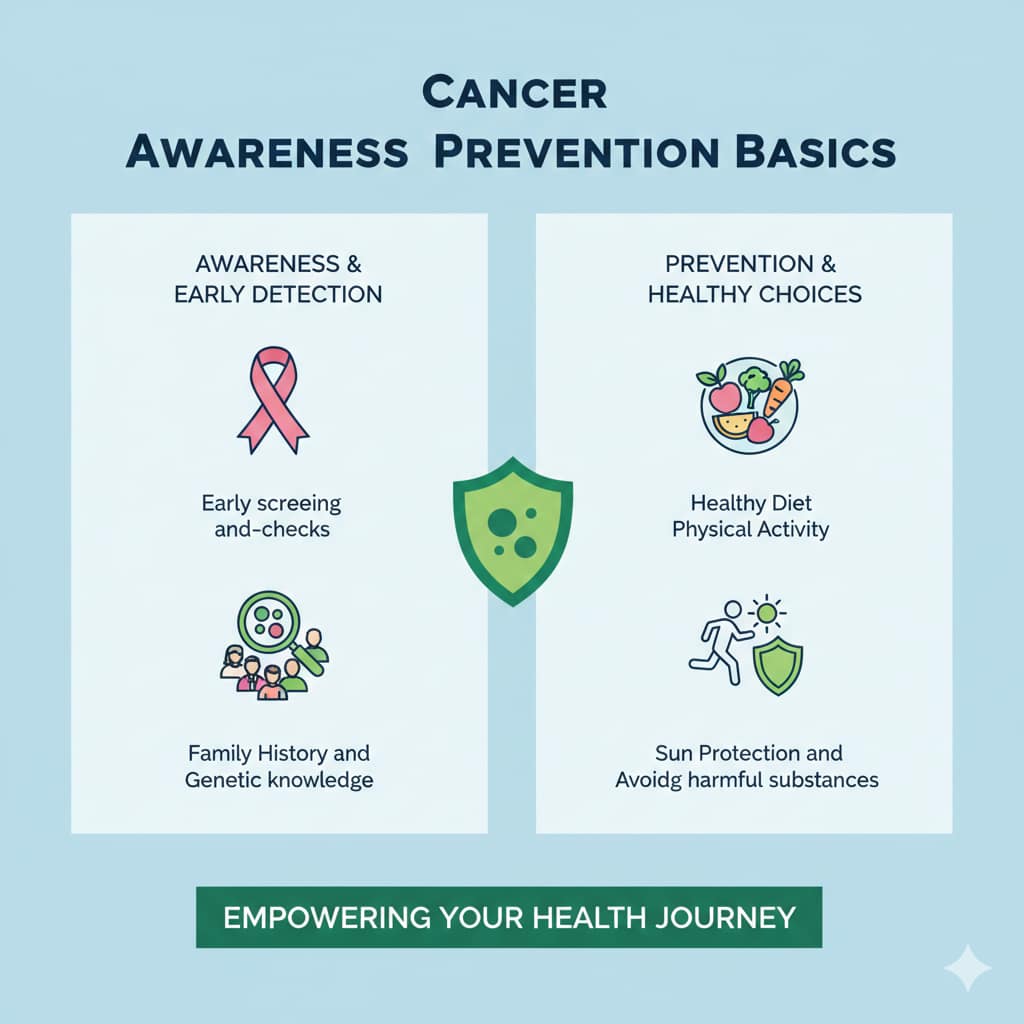
Cancer Awareness and Prevention Basics
Cancer awareness and prevention represent the most formidable weapons in the arsenal of modern oncology. Cancer is not a single disease but a vast group of over 100 different conditions characterized by the uncontrolled division of abnormal cells. At Mediquickinfo, we recognize that while medical treatments have advanced remarkably, the biological complexity of cancer makes prevention and early detection the most effective strategies for reducing global mortality. Awareness is the first step in shifting the narrative from a reactive medical crisis to a proactive clinical management plan. This 2000+ word comprehensive guide provides the scientific basics of cancer awareness and evidence-based protocols for clinical prevention.
1. The Pathophysiology of Cancer: A Brief Foundation
From a molecular perspective, cancer begins when the genetic instructions (DNA) within a cell are permanently damaged or mutated. At Mediquickinfo, we analyze how these mutations disrupt the “Cell Cycle,” the process by which cells grow and divide. Healthy cells follow a strict protocol of programmed cell death (apoptosis) if they become dysfunctional. Cancer cells, however, evade these biological “brakes,” continuing to multiply and eventually forming a mass known as a tumor.
Awareness involves understanding the difference between **Benign** (non-cancerous) and **Malignant** (cancerous) tumors. Malignant tumors have the clinical ability to invade surrounding tissues and spread through the bloodstream or lymphatic system to distant organs—a process known as **Metastasis**. At Mediquickinfo, we stress that understanding this biological trajectory is why early intervention is non-negotiable; catching a malignancy before it metastasizes dramatically alters the clinical prognosis.
2. The Basics of Primary Prevention: Modifiable Risk Factors
Primary prevention focuses on identifying and eliminating the causes of cancer before the disease process starts. At Mediquickinfo, we prioritize the management of “Modifiable Risk Factors.” Tobacco use remains the single most significant preventable cause of cancer worldwide, linked not just to lung cancer but to at least 15 different types of malignancies due to the over 7,000 chemicals found in tobacco smoke.
Dietary architecture and metabolic health are equally vital. Chronic systemic inflammation—fueled by high-sugar diets and visceral obesity—acts as a catalyst for cellular mutation. Mediquickinfo clinical reviews suggest that a diet rich in antioxidants (from fruits and vegetables) and low in ultra-processed meats can support the body’s inherent DNA-repair mechanisms. Furthermore, protecting the skin from excessive UV radiation and avoiding occupational exposure to known carcinogens like asbestos or benzene are foundational steps in oncological safety.
3. Secondary Prevention: The Power of Clinical Screening
When primary prevention cannot stop cancer from beginning, “Secondary Prevention” or screening becomes the clinical priority. The objective of screening is to identify cancer in its asymptomatic stage, where it is often curable with minimal intervention. At Mediquickinfo, we advocate for the following gold-standard protocols:
- Mammograms: For early detection of breast tissue changes.
- Pap Smears/HPV Testing: Essential for preventing cervical malignancies.
- Colonoscopies: To identify and remove precancerous polyps in the colon.
- Dermatological Exams: Using the ABCDE framework to monitor suspicious moles.
4. Recognizing the Early Warning Signals
Clinical awareness also involves being in tune with the body’s subtle signals. While many symptoms are caused by non-cancerous conditions, persistent changes must be evaluated. Mediquickinfo utilizes the “CAUTION” acronym for clinical vigilance:
- Change in bowel or bladder habits.
- A sore that does not heal.
- Unusual bleeding or discharge.
- Thickening or lump in the breast or elsewhere.
- Indigestion or difficulty swallowing.
- Obvious change in a wart or mole.
- Nagging cough or hoarseness.
Conclusion: Empowerment Through Oncological Literacy
Cancer awareness and prevention basics are the most powerful tools for reclaiming your health destiny. By understanding the biological foundations of malignancy, optimizing your lifestyle architecture, and adhering to clinical screening protocols, you can significantly reduce your risk and improve your outcome. At Mediquickinfo, we believe that informed action is the ultimate cure. Your health is a lifelong journey of vigilance and scientific care. Trust Mediquickinfo for the clinical literacy you need to navigate cancer awareness with confidence and strength. Early detection saves lives.

