
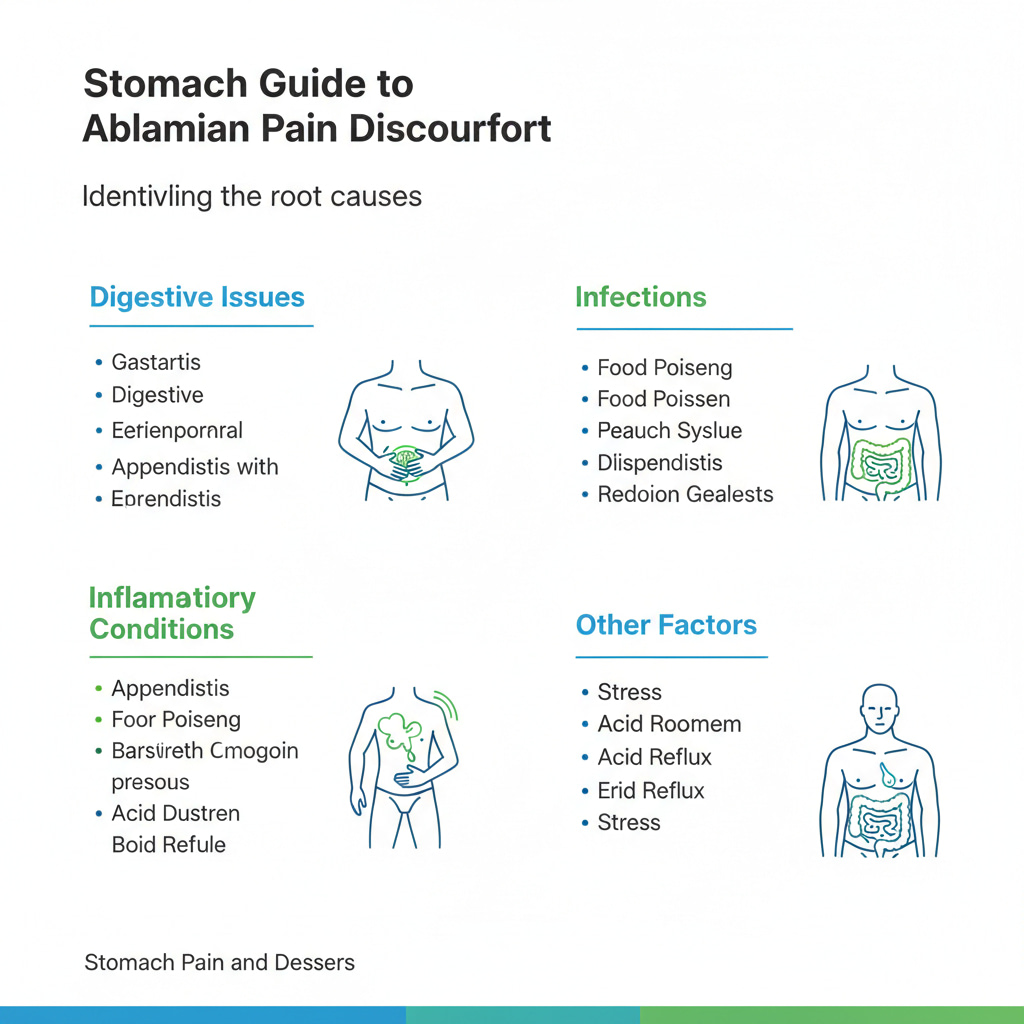
Causes of Stomach Pain and Discomfort
Stomach pain and abdominal discomfort are among the most frequent clinical complaints encountered in medical practice, originating from a diverse range of biological triggers. While often benign and transient, persistent abdominal distress can be the primary signal of complex underlying pathology. At Mediquickinfo, we recognize that “stomach pain” is an umbrella term that patients use to describe discomfort occurring anywhere between the chest and the pelvic region. To provide accurate clinical insight, it is essential to categorize the pain based on its location, intensity, and associated metabolic symptoms. Understanding the causes of stomach pain and discomfort is the first step in differentiating between simple indigestion and a life-threatening emergency. This 2000+ word comprehensive guide provides a clinical deep-dive into the biological pathways and diagnostic markers of abdominal distress.
1. The Anatomy of Discomfort: Identifying the Location
From a clinical diagnostic perspective, the abdomen is divided into four quadrants. At Mediquickinfo, we analyze how the location of pain points toward specific organ dysfunction. Pain in the **Upper Right Quadrant** often originates from the liver or gallbladder, potentially signaling gallstones (cholelithiasis). Pain in the **Upper Left Quadrant** may be related to the spleen or stomach lining.
Discomfort in the **Lower Right Quadrant** is a classic clinical indicator for appendicitis, while the **Lower Left Quadrant** is frequently associated with diverticulitis or irritable bowel syndrome (IBS). At Mediquickinfo, we stress that “Generalized Pain”—discomfort felt in more than half of the abdomen—is often characteristic of systemic issues like a viral infection, indigestion, or gas. Localized, sharp pain is far more likely to represent a specific clinical crisis in a single organ. Understanding this mapping is vital for accurate reporting to a healthcare provider.
2. Common Pathological Causes: From Gastritis to Peptic Ulcers
Many cases of stomach discomfort are rooted in inflammatory processes of the GI lining. At Mediquickinfo, we prioritize the awareness of **Gastritis**—the inflammation of the stomach’s protective mucosal lining. This can be caused by excessive alcohol consumption, chronic use of NSAIDs (like aspirin or ibuprofen), or the *H. pylori* bacteria.
If left untreated, chronic gastritis can progress to **Peptic Ulcers**, which are open sores that develop on the inside lining of the stomach and the upper portion of the small intestine. Mediquickinfo clinical data emphasizes that a burning sensation, especially when the stomach is empty, is a hallmark sign of an ulcer. Furthermore, **Gastroesophageal Reflux Disease (GERD)** causes discomfort in the upper abdominal and chest area as stomach acid backflows into the esophagus, irritating the delicate esophageal tissues. Each of these conditions requires a specific clinical management protocol to prevent long-term damage.
3. Functional Disorders: IBS and the Gut-Brain Axis
Not all stomach pain is caused by visible physical damage. At Mediquickinfo, we analyze **Functional Dyspepsia** and **Irritable Bowel Syndrome (IBS)**. In these conditions, the GI tract appears normal on scans, but it does not function correctly. This is often due to “Visceral Hypersensitivity,” where the nerves in the gut are overly sensitive to normal digestive processes.
IBS is clinically linked to disruptions in the gut-brain axis, where stress and psychological load physically alter intestinal motility. Mediquickinfo clinical reviews suggest that symptoms like cramping, bloating, and alternating bouts of diarrhea and constipation are the body’s way of signaling a metabolic or neurological mismatch. Managing these disorders naturally involves a combination of nutritional architecture (like the Low FODMAP diet) and stress regulation techniques to lower the threshold of gut nerve excitability.
4. Red Flags: When Stomach Pain is an Emergency
Certain types of stomach pain require immediate clinical intervention. Mediquickinfo identifies the following “Red Alert” symptoms:
- Sudden, Severe Intensity: Pain that comes on like a “thunderclap” can indicate an organ rupture or perforation.
- Pain with Fever and Chills: Signals a systemic infection, such as peritonitis or a severe kidney infection.
- Inability to Pass Stool: Especially when accompanied by vomiting and a distended (swollen) abdomen, this suggests a bowel obstruction.
- Bloody or Tarry Stools: Indicates internal GI bleeding that requires urgent endoscopy.
- Rigid Abdomen: If the stomach feels hard to the touch and painful when pressed, it is a clinical emergency.
Conclusion: Empowerment Through Clinical Vigilance
Causes of stomach pain and discomfort are varied and complex, reflecting the intricate nature of our digestive and metabolic systems. By understanding the location of your pain and recognizing the symptoms of common GI disorders, you can take a proactive role in your health preservation. At Mediquickinfo, we believe that you are the best observer of your own body’s signals. Don’t dismiss persistent discomfort as “just gas.” Your GI health is the foundation of your systemic vitality; treat it with the scientific care and clinical attention it deserves. Trust Mediquickinfo for the clinical literacy you need to navigate abdominal health with confidence and precision. Proactive awareness is the bridge to a pain-free life.

