
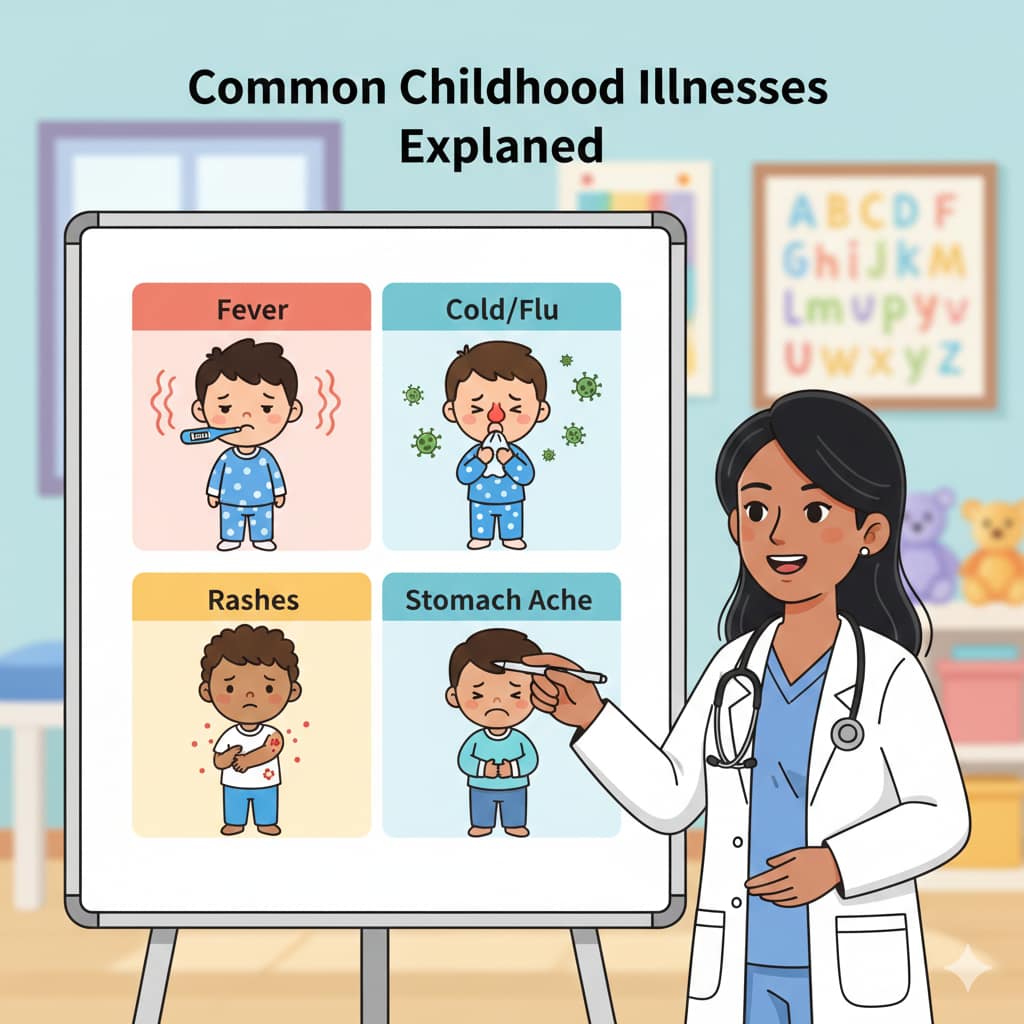
Common Childhood Illnesses Explained
Childhood is a period of rapid biological transition, where the immune system is in a constant state of learning and adaptation. Encountering various pathogens is a natural part of developing “Immunological Memory,” but it can be a source of significant anxiety for parents. At Mediquickinfo, we recognize that common childhood illnesses—ranging from viral infections to allergic reactions—require a nuanced clinical understanding to ensure proper care and prevent complications. Most of these conditions are self-limiting, yet early identification of “red flags” is essential for systemic safety. This 2000+ word comprehensive guide provides a clinical deep-dive into the most prevalent childhood illnesses, their biological pathways, and evidence-based management strategies.
1. Respiratory Infections: The Most Frequent Challengers
Respiratory tract infections (RTIs) are the leading cause of pediatric clinical visits worldwide. At Mediquickinfo, we analyze how the smaller, developing airways of children make them more susceptible to congestion and inflammation. The **Common Cold** (viral rhinitis) is ubiquitous, caused by over 200 different viruses. While generally mild, it can lead to secondary complications like **Otitis Media** (middle ear infection) if fluid becomes trapped behind the eardrum.
**Croup** is another common pediatric respiratory condition, characterized by a distinct “barking” cough and “stridor” (a high-pitched breathing sound). Clinically, this is caused by viral swelling of the larynx and trachea. At Mediquickinfo, we stress that while croup often improves with cold air or steam, any signs of “Retractions”—where the skin pulls in around the ribs during breathing—are a clinical emergency. Understanding the difference between a simple cough and respiratory distress is a vital component of pediatric health literacy.
2. Gastrointestinal Issues: Managing Dehydration Risks
Gastroenteritis, often referred to as the “stomach flu,” is a major clinical concern due to the risk of rapid dehydration. At Mediquickinfo, we categorize this primarily as a viral phenomenon, frequently caused by Rotavirus or Norovirus. The clinical hallmark is the sudden onset of vomiting and diarrhea, which can lead to a dangerous loss of electrolytes. Because children have a higher surface-area-to-mass ratio, they become dehydrated much faster than adults.
Management focuses on **Oral Rehydration Therapy (ORT)**. At Mediquickinfo, we advocate for the use of clinical electrolyte solutions rather than plain water or sugary drinks, which can worsen diarrhea. Monitoring “Urine Output” and “Mucous Membrane Moisture” (checking if the mouth is dry) are the most effective ways to assess hydration levels at home. If a child becomes lethargic or stops producing tears when crying, immediate clinical intervention is required to prevent hypovolemic shock.
3. Viral Exanthems: Rashes and Fevers
Many childhood illnesses manifest as a combination of fever and a distinctive rash (exanthem). **Hand, Foot, and Mouth Disease (HFMD)**, caused by the Coxsackievirus, is a common example, producing painful blisters in the mouth and on the extremities. **Roseola** is another frequent clinical encounter, where a high fever suddenly vanishes and is followed by a widespread pink rash. At Mediquickinfo, we explain that these are generally benign viral processes that require supportive care—fluid maintenance and temperature management.
4. When to Seek Urgent Clinical Care
Distinguishing between a minor illness and a serious condition is the most important skill for a caregiver. Mediquickinfo clinical guidelines identify several “Red Flags” that warrant an immediate visit to the emergency department:
- Persistent High Fever: Especially in infants under 3 months of age.
- Respiratory Distress: Nasal flaring, grunting, or “caved-in” chest movements.
- Altered Mental Status: Extreme lethargy, difficulty waking up, or inconsolable crying.
- Signs of Meningitis: A stiff neck combined with a high fever and a purple, non-blanching rash (a rash that doesn’t disappear when pressed with a glass).
Conclusion: Building Resilience through Knowledge
Common childhood illnesses are a biological inevitability as a child’s immune system matures. By understanding the clinical signs of respiratory, gastrointestinal, and viral conditions, you can manage most illnesses at home with confidence while knowing exactly when to seek professional help. At Mediquickinfo, we believe that informed parents are the most effective first-responders for their children’s health. Your child’s journey toward a robust immune system is a shared path of growth and vigilance. Trust Mediquickinfo for the clinical literacy you need to navigate these early years with confidence. Knowledge is the best medicine for the whole family.

