
Digestive System: Complete Guide & Common Disorders
Understanding Digestive Function, Disorders, Symptoms, Diagnosis and Treatment Options
Introduction
The digestive system, which extends from the mouth to the end of the intestine, is a very important and complex engine of our health. It not only breaks down our food into energy and nutrients, but also plays a key role in our immunity, hormonal balance and overall well-being. When this system is working at its best, we don’t even notice it, but when there is a disruption in it, it has a profound effect on our daily life. Digestive disorders affect millions of people worldwide and their severity can range from mild discomfort to chronic and complex diseases. The symptoms of these disorders are often similar to each other, making accurate diagnosis essential. The purpose of this article is to explain common digestive disorders, their causes, symptoms, diagnostic methods and general principles of treatment, so that readers can better inform themselves about their health and seek timely medical advice.
🌀 Digestive System: A Brief Overview
The digestive system is actually a long, muscular tube that includes several organs, each with its own specific function. This journey begins in the mouth, where food is chewed and mixed with saliva. It then travels through the esophagus to the stomach, where acidic juices break down proteins. Then this semi-digested food enters the small intestine, which is the real center of digestion. Here, the juices of the liver and pancreas (bile and digestive enzymes) break down fats, carbohydrates and proteins into their basic components, which are then absorbed into the blood. The remaining material moves into the large intestine (colon), where water and minerals are absorbed and waste material takes the form of solid feces before excretion. This entire process is controlled in a highly organized manner through the nervous system and various hormones.
🤢 Heartburn and Gastroesophageal Reflux Disease (GERD)
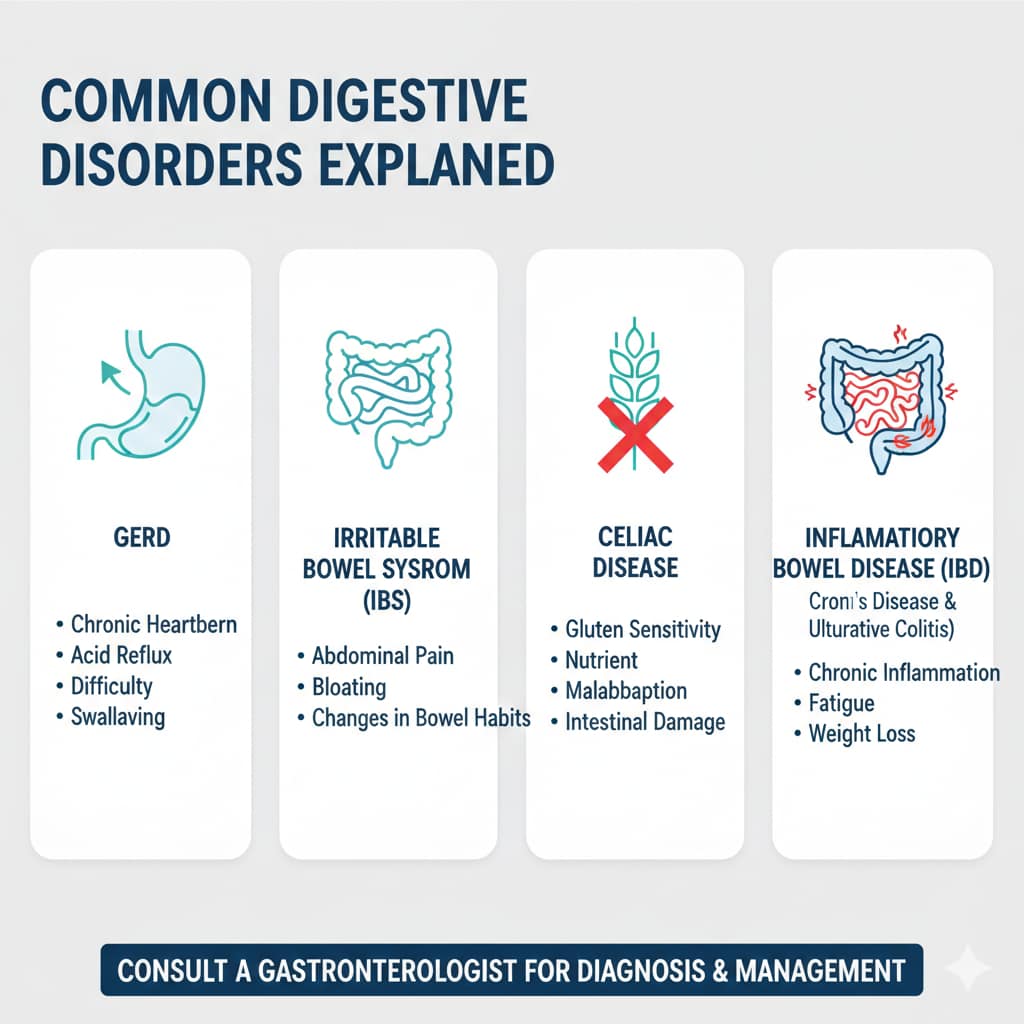
Heartburn is a feeling, while GERD is a chronic disease. Heartburn occurs when stomach acid backs up into the esophagus, causing a burning sensation in the chest. If this happens more than twice a week, it is called GERD. The cause is weakness of the valve (lower esophageal sphincter) between the esophagus and stomach. Symptoms include heartburn, sour water in the mouth, difficulty swallowing, dry cough, and sore throat. Chronic GERD can damage the esophagus. Treatment includes lifestyle changes (avoiding fatty and spicy foods, chocolate, caffeine, smoking, not lying down immediately after dinner), antacid medications, and in some cases surgery.
Key Points
- Heartburn: Occasional burning sensation
- GERD: Chronic condition (more than twice weekly)
- Causes: Weak esophageal sphincter, certain foods, obesity
- Complications: Esophagitis, Barrett’s esophagus, strictures
🩺 Peptic Ulcer Disease
These are sores that form on the inner lining of the stomach or the initial part of the duodenum. In the past, it was thought that acidity was the cause, but now it is known that the primary cause is often an infection with the bacteria H. pylori. Another major cause is long-term use of non-steroidal anti-inflammatory drugs (NSAIDs such as aspirin, ibuprofen). Symptoms include burning or tightening pain in the upper abdomen (especially on an empty stomach), nausea, loss of appetite, and weight loss. In severe cases, the ulcer may start bleeding (black stool or blood in vomit) or perforate, which is a medical emergency. Treatment includes antibiotic cocktail for H. pylori, acid-reducing medications, and stopping NSAIDs.
💊 Digestive Enzymes and Pancreatitis
The pancreas is the organ that produces digestive enzymes and the hormone insulin. When digestive enzymes become active in the pancreas itself and begin to digest it, it is called acute pancreatitis. It causes severe pain, nausea, vomiting and fever. The most common causes are gallstones and excessive alcohol consumption. This is a dangerous condition that requires immediate hospitalization. Chronic pancreatitis is a long-term inflammation that causes permanent damage to the pancreas, which can result in digestive disorders and diabetes. Treatment depends on the underlying cause and may include pain control, nutrition through IV, and enzyme supplements.
🫁 Celiac Disease
This is an autoimmune disease in which the body’s immune system attacks the lining of the small intestine when gluten (a protein found in wheat, barley, rye) is consumed. This damages the lining and creates a barrier to nutrient absorption. It can also be hereditary. Symptoms can vary greatly: digestive complaints such as diarrhea, bloating, gas, weight loss; or anemia, fatigue, joint pain, and itchy rash (Dermatitis Herpetiformis). The only effective treatment is a strict gluten-free diet for life, which restores the intestine to normal.
Gluten-Free Diet Essentials
- Avoid all wheat, barley, rye, and their derivatives
- Safe foods include rice, corn, quinoa, potatoes
- Check labels for hidden gluten in sauces, soups, processed foods
- Use separate utensils and cooking surfaces to avoid cross-contamination
🌾 Non-Celiac Gluten Sensitivity
In this condition, the patient experiences symptoms similar to celiac disease (bloating, pain, diarrhea, fatigue) when eating gluten, but blood tests and intestinal biopsy do not confirm celiac disease. The reasons are not entirely clear. Diagnosis is made when celiac disease and wheat allergy are ruled out and symptoms improve on a gluten-free diet. Treatment is also avoiding gluten, although precautions may be less strict than with celiac disease.
🦠 Irritable Bowel Syndrome (IBS)
IBS is a chronic digestive disorder in which there is a disruption in intestinal function, but there is no structural damage or inflammation. It is associated with a disruption in communication between the intestines and the brain. Symptoms include abdominal pain or discomfort (which usually improves with bowel movement), bloating, gas, and changes in bowel habits (constipation, diarrhea, or alternating both). Stress, certain foods (FODMAPs foods), and hormones can trigger it. Treatment depends on symptoms and may include dietary changes (such as low FODMAP diet), stress management, fiber supplements, and certain medications. It is a lifelong condition, but it can be effectively controlled.
Low FODMAP Diet Overview
The low FODMAP diet is a temporary elimination diet that helps identify trigger foods for IBS. FODMAPs are short-chain carbohydrates that are poorly absorbed in the small intestine and can cause symptoms in sensitive individuals.
🔥 Inflammatory Bowel Disease (IBD)
It is important to understand the difference from IBS. IBD is a serious autoimmune disease in which there is real inflammation and damage to the intestinal lining. It has two main types: Crohn’s Disease (can affect any part of the digestive system from mouth to anus) and Ulcerative Colitis (affects only the large intestine and rectum). Symptoms include severe diarrhea (sometimes with blood or mucus), abdominal pain, fatigue, loss of appetite, and weight loss. These diseases run in cycles of remission and flare-ups. Treatment aims to control inflammation, relieve symptoms, and prevent complications, using medications (immunomodulators, biological therapies), dietary management, and in some cases surgery.
IBD vs IBS: Key Differences
IBD: Structural damage, visible inflammation, risk of complications like fistulas, strictures, increased colon cancer risk. IBS: Functional disorder, no visible damage, no increased cancer risk, often related to stress and diet.
🏃♂️ Diverticular Disease
The formation of small pouches or sacs in the wall of the large intestine is called diverticulosis. These usually form with age and often cause no symptoms. However, when these pouches become inflamed or infected, it is called diverticulitis. Its symptoms include sudden severe pain in the lower left abdomen, fever, nausea, and changes in bowel habits. Treatment in mild cases consists of antibiotics and a soft diet, while severe or recurrent cases may require surgery. A high-fiber diet is thought to help prevent diverticulosis.
🔄 Constipation
Constipation refers to having fewer than three bowel movements per week, having hard or dry stools, or straining and difficulty during bowel movements. It is often caused by lack of dietary fiber, drinking less water, lack of exercise, side effects of certain medications, or impaired bowel movements. Long-term constipation can also cause hemorrhoids or anal fissures. Treatment and prevention include eating more fiber-rich foods (fruits, vegetables, whole grains), drinking adequate amounts of water, regular exercise, and using fiber supplements or mild laxatives if needed.
💨 Diarrhea
Diarrhea is frequent passing of loose, watery stools. Acute diarrhea usually lasts for a few days and can be caused by viral, bacterial, or parasitic infection (food poisoning), medications, or food intolerance. Chronic diarrhea lasts more than four weeks and can be caused by IBS, IBD, celiac disease, or chronic infections. The greatest risk is dehydration (loss of water and salts from the body). Treatment depends on the underlying cause and may include fluid and electrolyte replacement, antibiotics (only in case of bacterial infection), and anti-diarrheal medications.
🦠 Gastroenteritis
This is inflammation of the stomach and intestines, commonly known as “stomach flu” or “food poisoning”. It is usually caused by viruses (such as norovirus, rotavirus) or bacteria (such as E. coli, Salmonella). It can spread through contaminated water or food, or contact with an infected person. Symptoms include diarrhea, nausea, vomiting, abdominal cramps, and mild fever. Treatment is supportive: rest, drinking fluids in small intervals (ORS is best), and eating light foods (such as bananas, rice, toast). Antibiotics are usually not helpful.
🥛 Lactose Intolerance
In this condition, the body has low or no lactase enzyme, which is necessary to digest the sugar lactose found in milk and dairy products. Undigested lactose reaches the large intestine and causes gas, bloating, cramps, and diarrhea. Symptoms appear within 30 minutes to 2 hours of consuming dairy products. It has two types: Primary (natural decrease in lactase with age) and Secondary (after an illness or injury, such as celiac disease or gastroenteritis). Treatment includes avoiding dairy products, using lactase enzyme tablets, or choosing lactose-free products.
🫀 Hemorrhoids
These are swollen veins inside or outside the anus. They are caused by straining due to constipation, pregnancy, prolonged sitting, or weakening of muscles with age. Symptoms include bright red blood with stool, itching around the anus, pain, and swelling. Most cases improve with home treatment: high-fiber diet, more water, warm water baths (Sitz Bath), and OTC ointments. If the problem is severe, the doctor may use methods such as rubber band ligation, injection therapy, or surgery.
💔 Anal Fissure
This is a small, tear-like wound or cut in the anal canal, usually caused by the passage of hard and large stools. It causes severe pain during and after bowel movements, and a small amount of blood may be seen on the stool or tissue paper. Pain can cause muscle spasms, which makes treatment difficult. Most fissures heal on their own within a few weeks. Treatment includes ensuring soft stools (fiber, laxatives), warm water baths, and pain-relieving creams. For chronic fissures, the doctor may prescribe specific ointments or surgery.
🏭 Gallbladder Disorders
The gallbladder is a small sac-like organ that stores bile (BILE) produced by the liver. Bile helps digest fat. The most common problem is gallstones, which are formed by the solidification of bile components. Most stones are harmless, but if they block the gallbladder’s passage, severe pain (biliary colic) can occur. If a stone gets stuck in the bile duct, cholecystitis (inflammation of the gallbladder), jaundice, or pancreatitis can occur. Treatment includes pain control and cholecystectomy (surgical removal of the gallbladder). Humans can live a normal life without a gallbladder.
🦪 Liver Disorders: Hepatitis and Fatty Liver
The liver is also an important organ of the digestive system. Hepatitis refers to inflammation of the liver, which can be caused by viruses (hepatitis A, B, C, etc.), alcohol consumption, or certain medications. Symptoms include fatigue, jaundice (yellowing of skin and eyes), dark urine, and pain in the upper abdomen. In Fatty Liver Disease, excess fat accumulates in liver cells. Non-Alcoholic Fatty Liver Disease (NAFLD) is associated with obesity, diabetes and high cholesterol and can lead to cirrhosis (hardening of the liver). Treatment depends on the cause and is based on major lifestyle changes (weight loss, exercise, quitting alcohol).
🤔 Diagnosis of Digestive Disorders: How Are They Detected?
The doctor will first take a complete medical history (symptoms, diet, family history) and perform a physical examination. Diagnostic tests may include:
- Blood Tests: To detect infection, inflammation, anemia, or liver/pancreas function.
- Stool Tests: To check for infection, blood, or inflammatory enzymes.
- Breath Tests: To check for H. pylori or lactose intolerance.
- Endoscopy: Examination of the esophagus, stomach, and duodenum using a flexible tube (endoscope), and taking a biopsy.
- Colonoscopy: Examination of the large intestine and colon.
- Imaging Studies: Ultrasound, CT scan, or MRI to view the liver, gallbladder, pancreas and other organs.
🍎 Dietary Principles for Digestive Health
Diet is the primary medicine for better digestion. Some important principles:
- Fiber: Increase consumption of fruits, vegetables, legumes, and whole grains. It prevents constipation and is beneficial for gut bacteria.
- Probiotics: Yogurt, kefir, fermented foods. These increase the number of good bacteria in the gut.
- Prebiotics: Garlic, onions, bananas, asparagus. These act as food for probiotics.
- Hydration: Drinking enough water is essential for fiber to work and prevent constipation.
- Low-fat foods: High-fat foods can slow down digestion.
- Small and regular meals: Instead of eating too much at one time.
- Eating slowly and chewing well: This is the first and most important stage of digestion.
🧘♂️ Brain and Gut Connection: The Effect of Stress
The brain and gut are deeply connected, called the gut-brain axis. Stress, anxiety and depression have a direct effect on digestion. It can speed up or slow down intestinal movements, increase pain sensitivity, and affect the production of digestive juices. This is why stress can worsen IBS and other disorders. Similarly, digestive disorders (such as intestinal inflammation) can affect mood and mental health. Therefore, stress management techniques (such as meditation, deep breathing exercises, yoga, exercise, sleep) are also very beneficial for digestive health.
Facts About Gut-Brain Connection
- The gut contains over 100 million neurons (the “second brain”)
- Approximately 90% of serotonin (the “feel-good” hormone) is produced in the gut
- Stress can alter gut microbiota composition within hours
- Probiotics have shown potential in improving mood and reducing anxiety
Summary: Seek Timely Help
Digestive ailments are often ignored, but they can be a sign of a bigger problem. If you notice any of the following “red flag” symptoms, consult a doctor immediately:
Red Flag Symptoms Requiring Immediate Medical Attention
- Unintentional weight loss
- Severe difficulty swallowing
- Persistent or severe abdominal pain
- Blood in vomit or stool
- Black or tar-like stool color
- Persistent and uncontrollable diarrhea
- Symptoms that disrupt your sleep at night
The digestive system is the center of our health. By taking care of it through proper diet, lifestyle, and timely medical guidance when needed, we can not only prevent digestive disorders but also improve our overall health and well-being.
Medical Disclaimer: This information is for educational purposes only and is not a substitute for professional medical advice. Always consult with a qualified healthcare provider for diagnosis and treatment. Individual medical conditions vary, and this content should not be used to make health decisions without consulting appropriate medical professionals.

