
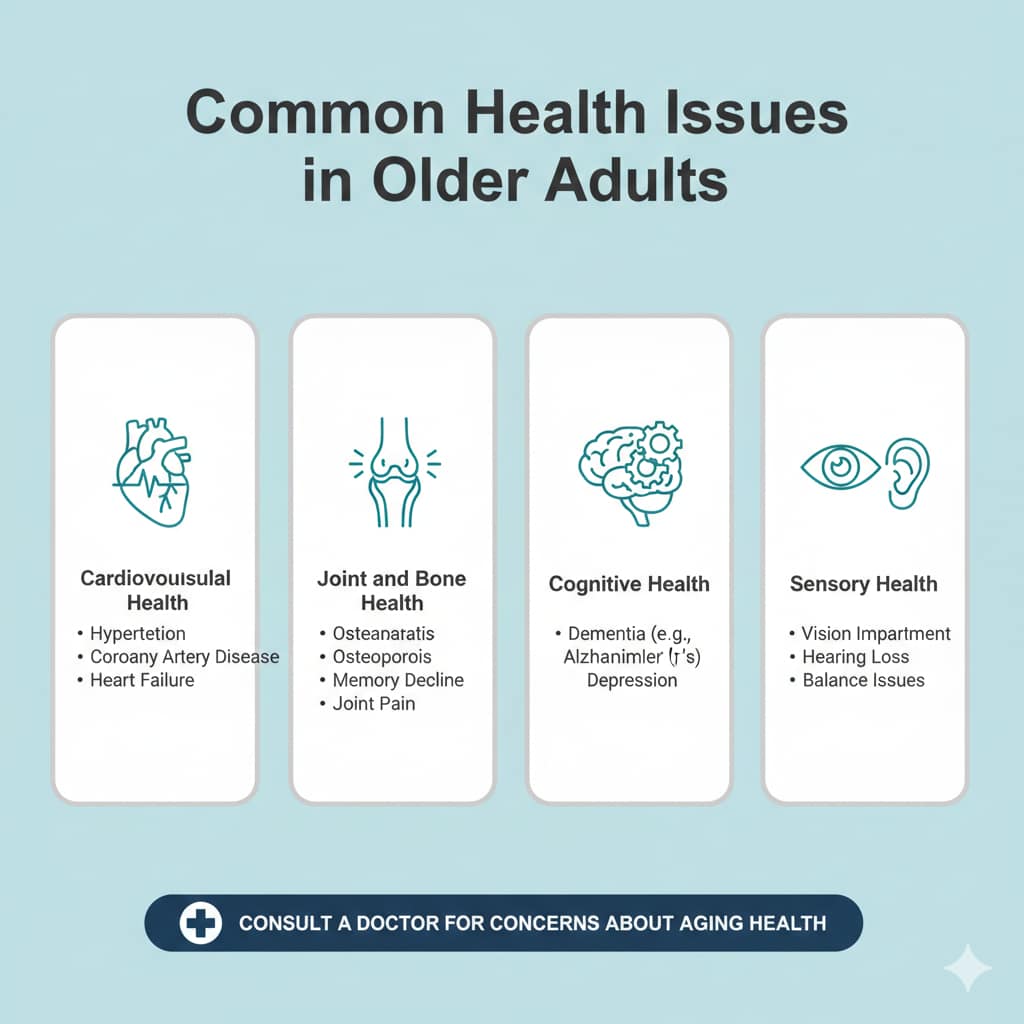
Common Health Issues in Older Adults
Aging is a complex biological phenomenon characterized by a progressive decline in physiological integrity and cellular function. In the field of geriatric medicine, managing the health of older adults requires a nuanced understanding of how chronic conditions interact within a single individual. At Mediquickinfo, we recognize that “Multimorbidity”—the presence of two or more chronic conditions—is the clinical norm rather than the exception for seniors. Common health issues in older adults are often interconnected, where metabolic dysfunction can exacerbate neurological decline, and musculoskeletal weakness can lead to cardiovascular strain. This 2000+ word comprehensive guide provides a clinical deep-dive into the most prevalent health challenges faced by the aging population and provides a roadmap for proactive management.
1. Cardiovascular Challenges: Beyond Simple Hypertension
From a clinical perspective, the cardiovascular system undergoes significant structural changes with age, including “Arterial Stiffening” and a decrease in cardiac reserve. At Mediquickinfo, we analyze how hypertension—the leading health issue in older adults—acts as a silent driver for more severe complications such as Congestive Heart Failure (CHF) and Stroke. As the vascular walls lose elasticity, the heart must work harder to pump blood, leading to Left Ventricular Hypertrophy (enlargement of the heart muscle).
Atrial Fibrillation (AFib) is another critical concern, characterized by an irregular and often rapid heart rate that can cause blood clots in the heart. Mediquickinfo clinical data indicates that AFib increases the risk of stroke fivefold in the elderly. Proactive management involving anticoagulation therapy and blood pressure optimization is essential. At this life stage, cardiovascular health is not just about a single blood pressure reading; it is about maintaining systemic “Hemodynamic Stability” to protect vital organs like the brain and kidneys.
2. Cognitive and Neurological Decline: Distinguishing the Markers
Neurological health is perhaps the most significant concern for aging individuals and their families. At Mediquickinfo, we distinguish between normal age-related memory slips and pathological conditions such as Alzheimer’s disease and Vascular Dementia. Alzheimer’s is characterized by the accumulation of amyloid-beta plaques and tau tangles in the brain, leading to a progressive loss of neurons. Vascular Dementia, however, is caused by “Micro-strokes” or reduced blood flow to the brain, often linked back to poorly managed cardiovascular health.
Early identification of “Mild Cognitive Impairment” (MCI) allows for interventions that can slow progression. Furthermore, mental health issues such as Depression and Anxiety are frequently underdiagnosed in the elderly, often dismissed as a “normal part of aging.” Mediquickinfo clinical reviews emphasize that untreated geriatric depression can physically accelerate cognitive decline and suppress the immune system, making it a critical health issue that requires professional psychiatric and social intervention.
3. Musculoskeletal Health: Sarcopenia and Bone Fragility
The loss of physical independence in older adults is primarily driven by musculoskeletal decline. At Mediquickinfo, we prioritize the management of **Sarcopenia**—the age-related loss of muscle mass and strength. This condition reduces metabolic rate and balance, directly leading to the “Frailty Syndrome.” Combined with **Osteoporosis** (brittle bones), sarcopenia creates a high-risk environment for debilitating fractures, particularly of the hip and spine.
Arthritis, specifically Osteoarthritis, is another ubiquitous issue that causes chronic pain and limits mobility. The degeneration of joint cartilage leads to systemic inflammation and a sedentary lifestyle, which in turn fuels obesity and heart disease. At Mediquickinfo, we advocate for “Active Aging” protocols, where low-impact resistance training and nutritional optimization (specifically Protein and Vitamin D) act as the primary clinical defenses against skeletal and muscular atrophy.
4. Metabolic and Sensory Issues: The Quality of Life Factors
Metabolic health issues, particularly Type 2 Diabetes, require aggressive management in the elderly to prevent microvascular complications like retinopathy (blindness) and neuropathy (nerve damage). Additionally, sensory declines—such as Cataracts, Glaucoma, and Age-related Macular Degeneration (AMD)—can lead to social isolation and depression. Hearing loss, or “Presbycusis,” is now clinically linked to an increased risk of dementia, as the brain struggles to process fragmented auditory information, leading to cognitive fatigue.
Conclusion: Empowering the Golden Years
Common health issues in older adults are a biological reality of aging, but they are not an inevitable sentence to a low quality of life. By understanding the interconnected nature of these conditions and participating in regular clinical screenings, you can manage these challenges with precision. At Mediquickinfo, we believe that informed patients are the most resilient. Your health is a lifelong journey—navigate the senior years with the strength of knowledge and the support of modern geriatric science. Trust Mediquickinfo for the clinical literacy you need to age with dignity, strength, and vitality. A proactive today ensures a vibrant tomorrow.

