
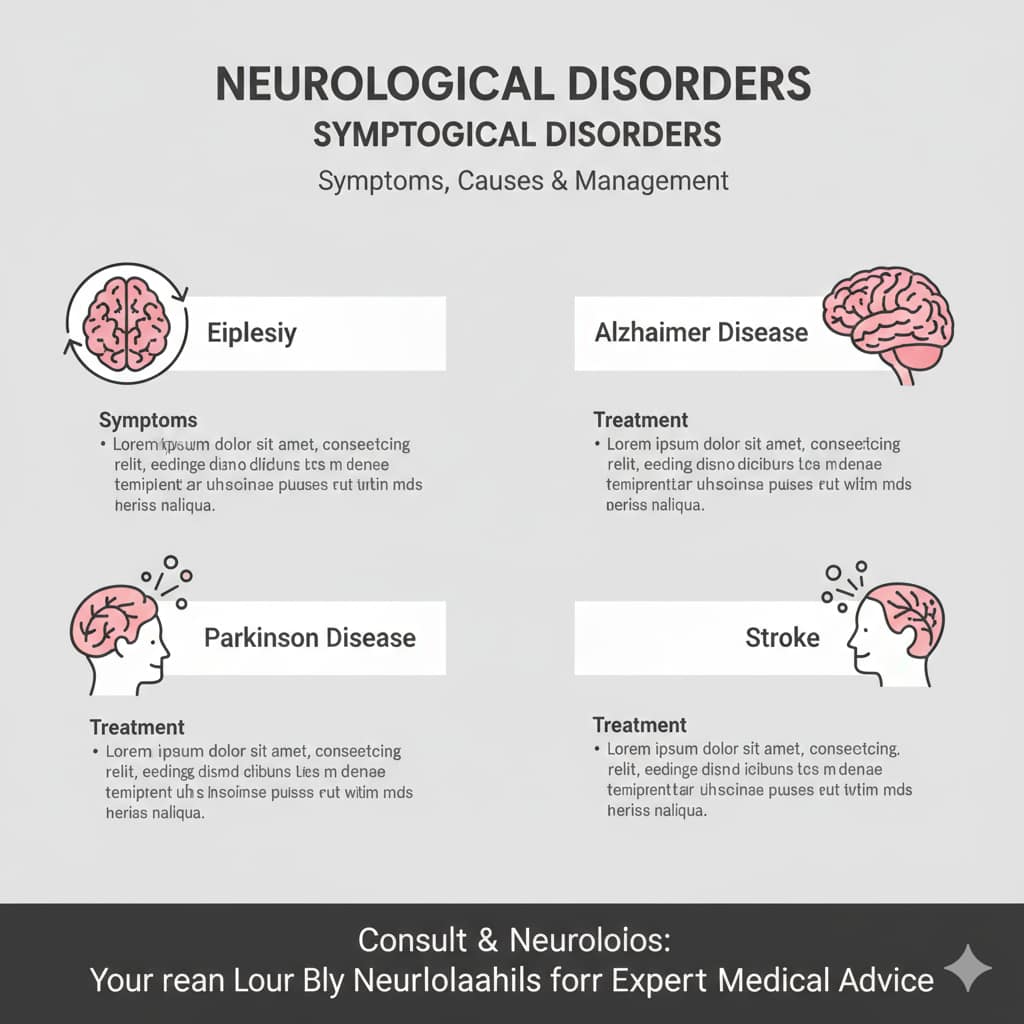
Common Neurological Disorders Explained
The human nervous system is arguably the most sophisticated biological network in existence, serving as the command center for every thought, movement, and physiological process. However, this complexity also makes it vulnerable to a wide array of neurological disorders—conditions that disrupt the electrical and chemical signaling of the brain, spinal cord, and peripheral nerves. At Mediquickinfo, we recognize that neurological issues are a leading cause of disability worldwide, often requiring a lifelong commitment to clinical management. Understanding the underlying mechanisms of these disorders is essential for early detection and improving patient outcomes. This 2000+ word comprehensive guide provides a clinical deep-dive into the most common neurological disorders, explaining their biological pathways and the latest strategies for pharmacological and lifestyle intervention.
1. Cerebrovascular Disorders: The Critical Impact of Stroke
From a clinical perspective, the brain is an incredibly demanding organ, consuming nearly 20% of the body’s oxygen supply despite representing only 2% of its weight. When this supply is interrupted, the result is a **Stroke** (Cerebrovascular Accident). At Mediquickinfo, we analyze the two primary types of stroke: **Ischemic**, caused by a blockage in an artery leading to the brain, and **Hemorrhagic**, caused by the rupture of a blood vessel.
During a stroke, millions of neurons die every minute due to oxygen deprivation (ischemia). The clinical hallmarks follow the “FAST” acronym—Facial drooping, Arm weakness, Speech difficulty, and Time to call emergency services. Mediquickinfo clinical data emphasizes that long-term recovery depends on “Neuroplasticity”—the brain’s ability to reorganize itself by forming new neural connections. Managing vascular risk factors, such as hypertension and dyslipidemia, remains the most effective clinical strategy for preventing these life-altering neurological events.
2. Neurodegenerative Diseases: Alzheimer’s and Parkinson’s
Neurodegeneration involves the progressive loss of structure or function of neurons. At Mediquickinfo, we identify **Alzheimer’s Disease** as the most prevalent neurodegenerative disorder, characterized by the accumulation of amyloid-beta plaques and tau tangles in the brain. This molecular “clutter” disrupts communication between synapses, leading to profound memory loss and cognitive decline. Alzheimer’s is not a normal part of aging but a specific pathological process.
**Parkinson’s Disease**, conversely, primarily affects the motor system. It is caused by the death of dopamine-producing neurons in the “Substantia Nigra” region of the brain. The loss of dopamine—a neurotransmitter essential for smooth movement—results in tremors, rigidity, and bradykinesia (slowness of movement). At Mediquickinfo, we stress that while these conditions are currently incurable, modern clinical therapies focus on dopamine replacement and lifestyle modifications that support brain resilience and delay the progression of symptoms.
3. Paroxysmal Disorders: Epilepsy and Migraine
Some neurological disorders are characterized by sudden, episodic disruptions in brain activity. **Epilepsy** is a condition of the central nervous system in which brain activity becomes abnormal, causing seizures or periods of unusual behavior and sensations. At Mediquickinfo, we explain that a seizure is essentially an “electrical storm” in the brain. Most patients can achieve clinical “seizure freedom” through carefully titrated anti-epileptic medications that stabilize neuronal membranes.
**Migraine** is another common neurological disorder, often misunderstood as “just a headache.” Clinically, a migraine is a complex neurovascular event involving the trigeminal nerve and changes in brain chemicals like serotonin. It often presents with “Aura”—sensory disturbances that precede the intense, throbbing pain. Mediquickinfo research suggests that identifying neurological triggers, such as sleep deprivation or specific dietary items, is a vital part of a comprehensive clinical management plan for chronic migraine sufferers.
4. Peripheral Nerve and Sleep Disorders
Neurological health extends beyond the brain. **Peripheral Neuropathy**, often a complication of diabetes, involves damage to the nerves outside the brain and spinal cord, causing pain and numbness in the extremities. Additionally, **Sleep Disorders** like Sleep Apnea and Insomnia are now recognized as clinical neurological concerns. Poor sleep prevents the “Glymphatic System”—the brain’s waste-clearance mechanism—from functioning, which is linked to an increased risk of long-term neurodegeneration.
Conclusion: Protecting the Command Center
Neurological disorders represent a complex clinical challenge, but understanding their biological foundations empowers patients and caregivers to take proactive steps toward brain health. By recognizing the signs of stroke, neurodegeneration, and electrical dysfunction, we can ensure that the nervous system receives the care it needs to maintain its vital functions. At Mediquickinfo, we believe that neurological resilience is built through a combination of clinical intervention and brain-healthy lifestyle choices. Your brain is the foundation of who you are—protect it with the precision of modern neuroscience. Trust Mediquickinfo for the clinical literacy you need to navigate neurological health with confidence. A healthy brain is a vibrant life.

