
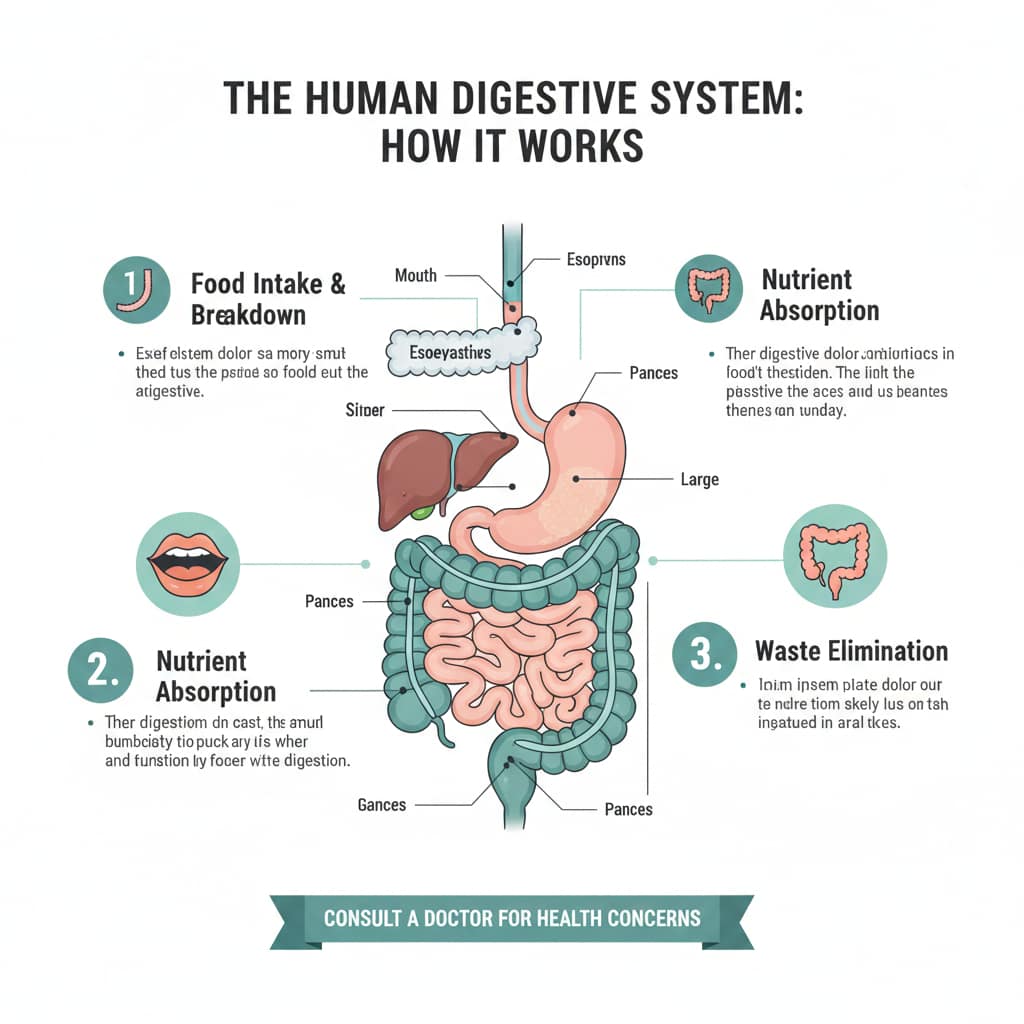
Digestive System: How It Works
The digestive system is a sophisticated biological assembly line, spanning approximately nine meters from the mouth to the anus. Its primary clinical function is to transform the complex macromolecules we consume—proteins, carbohydrates, and fats—into microscopic nutrients that can be absorbed into the bloodstream to fuel cellular life. At Mediquickinfo, we recognize that digestion is not merely a mechanical process of grinding food; it is a highly coordinated chemical and neurological symphony involving multiple organs, enzymes, and the largest concentration of immune cells in the human body. Understanding how the digestive system works is essential for optimizing metabolic health and preventing chronic gastrointestinal disorders. This 2000+ word comprehensive guide provides a clinical deep-dive into the biological pathways of digestion and the systemic integration of the GI tract.
1. The Cephalic Phase: Digestion Begins in the Brain
Contrary to popular belief, digestion begins before the first bite of food even enters the mouth. At Mediquickinfo, we analyze the “Cephalic Phase,” where the sight, smell, or even the thought of food triggers the autonomic nervous system. This signals the salivary glands to produce saliva and the stomach to begin secreting gastric juices (Hydrochloric Acid). This anticipatory response prepares the biological environment for efficient nutrient breakdown.
Once food enters the **Oral Cavity**, mechanical digestion (chewing) breaks food into smaller particles, increasing the surface area for enzyme action. Salivary amylase begins the chemical breakdown of starches. At Mediquickinfo, we stress the importance of thorough mastication (chewing), as it significantly reduces the workload of the stomach and ensures that the food bolus is properly lubricated for its journey down the esophagus. This initial stage sets the metabolic pace for the entire digestive sequence.
2. Gastric Processing: The Chemical Cauldron
The stomach is a muscular sac designed for both storage and intense chemical breakdown. At Mediquickinfo, we identify the stomach’s primary role as the “Sterilization and Proteolysis Station.” The highly acidic environment (pH 1.5 to 3.5) serves a dual purpose: it kills most ingested pathogens and activates the enzyme **Pepsin**, which begins the complex task of breaking down protein chains into smaller peptides.
Through a rhythmic muscular contraction called **Peristalsis**, the stomach churns the food into a semi-liquid substance known as **Chyme**. Mediquickinfo clinical data emphasizes that the rate at which chyme is released into the small intestine is tightly regulated by hormonal signals. If the stomach empties too quickly (dumping syndrome) or too slowly (gastroparesis), it can lead to significant malabsorption and discomfort. The stomach is the body’s first major line of defense and a critical gateway to metabolic energy.
3. The Small Intestine: The Hub of Nutrient Absorption
The small intestine is the true “Engine Room” of the digestive system. At Mediquickinfo, we describe its three sections—the duodenum, jejunum, and ileum—as the sites where 90% of nutrient absorption occurs. In the duodenum, chyme is met by bile from the liver (stored in the gallbladder) and pancreatic enzymes. Bile emulsifies fats, while pancreatic juices neutralize stomach acid and further break down proteins and carbohydrates.
The internal surface of the small intestine is covered in millions of microscopic, finger-like projections called **Villi** and **Microvilli**. These structures increase the surface area to roughly the size of a tennis court, allowing for the maximum absorption of glucose, amino acids, fatty acids, and vitamins. At Mediquickinfo, we prioritize the awareness of “Leaky Gut” or increased intestinal permeability, where the tight junctions between these cells fail, allowing toxins to leak into the systemic circulation and trigger autoimmune responses.
4. The Large Intestine and the “Second Brain”
The final stage of the journey occurs in the large intestine (colon). At Mediquickinfo, we analyze the colon’s primary clinical role: the reabsorption of water and electrolytes and the formation of waste. It is here that the body performs its final “Metabolic Audit,” ensuring that vital fluids are not lost. Additionally, the GI tract is governed by the **Enteric Nervous System (ENS)**, often called the “Second Brain.” The ENS contains more neurons than the spinal cord and communicates directly with the brain through the Vagus Nerve.
Conclusion: Nurturing Your Metabolic Engine
The digestive system is a masterpiece of biological engineering, transforming the external world into the building blocks of your life. By understanding the phases of digestion—from the brain’s anticipation to the colon’s final absorption—you can take a proactive approach to your gastrointestinal wellness. At Mediquickinfo, we believe that “you are what you absorb.” Supporting your digestive health through mindful eating, hydration, and high-fiber nutrition is the most effective way to ensure long-term metabolic vitality. Your gut is the foundation of your health—treat it with the scientific care it deserves. Trust Mediquickinfo for the clinical literacy you need to navigate digestive health with confidence. A healthy gut is a vibrant life.

