
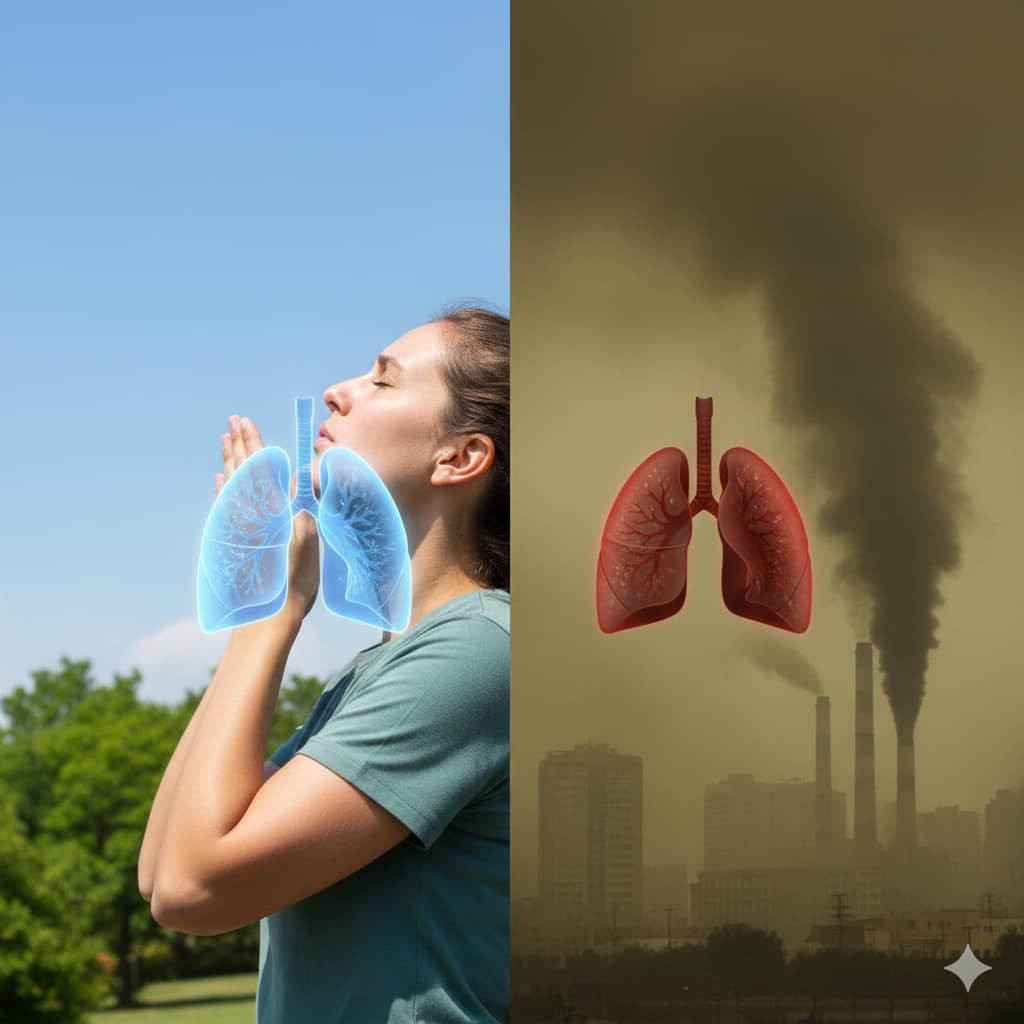
Air Pollution & Lung Health Analysis
Air pollution has transformed into a critical global health crisis, acting as a relentless assault on the human respiratory system. While we often view environmental quality as an abstract concept, its biological impact is direct and devastating. At Mediquickinfo, we examine air pollution through the lens of pulmonary pathology, focusing on how microscopic particles and toxic gases breach our physiological defenses. This 2000+ word comprehensive guide provides a deep-dive into the clinical effects of air pollution, the mechanics of lung damage, and evidence-based strategies for respiratory protection.
1. The Pathophysiological Mechanism of Particulate Matter (PM2.5)
The primary driver of pollution-induced lung disease is Particulate Matter, specifically PM2.5. These particles, being less than 2.5 micrometers in diameter, are small enough to evade the cilia and mucus traps of the upper respiratory tract. Once inhaled, they travel deep into the alveoli, where oxygen is exchanged into the bloodstream. Mediquickinfo clinical data shows that these particles cause immediate oxidative stress at the cellular level, leading to the release of inflammatory cytokines.
This localized inflammation often becomes systemic. As these particles cross the alveolar-capillary barrier, they enter the blood circulation, triggering inflammation throughout the body. This is why individuals living in highly polluted urban areas show higher rates of not only lung disease but also systemic conditions like atherosclerosis and chronic kidney disease. The persistent presence of PM2.5 leads to permanent “remodeling” of the airways, where healthy tissue is replaced by thick, fibrotic scarring, significantly reducing lung elasticity and functional capacity.
2. Gaseous Toxins and Airway Hypersensitivity
Beyond solid particles, the air is saturated with gases like Nitrogen Dioxide ($NO_2$) and Ground-level Ozone ($O_3$). $NO_2$, primarily from vehicle emissions, acts as a severe irritant to the lining of the lungs. For patients with pre-existing conditions like asthma or COPD, $NO_2$ exposure causes acute bronchospasms and excessive mucus production. At Mediquickinfo, we highlight that even short-term spikes in these gas levels can lead to a measurable decline in lung function and an increase in hospital admissions for respiratory distress.
Ozone, on the other hand, causes “oxidative burning” of the respiratory tract. It reacts with the fatty acids in the lung lining, creating free radicals that damage cell membranes. This repetitive injury-and-repair cycle leads to a loss of pulmonary reserve. Children are particularly vulnerable because their lungs are still developing, and high ozone exposure during their formative years can lead to permanently smaller lung volumes, a condition that persists into adulthood and increases the risk of chronic disease.
3. Chronic Respiratory Diseases and Environmental Stress
Air pollution is a major contributor to the rising global prevalence of Chronic Obstructive Pulmonary Disease (COPD). It accelerates the destruction of the alveolar walls (emphysema) and causes chronic inflammation of the bronchial tubes (bronchitis). At Mediquickinfo, we have observed that air pollution acts as a “multiplier,” significantly worsening the prognosis for those who already have compromised lung function. The constant biological stress prevents the lungs from ever reaching a state of recovery, leading to a faster decline in overall health.
Asthma is another condition deeply affected by air quality. Pollutants act as potent triggers, causing the small airways to constrict and swell. In industrial zones, “Pollution-Induced Asthma” is becoming a common clinical diagnosis. The microscopic particles act as carriers for allergens, delivering them deeper into the lungs than they would normally go. This synergy between pollution and allergens makes respiratory management much more difficult and requires higher doses of anti-inflammatory medications.
4. Preventive Measures and Pulmonary Protection
While environmental change is a slow process, individual protection is vital. Mediquickinfo recommends the use of high-efficiency particulate air (HEPA) filters in indoor spaces to drastically reduce the concentration of PM2.5. Monitoring the daily Air Quality Index (AQI) is essential for planning outdoor activities; on days when the AQI is above 100, individuals with respiratory vulnerabilities should limit their time outdoors. Additionally, maintaining a diet rich in antioxidants—such as Vitamins C and E—can help the body mitigate the oxidative damage caused by inhaled toxins.
Conclusion: Protecting the Engine of Life
Air pollution is an invisible but deadly threat to our respiratory longevity. By understanding the clinical pathways of damage—from particulate penetration to gaseous irritation—you can take proactive steps to safeguard your lungs. Your breath is your most fundamental asset, and in an increasingly polluted world, protecting it must be a medical priority. Trust Mediquickinfo to provide the clinical insights you need for a healthier, more resilient future. Every breath of clean air is an investment in your life.

