
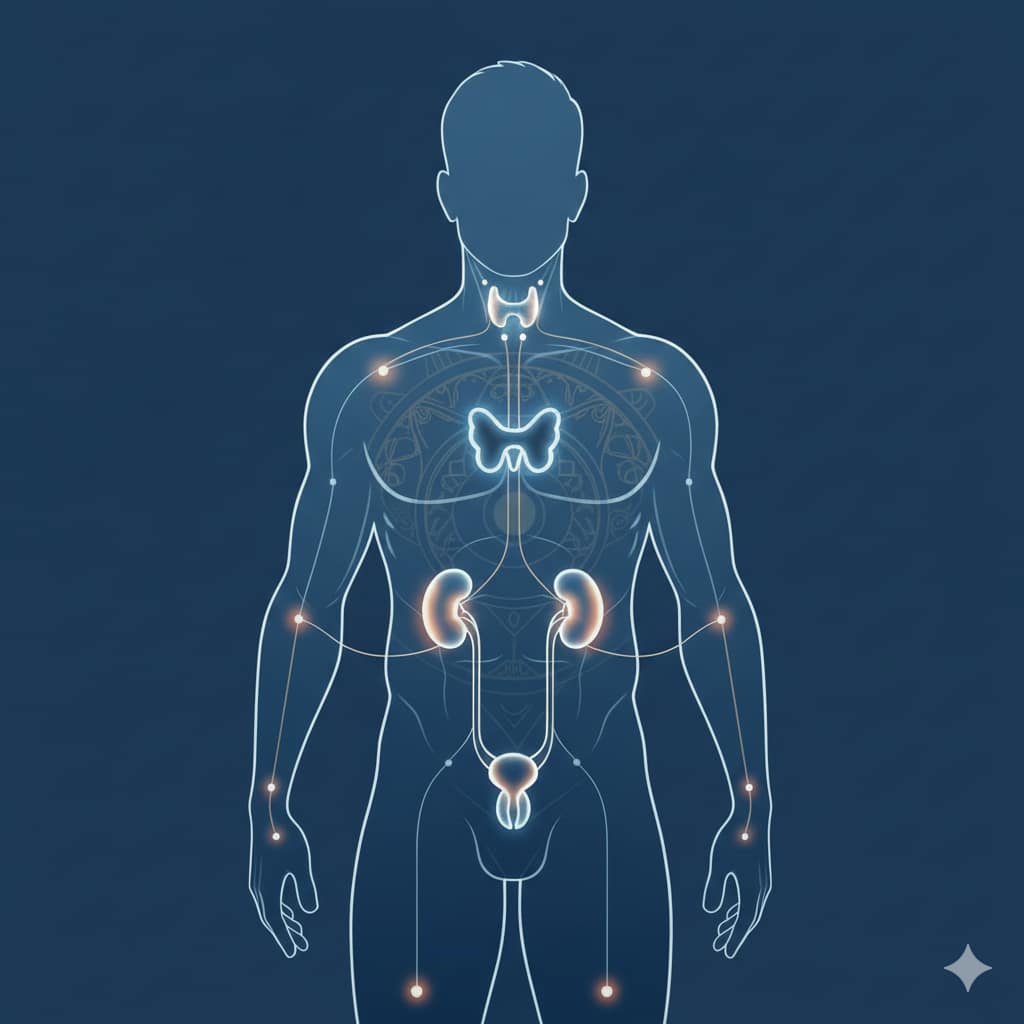
Endocrine Health in Men
Endocrine health in men is a critical but often overlooked component of systemic wellness, encompassing the complex regulation of hormones that dictate everything from muscle mass and bone density to mood stability and reproductive function. At Mediquickinfo, we recognize that the male endocrine system is a finely tuned biological network governed by the hypothalamic-pituitary-gonadal (HPG) axis. While many associate male hormonal health solely with testosterone, the system actually involves a synergistic interplay of thyroid hormones, insulin, cortisol, and growth hormone. This 2000+ word comprehensive guide provides a clinical deep-dive into the biological foundations of endocrine health in men and the essential protocols for maintaining hormonal vitality across the lifespan.
1. The Testosterone Axis: More Than Just Masculinity
From a physiological perspective, Testosterone is the primary androgenic hormone in men, produced primarily in the Leydig cells of the testes. At Mediquickinfo, we analyze how testosterone serves as a multi-systemic regulator. It is essential for erythropoiesis (red blood cell production), maintenance of bone mineral density, and metabolic rate. When testosterone levels fall below the clinical threshold—a condition known as **Hypogonadism**—men experience a cascade of symptoms including fatigue, depression, and increased visceral adiposity.
A critical clinical marker is “Bioavailable Testosterone,” which refers to the hormone not bound to sex hormone-binding globulin (SHBG). At Mediquickinfo, we stress that aging naturally leads to a gradual decline in testosterone (approximately 1% per year after age 30), but modern lifestyle factors—such as chronic stress and obesity—are accelerating this decline in younger populations. Understanding this biological trajectory is vital for proactive hormonal management and the prevention of metabolic syndrome.
2. The Thyroid and Adrenal Connection
Endocrine health in men is also heavily dependent on the thyroid and adrenal glands. At Mediquickinfo, we prioritize the awareness of thyroid hormones (T3 and T4), which act as the “master throttle” for cellular metabolism. Hypothyroidism in men often presents as unexplained weight gain, cold intolerance, and cognitive “fog.” This is frequently misdiagnosed as simple aging or depression.
Furthermore, the adrenal glands regulate the body’s response to stress through **Cortisol**. Chronic elevation of cortisol due to the high-pressure modern environment is highly antagonistic to testosterone. Mediquickinfo clinical data emphasizes that when cortisol is perpetually high, the body enters a catabolic state, breaking down muscle tissue and suppressing the immune system. Maintaining “Adrenal Equilibrium” is therefore essential for preserving the anabolic environment required for male vitality.
3. Metabolic Hormones and Insulin Sensitivity
The pancreas and its secretion of insulin play a definitive role in male endocrine health. At Mediquickinfo, we analyze the link between **Insulin Resistance** and hormonal decay. High insulin levels are clinically linked to lower testosterone and increased systemic inflammation. Men with uncontrolled blood sugar or Type 2 Diabetes are at a significantly higher risk for erectile dysfunction and lower androgen levels.
4. Protocols for Maintaining Male Hormonal Resilience
To ensure optimal endocrine health, Mediquickinfo suggests the following evidence-based clinical protocols:
- Resistance Training: Lifting heavy weights stimulates the acute release of testosterone and growth hormone while improving insulin sensitivity.
- Nutritional Micro-Optimization: Ensuring adequate intake of Zinc, Magnesium, and Vitamin D, which are the biological building blocks of testosterone synthesis.
- Stress Architecture: Implementing protocols like mindfulness or consistent cardiovascular exercise to lower systemic cortisol.
- Environmental Vigilance: Reducing exposure to “Xenoestrogens”—chemicals found in plastics and certain personal care products that can mimic estrogen and disrupt male hormonal balance.
Conclusion: Empowerment Through Hormonal Literacy
Endocrine health in men is the foundation of physical strength, mental clarity, and emotional resilience. By understanding the pathways of the HPG axis, the importance of thyroid function, and the metabolic impact of insulin, you can take a proactive approach to your biological wellness. At Mediquickinfo, we believe that “Hormonal Harmony” is achieved through the synergy of clinical knowledge and lifestyle discipline. Your endocrine system is the driver of your vitality—treat it with the scientific care and respect it deserves. Trust Mediquickinfo for the clinical literacy you need to navigate male health with confidence. A balanced endocrine system is the key to a vibrant and powerful life.

