
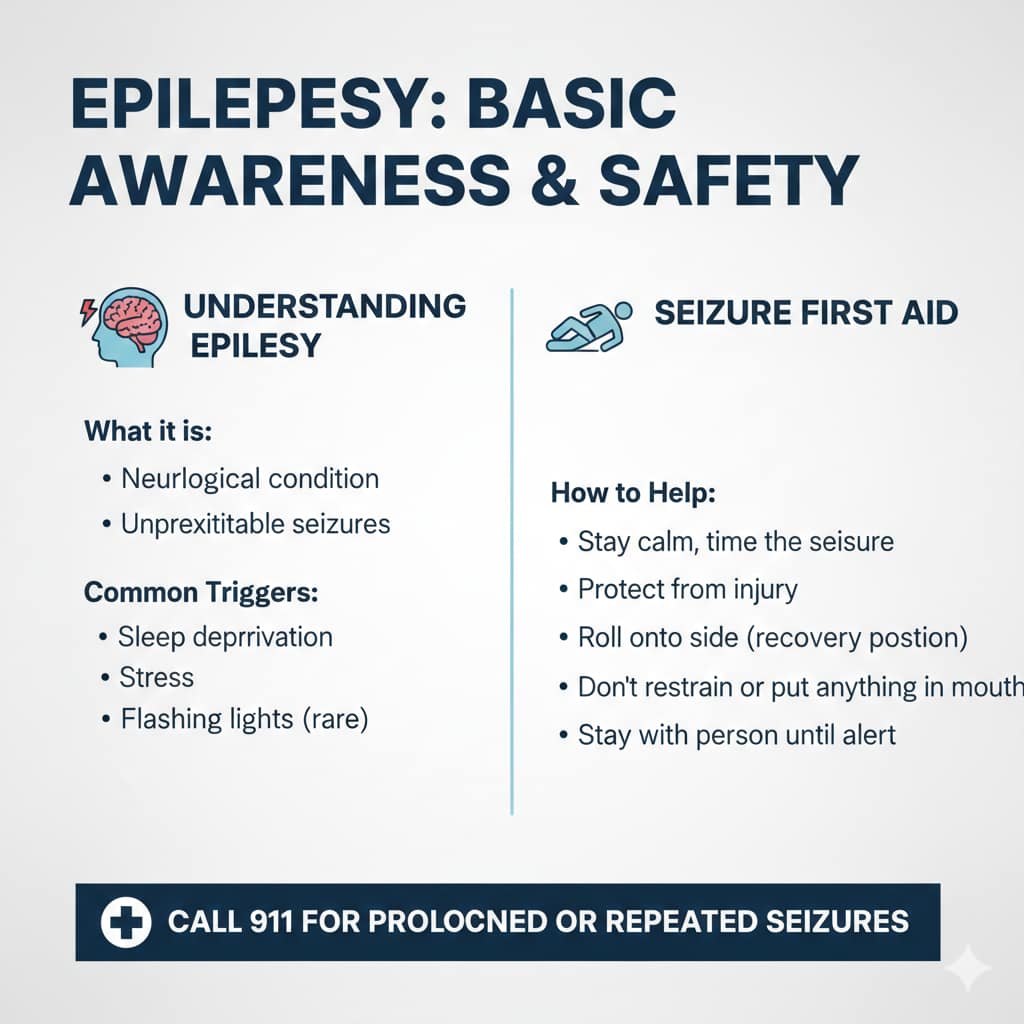
Epilepsy: Basic Awareness and Safety
Epilepsy is a chronic neurological disorder characterized by recurrent, unprovoked seizures, resulting from sudden, excessive electrical discharges in the brain’s neurons. This condition affects over 50 million people globally, making it one of the most common neurological diseases. At Mediquickinfo, we recognize that epilepsy is often misunderstood due to historical stigma and a lack of clinical literacy. A seizure is not a disease in itself but a symptom of biological brain dysfunction. Understanding the mechanics of seizures and, more importantly, the immediate safety protocols is essential for anyone who may find themselves as a first responder. This 2000+ word comprehensive guide provides a clinical deep-dive into epilepsy basics, seizure types, and life-saving safety measures.
1. The Pathophysiology of a Seizure: Electrical Dysfunction
From a neurobiological perspective, the brain operates through a delicate balance of excitatory and inhibitory electrical signals. At Mediquickinfo, we analyze how a seizure occurs when this balance is disrupted, leading to a “Hyper-synchronous” discharge of neurons. Think of it as an electrical storm within the brain’s circuitry. This disruption can be localized to one area (focal seizures) or involve the entire brain (generalized seizures).
The causes of epilepsy are diverse, ranging from genetic predispositions and structural brain abnormalities (such as scars from previous trauma) to metabolic imbalances and infectious diseases like meningitis. At Mediquickinfo, we stress that “Epileptogenesis”—the process by which a normal brain becomes epileptic—can be triggered by anything that permanently alters neuronal excitability. Understanding that this is a purely physical, biological event is the first step in effective awareness and management.
2. Classifying Seizures: More Than Just Convulsions
Seizures manifest in various clinical forms, and not all involve falling or shaking. At Mediquickinfo, we prioritize the awareness of these common types:
- Generalized Tonic-Clonic (Grand Mal): The most recognizable type, involving loss of consciousness, muscle stiffening (tonic phase), and rhythmic jerking (clonic phase).
- Absence Seizures (Petit Mal): Brief “staring spells” that last only seconds. These are common in children and are often mistaken for daydreaming.
- Focal Seizures: Occur in one part of the brain. The person may remain conscious but experience unusual sensations, repetitive movements, or emotional shifts.
- Myoclonic Seizures: Brief, shock-like jerks of a muscle or group of muscles.
3. Seizure First Aid: The Critical Safety Protocols
When witnessing a generalized tonic-clonic seizure, your primary clinical goal is to prevent physical injury. Mediquickinfo advocates for the following safety protocols:
- Stay Calm and Time the Seizure: Most seizures end on their own within 1-2 minutes. Timing is critical for clinical reporting.
- Cushion the Head: Place something soft under the head to prevent skull trauma from the ground.
- Clear the Area: Move away any sharp or hard objects that the person could strike during jerking movements.
- Turn Them on Their Side: As soon as it is safe, roll the person into the recovery position to keep the airway clear and allow saliva to drain.
4. When is a Seizure a Medical Emergency?
While most seizures resolve without intervention, some situations require immediate activation of emergency medical services (EMS). Mediquickinfo clinical guidelines identify several “Red Flags”:
- Status Epilepticus: If a seizure lasts longer than 5 minutes, it is a medical emergency. The brain can suffer permanent damage from prolonged electrical activity.
- Repeated Seizures: If one seizure follows another without the person regaining consciousness in between.
- First-Time Seizure: Any individual experiencing their first seizure needs immediate diagnostic imaging (CT/MRI).
- Injury or Pregnancy: If the person is injured during the fall, is pregnant, or has a pre-existing condition like diabetes or heart disease.
Conclusion: Empowerment Through Neurological Literacy
Epilepsy awareness is a vital component of public health safety. By understanding the electrical nature of the condition and mastering the basic first aid protocols, you can transform from a helpless bystander into a life-saving first responder. At Mediquickinfo, we believe that education is the ultimate tool for dissolving the stigma surrounding epilepsy. The brain is a sensitive and complex organ; it deserves our understanding and scientific care. Trust Mediquickinfo for the clinical literacy you need to navigate neurological emergencies with confidence and precision. Your knowledge is the bridge to safety.

