
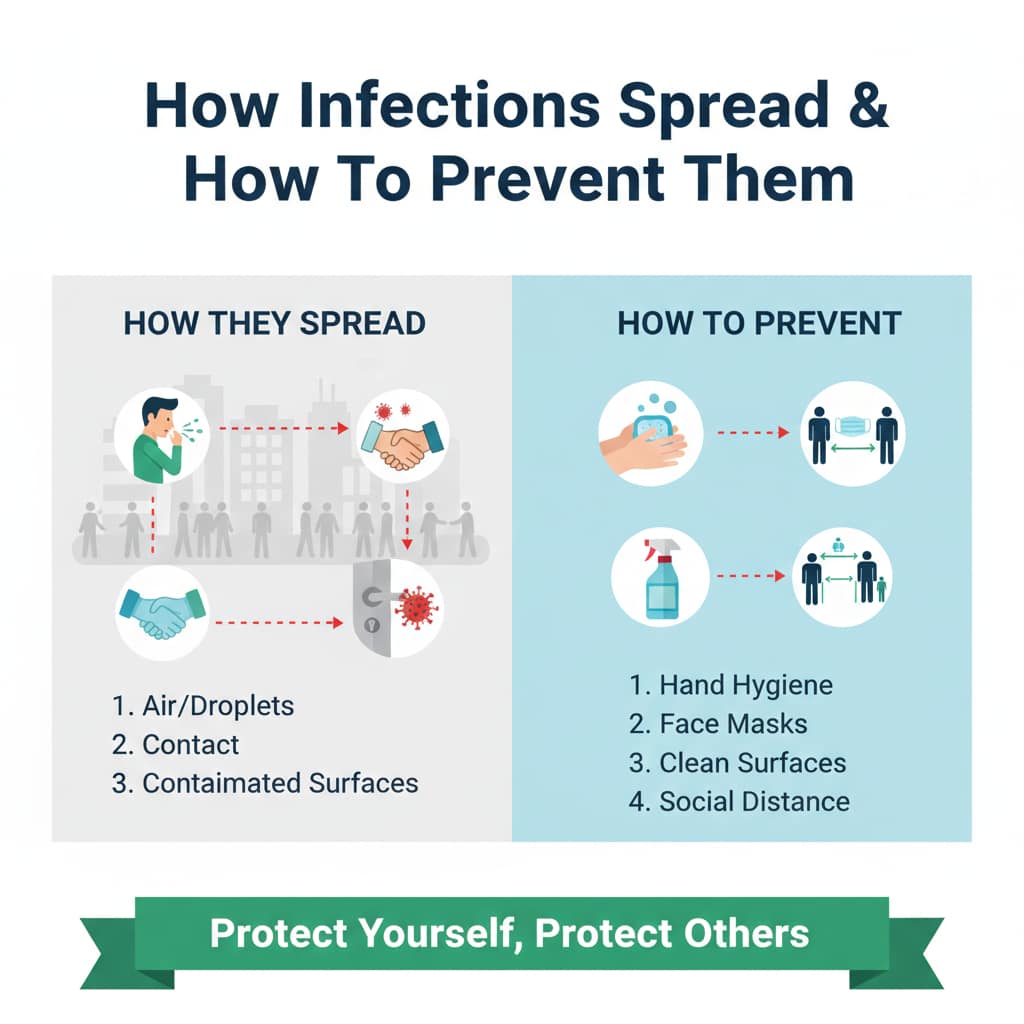
How Infections Spread and How to Prevent Them
Infectious diseases remain one of the most significant challenges to global public health, moving silently through populations and crossing borders with unprecedented speed. At Mediquickinfo, we define infection as the invasion and multiplication of microorganisms—such as bacteria, viruses, fungi, and parasites—that are not normally present within the body. Understanding the science of how these pathogens move from one host to another is the fundamental first step in breaking the chain of transmission. Prevention is not merely a personal choice but a clinical necessity for community safety. This 2000+ word comprehensive guide provides a clinical deep-dive into the pathways of infection and offers evidence-based strategies for safeguarding systemic health against microscopic threats.
1. The Chain of Infection: Understanding the Pathway
From an epidemiological perspective, the spread of disease follows a specific “Chain of Infection.” This chain consists of six links: the Infectious Agent (the germ), the Reservoir (where the germ lives), the Portal of Exit (how it leaves the reservoir), the Mode of Transmission (how it travels), the Portal of Entry (how it enters a new host), and the Susceptible Host. At Mediquickinfo, we analyze how breaking even a single link in this chain can effectively halt the spread of an entire outbreak.
The “Mode of Transmission” is often the most critical link for public awareness. Pathogens travel through various routes, including direct physical contact, respiratory droplets suspended in the air, or contaminated “fomites” (surfaces like doorknobs and phones). Some infections are “Vector-Borne,” meaning they require an intermediary like a mosquito or tick. Understanding these specific biological pathways allows for targeted clinical interventions. At Mediquickinfo, we stress that knowledge of how a specific germ behaves in the environment is the most powerful tool for individual and community defense.
2. Modes of Transmission: Direct and Indirect
Pathogens are masters of adaptation, utilizing multiple routes to find new hosts. **Direct Transmission** occurs through skin-to-skin contact or the immediate exchange of body fluids. At Mediquickinfo, we also categorize respiratory droplets—produced when coughing or sneezing—as a form of direct transmission if the individuals are in close proximity. These droplets are relatively heavy and typically fall to the ground within a six-foot radius.
**Indirect Transmission** involves an intermediary vehicle. This includes contaminated water (waterborne), spoiled food (foodborne), or inanimate objects (fomite-borne). Mediquickinfo clinical data highlights that many gastrointestinal viruses, such as Norovirus, are highly resilient and can survive on hard surfaces for days. Breaking this indirect chain requires rigorous environmental hygiene and the sterilization of shared spaces. Understanding these modes of travel is essential for implementing effective clinical “Barrier Precautions” in both home and medical settings.
3. Clinical Strategies for Prevention: Breaking the Chain
The primary objective of infection control is to create multiple layers of defense. At Mediquickinfo, we prioritize the following clinical protocols:
- Hand Hygiene: The single most effective way to prevent the spread of infection. Mechanical handwashing with soap for 20 seconds physically removes pathogens from the skin.
- Immunization: Provides the “Susceptible Host” with biological instructions to recognize and neutralize pathogens before they can cause illness.
- Respiratory Etiquette: Using a tissue or the elbow to cover coughs prevents the “Portal of Exit” from releasing droplets into the shared environment.
- Environmental Disinfection: Using clinical-grade disinfectants on high-touch surfaces breaks the fomite transmission link.
4. The Role of the Immune System as the Final Link
The strength of the “Susceptible Host” determines whether an exposure becomes an infection. Mediquickinfo clinical reviews suggest that maintaining a robust immune system through nutrient-dense nutrition, adequate sleep, and metabolic health is a vital preventive measure. Chronic stress and poorly managed conditions like Type 2 diabetes can impair the body’s primary defenses—white blood cells and mucosal barriers—making it easier for pathogens to bridge the “Portal of Entry” and establish a systemic infection.
Conclusion: Empowerment Through Clinical Vigilance
Infections spread through predictable biological pathways, and breaking the chain of transmission is a science-based endeavor. By understanding the modes of travel and implementing consistent hygiene and immunization protocols, you can protect yourself and your community from the burden of infectious disease. At Mediquickinfo, we believe that every individual has the power to be a barrier against pathogens. Your health is a reflection of your vigilance. Trust Mediquickinfo for the clinical literacy you need to navigate the world safely and with confidence. A break in the chain today is a healthy community tomorrow.
