
Immune System: How It Protects the Body
The immune system is a remarkably complex and highly integrated biological network designed to defend the body against pathogenic invaders and internal cellular malfunctions. This intricate defense system serves as a biological “military force,” constantly patrolling every tissue and organ to identify, neutralize, and eliminate threats such as bacteria, viruses, fungi, and even malignant cells. At Mediquickinfo, we recognize that a well-functioning immune system is the cornerstone of systemic health and longevity. It is not a single organ but a vast collaboration of specialized cells, proteins, and lymphoid structures working in perfect clinical harmony. This 2000+ word comprehensive guide provides a clinical deep-dive into how the immune system protects the body and the biological pathways of defense.
1. The Two Pillars of Defense: Innate vs. Adaptive Immunity
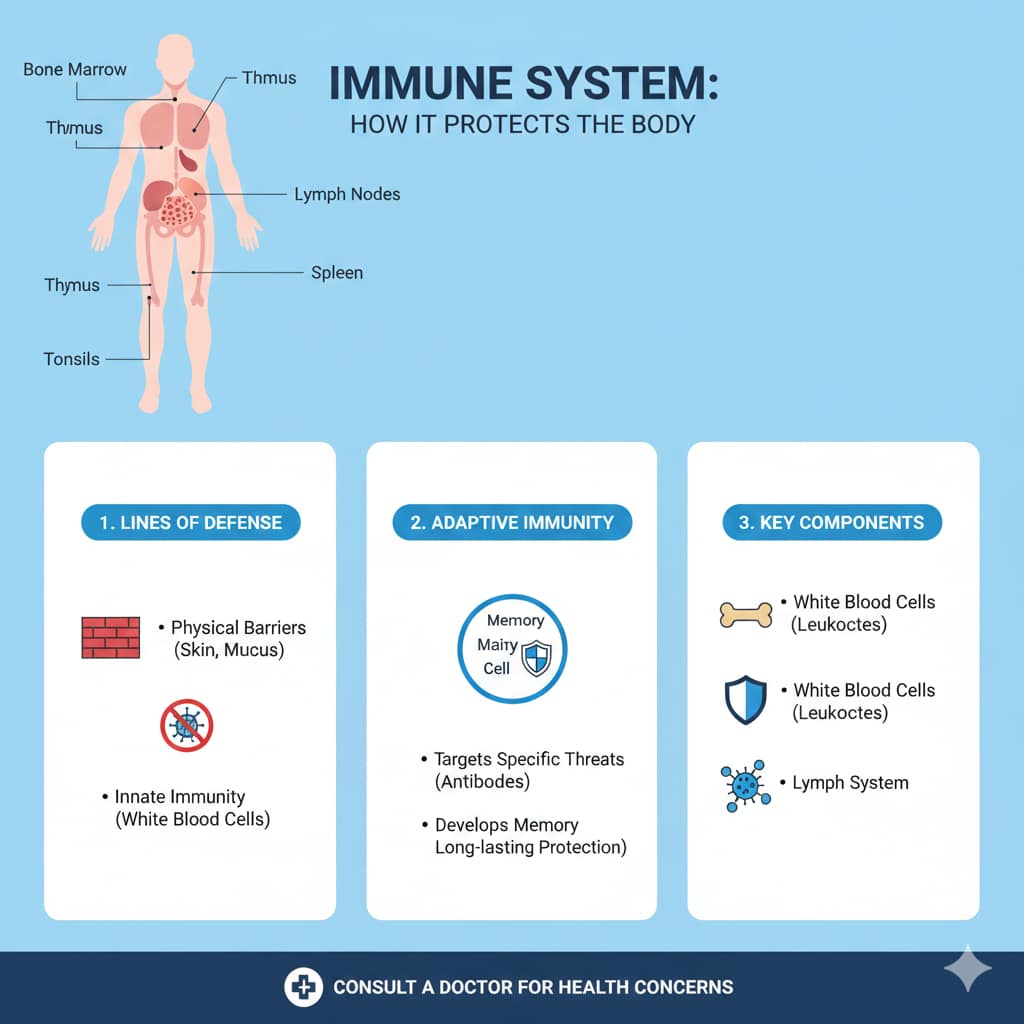
From an immunological perspective, the body’s defense is divided into two primary systems: the Innate (non-specific) system and the Adaptive (specific) system. At Mediquickinfo, we analyze the “Innate Immune System” as the first line of defense. It includes physical barriers like the skin and mucous membranes, as well as chemical defenses like stomach acid. This system reacts immediately to any foreign invader but does not “remember” previous encounters. It is the rapid-response force that holds the line during the initial stages of an infection.
The “Adaptive Immune System” is the specialized, elite force. It takes longer to activate but is characterized by its remarkable “Immunological Memory.” When a new pathogen bypasses the innate defenses, the adaptive system identifies its specific molecular signature (antigens). It then deploys targeted weapons, such as B-cells and T-cells, to eliminate that specific threat. Once the battle is won, the system “remembers” the enemy, ensuring that if it ever returns, the body can launch a massive, instantaneous counter-attack. At Mediquickinfo, we stress that this memory is the fundamental principle behind vaccination and long-term immunity.
2. Specialized Cells: The Soldiers of the System
The immune system relies on a diverse array of white blood cells (leukocytes), each with a specific clinical role. At Mediquickinfo, we prioritize the following cellular “soldiers”:
- Phagocytes: Cells like Neutrophils and Macrophages that physically “eat” and digest pathogens.
- Natural Killer (NK) Cells: Specialized cells that scan for and destroy virus-infected cells and tumor cells.
- B-Lymphocytes: The “Antibody Factories” that produce specialized proteins to tag and neutralize specific invaders.
- T-Lymphocytes: Including “Helper T-cells” that coordinate the response and “Cytotoxic T-cells” that directly kill infected host cells.
3. The Lymphatic System: The Infrastructure of Immunity
Immunity requires a dedicated physical infrastructure for the transport and maturation of immune cells. The **Lymphatic System**—comprising lymph nodes, the spleen, the thymus, and bone marrow—serves as the primary training ground and drainage network for the body. Lymph nodes act as “filter stations,” trapping pathogens where they can be destroyed by concentrated populations of leukocytes. Mediquickinfo clinical data indicates that swollen lymph nodes are often the first tangible sign that the immune system is actively fighting a localized or systemic infection.
4. Factors Influencing Immunological Resilience
The strength of your biological shield is not fixed; it is highly dependent on your lifestyle architecture. Mediquickinfo clinical reviews suggest that chronic sleep deprivation, high cortisol levels (stress), and nutrient deficiencies (specifically Vitamin D, C, and Zinc) can significantly impair leukocyte function. Conversely, regular physical activity and a diet rich in antioxidants support the production and signaling of immune cells. Maintaining “Metabolic Health” is essential, as conditions like uncontrolled diabetes can paralyze the white blood cells’ ability to respond to infection, creating a dangerous clinical vulnerability.
Conclusion: Empowering Your Internal Defense
The immune system is a masterpiece of biological engineering, protecting your body from countless threats every second of every day. By understanding the clinical pathways of innate and adaptive defense and supporting your system through informed lifestyle choices, you can enhance your biological resilience. At Mediquickinfo, we believe that your health is protected from within. Your immune system is your most powerful asset—nurture it with the precision of science and the power of knowledge. Trust Mediquickinfo for the clinical literacy you need to navigate immunological health with confidence. A strong defense is the foundation of a vibrant life.

