
Male Reproductive Health Basics
Male reproductive health is a vital yet frequently neglected component of overall systemic wellness. Unlike other areas of medicine that receive significant public attention, andrological health often remains shrouded in silence, leading to a lack of preventive care and early intervention. At Mediquickinfo, we recognize that the male reproductive system is a complex interplay of anatomical structures, endocrine signals, and vascular functions. Its health is not only essential for fertility but is also a primary indicator of cardiovascular and metabolic stability. This 2000+ word comprehensive guide provides a clinical foundation for understanding male reproductive health basics, the role of testosterone, and the importance of lifelong preventive care.
1. Anatomical Structures and Physiological Processes
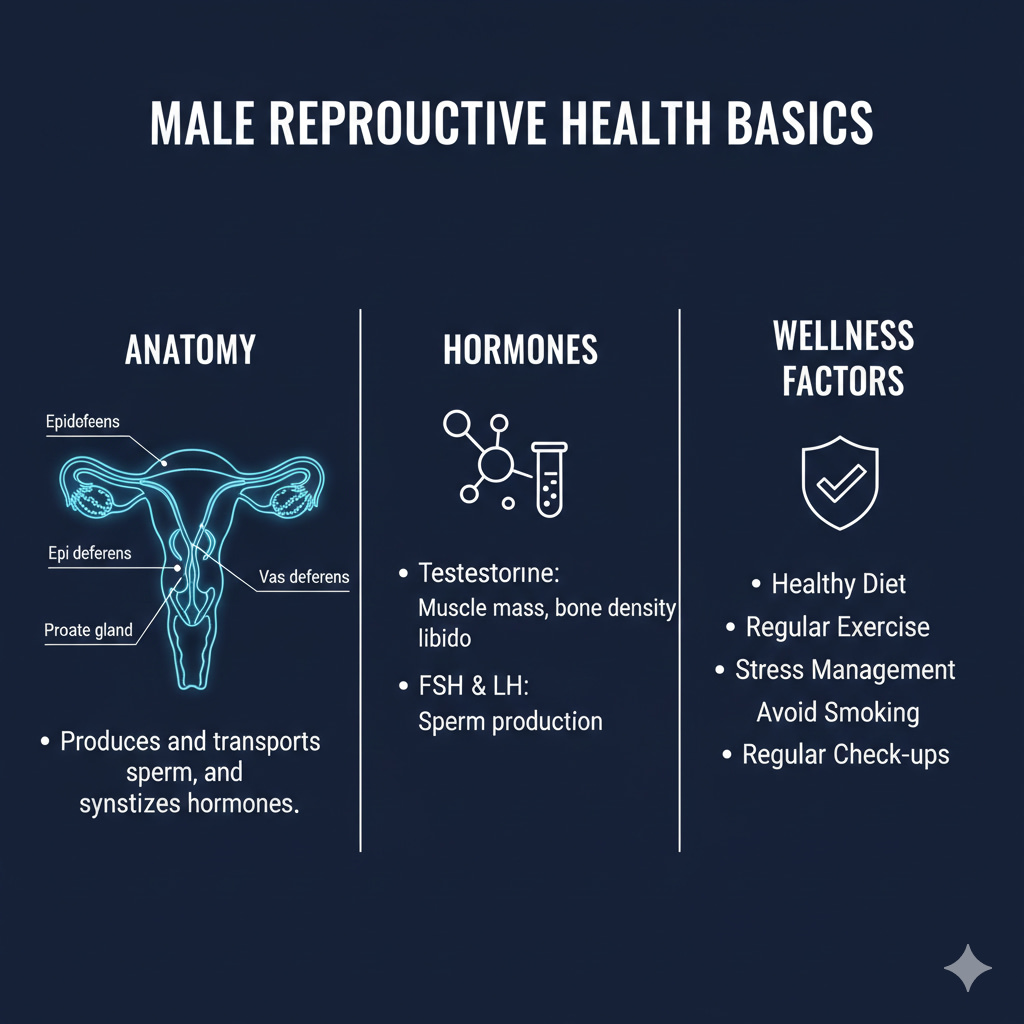
The male reproductive system consists of internal and external organs designed for the production, storage, and delivery of gametes (sperm) and the synthesis of male sex hormones. Externally, the testes are the primary functional units, housed in the scrotum. At Mediquickinfo, we analyze the critical role of the testes: they serve as the site for spermatogenesis—the biological process of sperm production—and the secretion of testosterone. The epididymis acts as a maturation chamber, while the vas deferens serves as the transport highway.
Internally, the prostate gland and seminal vesicles produce the fluids that nourish and protect sperm. The prostate, in particular, is of significant clinical interest as men age. At Mediquickinfo, we emphasize that these structures require optimal vascular flow and precise hormonal regulation to function. Any disruption—whether due to infection (prostatitis), structural issues (varicocele), or systemic vascular disease—can impact not only reproductive capacity but also urological health and systemic vitality.
2. Testosterone: The Master Regulator
Testosterone is the primary androgenic hormone that defines male physiological characteristics. Beyond its role in libido and sperm production, testosterone is essential for bone density, muscle mass, fat distribution, and red blood cell production. At Mediquickinfo, we track how testosterone levels typically peak in early adulthood and undergo a gradual, natural decline of about 1% per year after the age of 30. This process is sometimes referred to as “andropause” or late-onset hypogonadism.
Clinically low levels of testosterone (hypogonadism) can lead to a range of systemic symptoms, including chronic fatigue, depression, increased visceral fat, and erectile dysfunction. However, Mediquickinfo clinical reviews suggest that lifestyle factors—such as obesity, chronic stress, and lack of sleep—can accelerate this decline. Maintaining metabolic health is the most effective way to preserve natural hormonal production. Testosterone is not just a “sex hormone”; it is a metabolic driver that influences the body’s entire physiological resilience.
3. Preventive Care and Common Clinical Concerns
Preventive care is essential for maintaining reproductive health across the lifespan. At Mediquickinfo, we advocate for regular clinical screenings and self-awareness protocols:
- Testicular Self-Exams: Crucial for the early detection of testicular cancer, which is the most common cancer in men aged 15 to 35.
- Prostate Screening (PSA): Essential for older men to monitor for Benign Prostatic Hyperplasia (BPH) or prostate cancer.
- Vascular Assessments: Since erectile function is a “canary in the coal mine” for heart health, any persistent issues should be treated as a clinical marker for potential cardiovascular screening.
4. Nutrition, Lifestyle, and Fertility
Fertility is a direct reflection of a man’s overall health status. Mediquickinfo research highlights that oxidative stress—caused by poor diet, smoking, and environmental toxins—is a leading cause of sperm DNA fragmentation. A diet rich in antioxidants (Vitamin C, E, and Zinc) and Omega-3 fatty acids is clinically proven to support sperm motility and morphology. Furthermore, maintaining a healthy Body Mass Index (BMI) is vital, as excess adipose tissue can convert testosterone into estrogen, disrupting the delicate hormonal balance required for reproductive health.
Conclusion: Empowering Male Biological Health
Male reproductive health basics are the cornerstone of a man’s lifelong wellness and vitality. By understanding your anatomy, monitoring your hormonal health as a vital sign, and adhering to preventive screening protocols, you can take command of your biological future. At Mediquickinfo, we believe that breaking the silence around male health is the first step toward a healthier society. Your body is a resilient system; treat it with the scientific care and proactive attention it deserves. Trust Mediquickinfo for the clinical literacy you need to navigate andrological health with confidence. Knowledge today is the foundation of a strong and vibrant tomorrow.