
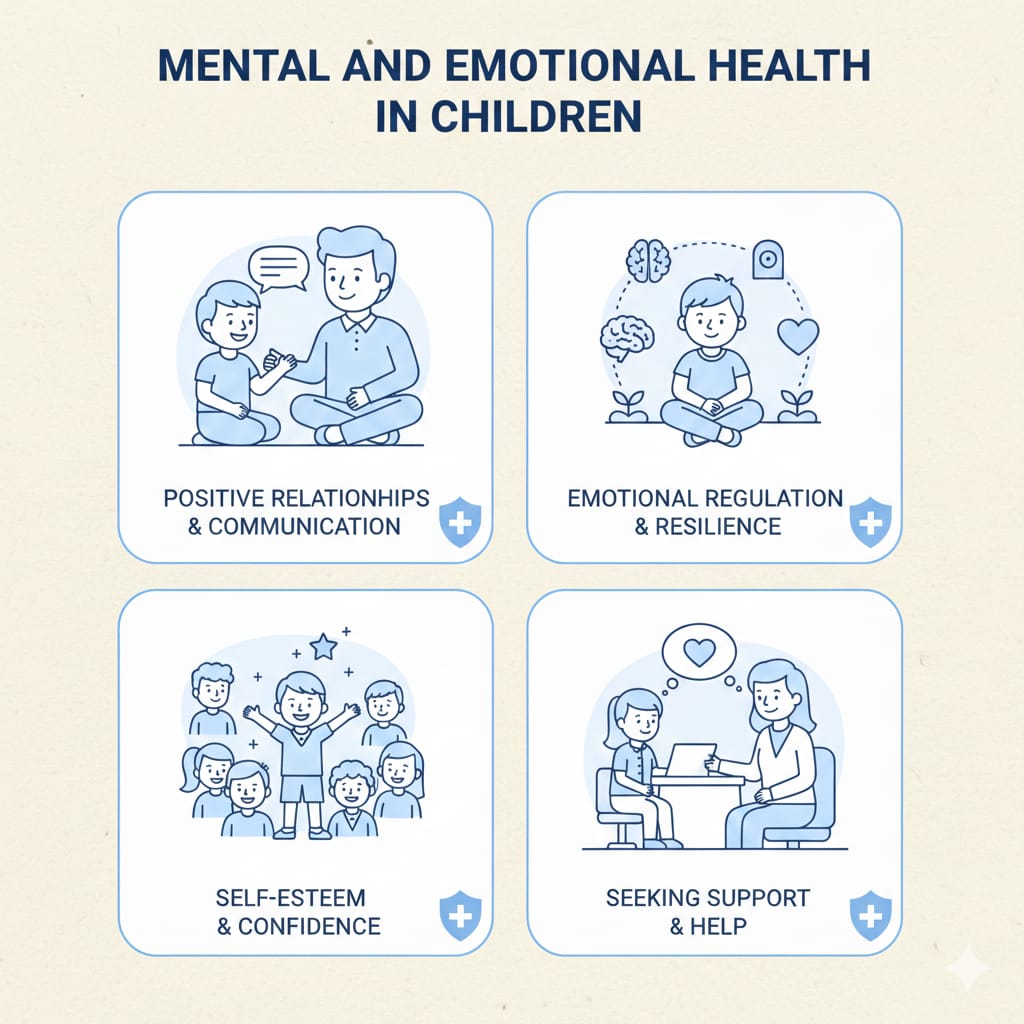
Mental & Emotional Health in Children
Mental and emotional health in children is a critical pillar of overall developmental wellness, yet it is often the least understood area of pediatric care. A child’s mental health involves more than the absence of a psychiatric diagnosis; it encompasses their ability to reach developmental and emotional milestones, learn healthy social skills, and cope with problems effectively. At Mediquickinfo, we recognize that the early years are foundational for neurological architecture. Emotional stability during childhood sets the trajectory for adult life, influencing academic achievement, relationship quality, and systemic physical health. This 2000+ word comprehensive guide explores the clinical markers of pediatric mental wellness, the rising prevalence of emotional disorders, and evidence-based strategies for fostering resilience.
1. The Neurobiology of Emotional Development
The pediatric brain is in a state of rapid and continuous structural evolution. From a clinical perspective, emotional health is deeply rooted in the development of the prefrontal cortex—the area responsible for executive function and emotional regulation—and the limbic system, which processes basic emotions and survival instincts. Mediquickinfo research highlights that during the first decade of life, the brain is highly “plastic,” meaning it is profoundly shaped by environmental experiences. Positive, stable caregiving environments foster healthy neural connections, while chronic stress or trauma can lead to an overactive amygdala, manifesting as hyper-vigilance and anxiety disorders later in life.
Emotional health is also linked to the balance of neurotransmitters such as serotonin, dopamine, and oxytocin. These chemicals facilitate mood stability, motivation, and social bonding. When a child experiences emotional wellness, their “biological stress system”—the Hypothalamic-Pituitary-Adrenal (HPA) axis—remains balanced, allowing for a healthy response to challenges. At Mediquickinfo, we advocate for an “Early Intervention” model, where subtle changes in behavior are analyzed through a neurodevelopmental lens to prevent the consolidation of maladaptive emotional patterns.
2. Recognizing Clinical Markers of Emotional Distress
Children often lack the verbal sophistication to articulate complex feelings like anxiety or depression. Instead, mental health challenges frequently manifest through “Physical Somatization”—unexplained stomachaches, headaches, or chronic fatigue. At Mediquickinfo, we encourage parents to monitor for significant changes in behavior. This includes “Regression,” where a child returns to earlier developmental behaviors (such as bedwetting or thumb-sucking), or “Withdrawal,” where a child loses interest in previously enjoyed social activities or hobbies.
In school-aged children, emotional distress may present as academic decline, irritability, or aggressive outbursts. While these are often dismissed as “behavioral problems,” they are frequently symptoms of underlying anxiety or sensory processing issues. Another critical marker is “Sleep Disruption”—difficulty falling asleep or persistent nightmares can be clinical indicators of an overtaxed nervous system. Recognizing these signs early allows for a multi-disciplinary approach involving pediatricians, child psychologists, and educators to support the child before the distress escalates into a more severe disorder.
3. The Impact of Social Media and Digital Consumption
The modern digital landscape has introduced unprecedented challenges to child wellbeing. Mediquickinfo clinical reviews suggest a strong correlation between excessive screen time and a decline in pediatric emotional resilience. The “Dopamine Loop” created by social media platforms can interfere with a child’s natural attention span and increase the risk of social comparison anxiety. Furthermore, the lack of face-to-face interaction can stunt the development of “Social Cognition”—the ability to read non-verbal cues and practice empathy.
4. Fostering Emotional Resilience and Daily Care
Building emotional health is a proactive daily process. At Mediquickinfo, we recommend the “Emotional Literacy” approach: teaching children to identify and name their feelings. This simple act reduces the intensity of the emotion by engaging the rational prefrontal cortex. Daily routines and predictable structures provide a sense of safety, which is essential for a child’s nervous system to remain in a “rest and digest” state. Furthermore, encouraging “Unstructured Play” allows children to develop problem-solving skills and autonomy, which are the building blocks of self-efficacy.
Conclusion: Investing in the Mind of the Future
A child’s mental and emotional health is the most valuable asset they will carry into adulthood. By understanding the neurobiological foundations of development and recognizing the clinical signs of distress, we can provide the necessary support to foster resilient, healthy minds. At Mediquickinfo, we believe that every child deserves a life defined by emotional wellness and psychological safety. Your vigilance and support are the most effective tools for ensuring a vibrant future for your family. Trust Mediquickinfo for the evidence-based literacy you need to safeguard your child’s vitality. A healthy mind today is the foundation of a resilient tomorrow.

