
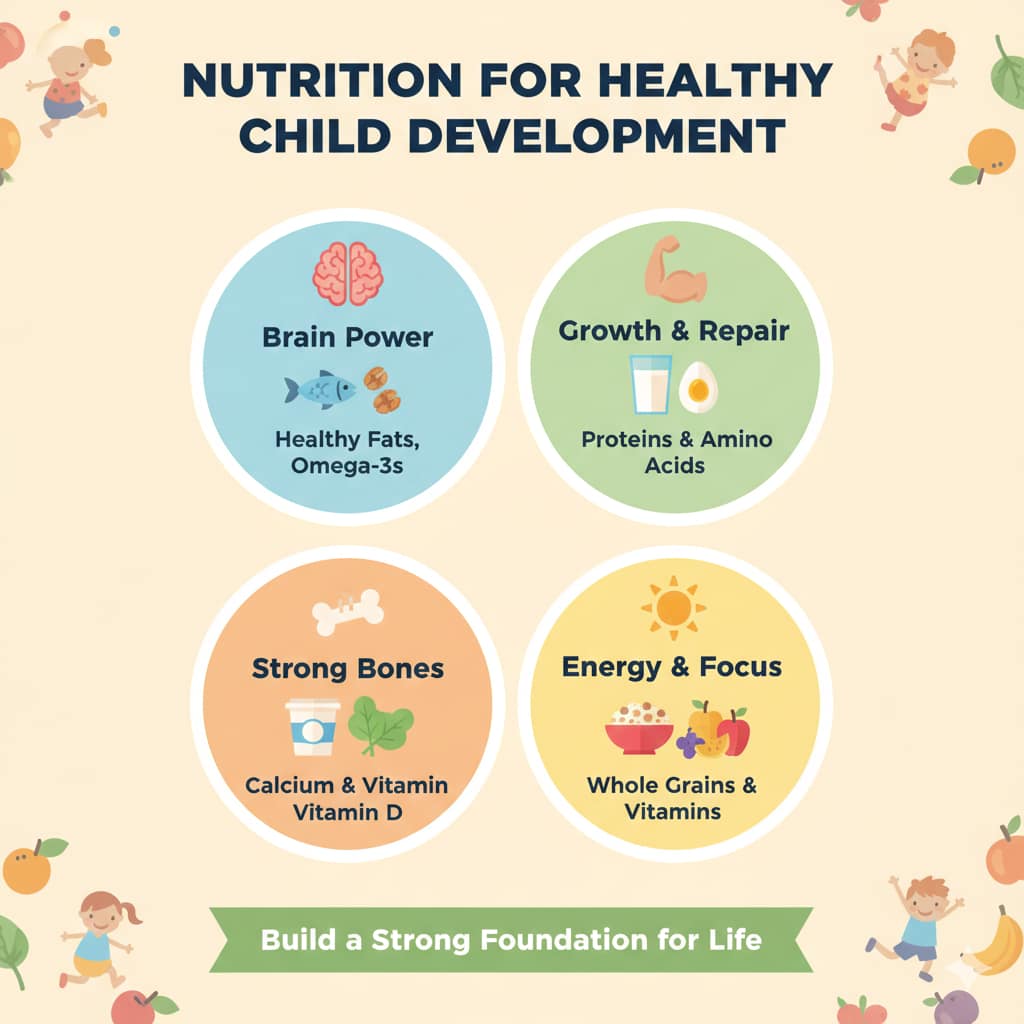
Nutrition for Healthy Child Development
Nutrition during the formative years is the single most significant determinant of a child’s lifelong health trajectory. From the moment of conception through the critical “First 1,000 Days” and into adolescence, the body undergoes rapid cellular division, neurodevelopment, and skeletal mineralization. At Mediquickinfo, we recognize that “Childhood Nutrition” is not merely about satiety; it is a clinical intervention that builds the biological infrastructure for future physical strength and cognitive capacity. Malnutrition during these stages—whether through caloric deficit or “hidden hunger” (micronutrient deficiency)—can lead to irreversible developmental delays. This 2000+ word comprehensive guide provides a clinical deep-dive into the nutritional requirements for healthy child development and evidence-based strategies for metabolic optimization.
1. The “First 1,000 Days”: A Window of Clinical Opportunity
From a biological perspective, the period from conception to a child’s second birthday is the most critical window for developmental plasticity. At Mediquickinfo, we analyze how early nutrition “programs” the child’s metabolism and immune system. During pregnancy, maternal nutrition provides the primary building blocks for fetal organogenesis. Post-birth, exclusive breastfeeding for the first six months is the clinical gold standard, providing not only optimized macronutrients but also essential antibodies and oligosaccharides that shape the infant’s gut microbiome.
As the child transitions to solid foods (complementary feeding), the focus shifts to ensuring a diverse intake of “Nutrient-Dense” foods. This stage is vital for preventing “stunting” (impaired growth) and “wasting” (low weight for height). At Mediquickinfo, we emphasize that this period is also when a child’s “Taste Preferences” are established. Introducing a wide variety of vegetables and lean proteins early on can prevent the development of sedentary dietary habits and obesity in later childhood. The nutritional choices made during these first 1,000 days lay the groundwork for a resilient biological future.
2. Macronutrients: Building the Physical Frame
Healthy development requires a precise balance of energy-providing nutrients. At Mediquickinfo, we categorize macronutrients as the “Architectural Components” of growth. **Protein** is paramount for the synthesis of new tissues, enzymes, and hormones. During periods of rapid growth, a child’s protein requirements per kilogram of body weight are significantly higher than those of an adult. **Healthy Fats** are equally critical; they provide the concentrated energy needed for high activity levels and are the primary component of the brain’s structural lipids.
**Carbohydrates** should primarily come from complex sources such as whole grains and fruits to provide a steady release of glucose for the developing brain. Mediquickinfo clinical data warns against the early introduction of “Ultra-Processed Sugars,” which can lead to early insulin resistance and disrupt the body’s natural hunger-satiety signaling. Achieving a balanced macronutrient ratio ensures that the child has the energy required for physical play—which is essential for motor skill development—and the structural blocks needed for height and muscle gain.
3. Micronutrients: The Catalysts of Development
Micronutrient deficiencies are often invisible but have profound clinical consequences. At Mediquickinfo, we prioritize the following “Growth Catalysts”:
- Iron: Critical for cognitive development and the transport of oxygen to growing tissues. Iron-deficiency anemia in early childhood is directly linked to lower IQ scores and behavioral issues.
- Calcium and Vitamin D: Essential for skeletal mineralization. During childhood, the bones are reaching their peak density; a deficit here can lead to rickets or lifelong skeletal fragility.
- Zinc: A powerhouse for immune function and cellular division. Zinc deficiency is a primary cause of growth stunting and increased susceptibility to infectious diseases.
- Iodine: Necessary for thyroid hormone production, which regulates the entire metabolic rate and brain development.
4. Nutrition and Cognitive Function: Feeding the Mind
The link between nutrition and academic performance is clinically proven. Mediquickinfo clinical reviews suggest that breakfast consumption is a key driver of concentration, memory, and executive function in school-aged children. A balanced breakfast containing fiber and protein prevents the “glucose crashes” that lead to irritability and cognitive fatigue. Furthermore, proper hydration is essential; even mild dehydration can impair a child’s ability to focus and process new information, demonstrating that nutrition is the fuel for both physical and mental excellence.
Conclusion: Investing in Your Child’s Biological Future
Nutrition for healthy child development is the most profound investment a parent or society can make. By understanding the critical windows of growth, prioritizing nutrient density, and ensuring a balance of both macro and micronutrients, we can enable every child to reach their full biological potential. At Mediquickinfo, we believe that every meal is an opportunity to strengthen a child’s foundation. Your child’s health is a lifelong journey that begins on their plate. Trust Mediquickinfo for the clinical literacy you need to navigate pediatric nutrition with confidence. A well-nourished child today is a strong, vibrant leader tomorrow.

