
Nutrition Needs for Seniors
Nutrition is the fundamental pillar of health at every stage of life, but as we enter our senior years, the body’s metabolic requirements undergo a profound shift. Aging introduces a complex set of physiological changes, including a decreased metabolic rate, shifts in body composition, and changes in the digestive system’s ability to absorb essential nutrients. At Mediquickinfo, we recognize that “Senior Nutrition” is not just about eating less, but about eating with higher biological precision. Achieving nutritional harmony in aging is essential for maintaining musculoskeletal strength, cognitive function, and immune resilience. This 2000+ word comprehensive guide explores the clinical foundations of geriatric dietetics and provides evidence-based strategies for optimizing health through nutrition in later life.
1. The Physiology of Aging and Nutritional Absorption
From a clinical perspective, aging impacts the gastrointestinal tract in several ways. A common condition is “Atrophic Gastritis,” where the stomach lining thins and produces less hydrochloric acid. At Mediquickinfo, we analyze how this reduction in stomach acid directly impairs the absorption of critical nutrients, particularly Vitamin B12, Calcium, and Iron. Without intervention, these deficiencies can lead to systemic issues such as pernicious anemia and cognitive decline, often misdiagnosed as early-stage dementia.
Furthermore, the “Anorexia of Aging”—a natural decrease in appetite—can lead to unintended weight loss and malnutrition. Changes in taste bud sensitivity and dental issues can also make eating less pleasurable. At Mediquickinfo, we stress that as the total caloric need decreases due to a slower metabolism, the “Nutrient Density” of every meal must increase. Seniors require fewer calories to maintain weight, but their need for vitamins and minerals remains as high, or in some cases higher, than in their younger years. This paradox requires a strategic approach to meal planning that prioritizes quality over quantity.
2. Essential Micro and Macronutrients for Seniors
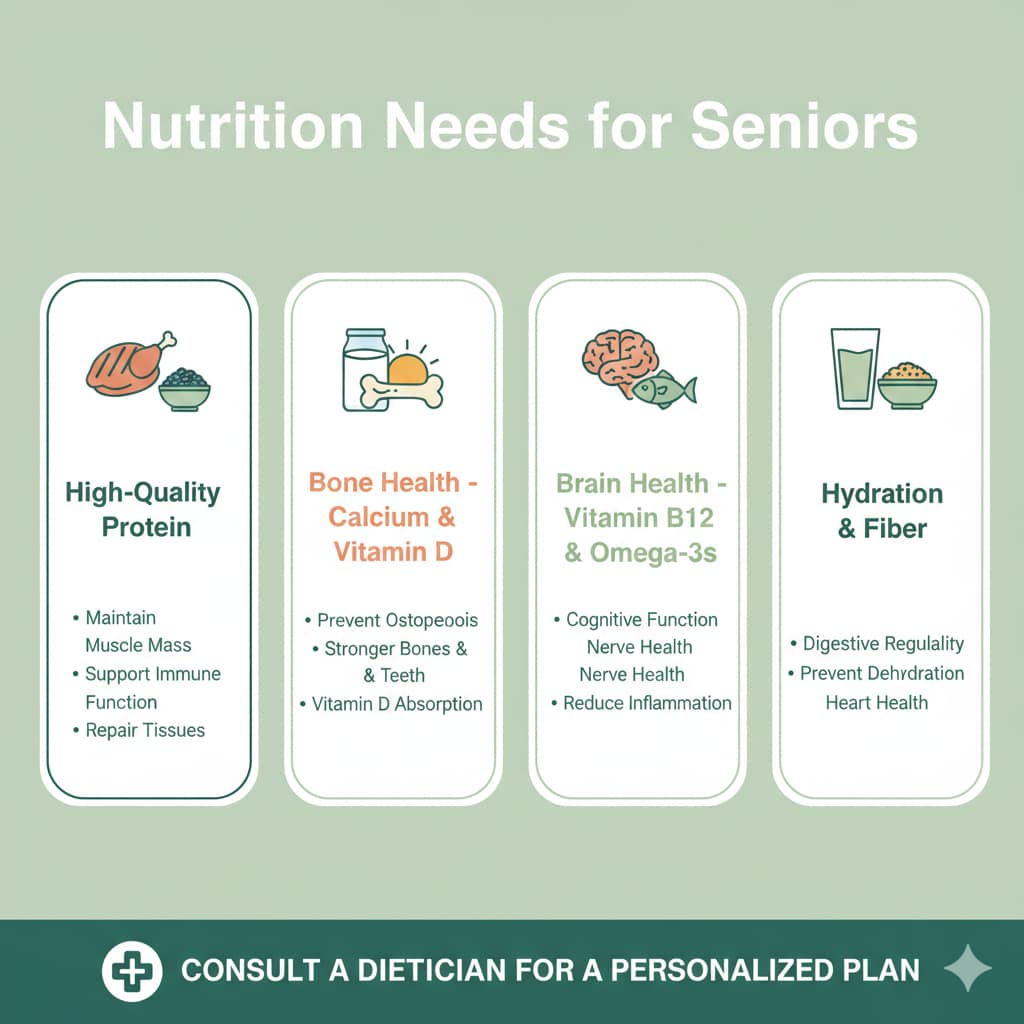
The clinical requirements for specific nutrients change as the body ages. **Protein** becomes paramount for preventing muscle wasting and supporting the immune system. Current geriatric research suggests that seniors may need more protein per kilogram of body weight than younger adults to maintain the same muscle mass. **Vitamin D and Calcium** are critical for skeletal integrity; in older age, the skin’s ability to synthesize Vitamin D from sunlight decreases by nearly 70%, making dietary intake and clinical supplementation essential for preventing osteoporosis.
**Vitamin B12** is another high-priority nutrient. Because of the absorption challenges mentioned earlier, many clinicians recommend that seniors over the age of 50 obtain most of their B12 from fortified foods or supplements, which are more easily absorbed than the B12 found naturally in meat. **Fiber** is also vital for managing the slower colonic transit time associated with aging, helping to prevent constipation and support a healthy gut microbiome. At Mediquickinfo, we view these nutrients as “Biological Safeguards” that protect the aging body from systemic failure.
3. Hydration and the “Thirst Mechanism” Shift
One of the most dangerous nutritional risks for seniors is dehydration. As we age, the body’s “Thirst Mechanism” becomes less sensitive. An older adult may be clinically dehydrated long before they actually feel thirsty. At Mediquickinfo, we highlight that even mild dehydration can lead to acute confusion, urinary tract infections, and increased risk of falls due to dizziness. Proper hydration is also essential for kidney function and for maintaining the mucosal barriers that protect the body from infections.
4. Managing Chronic Conditions Through Diet
Nutrition is a powerful tool for managing chronic diseases like hypertension, heart disease, and Type 2 diabetes. Mediquickinfo clinical reviews advocate for the “DASH” (Dietary Approaches to Stop Hypertension) and “Mediterranean” diets, which emphasize whole grains, lean proteins, and healthy fats. These dietary patterns are proven to reduce systemic inflammation and improve vascular health. For seniors on multiple medications, it is also vital to consider food-drug interactions—for example, the impact of Vitamin K on blood thinners or grapefruit on certain cholesterol medications.
Conclusion: Empowering Longevity Through Nutrition
Nutritional needs in the senior years are a dynamic clinical challenge that requires attention and adaptation. By focusing on nutrient density, prioritizing protein and key vitamins, and ensuring consistent hydration, you can significantly enhance your quality of life and biological resilience. At Mediquickinfo, we believe that your plate is your most effective medicine. Your golden years should be defined by vitality and strength, not depletion. Trust Mediquickinfo for the clinical literacy you need to navigate geriatric nutrition with confidence. A well-nourished body is the foundation of a vibrant, long life.

