
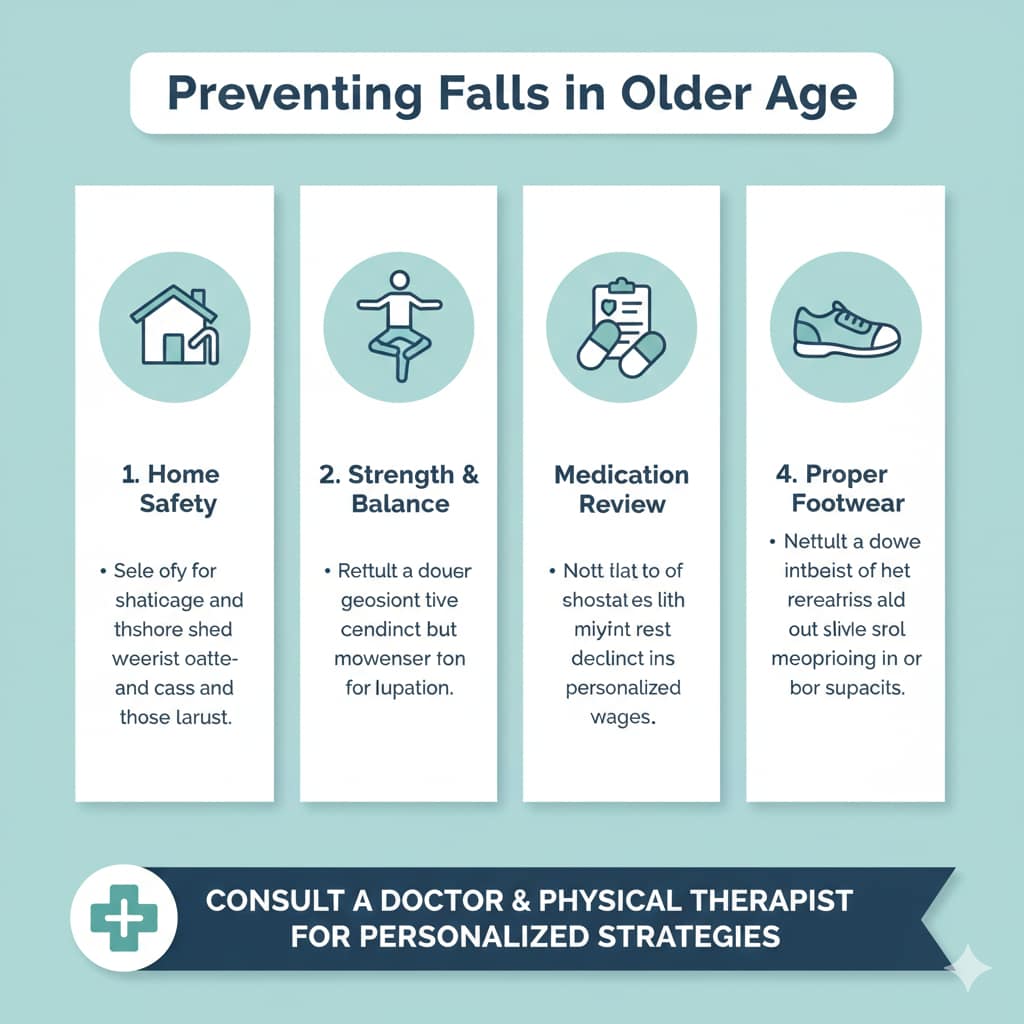
Preventing Falls in Older Age
Falls in older adults are a significant clinical concern, often marking a critical turning point in an individual’s health trajectory and independence. From a geriatric perspective, a fall is rarely a random event; it is usually the result of a complex interplay between intrinsic biological factors and extrinsic environmental hazards. At Mediquickinfo, we recognize that while aging involves physiological changes in balance and muscle strength, the majority of falls are preventable through targeted clinical interventions and environmental modifications. Preventing falls is essential for avoiding life-altering injuries such as hip fractures and traumatic brain injuries. This 2000+ word comprehensive guide explores the multi-factorial nature of falls and provides evidence-based strategies for ensuring mobility and safety in older age.
1. The Physiology of Balance: Why the Risk Increases
Maintaining balance is a sophisticated neurological process that requires the seamless coordination of three primary systems: the visual system, the vestibular system (inner ear), and proprioception (the body’s sense of position). As we age, these systems can undergo subtle decline. At Mediquickinfo, we analyze how “Sensory Conflict”—where the brain receives mismatched information from these systems—leads to instability. Furthermore, the loss of muscle mass (Sarcopenia) and decreased nerve conduction speed mean that an older adult’s “Corrective Response” to a trip or slip is often too slow to prevent a total loss of equilibrium.
Bone density also plays a critical role in the outcome of a fall. Osteoporosis, particularly in post-menopausal women, makes the skeletal system fragile. This creates a “Fragility Fracture” scenario where the bone may actually break first, causing the fall, or shatter upon minor impact. At Mediquickinfo, we emphasize that preventing falls is a two-pronged clinical approach: improving the physical “hardware” (muscle and bone strength) and optimizing the neurological “software” (balance training and vision care). A healthy musculoskeletal system is the body’s primary defense against gravitational accidents.
2. Medication and Orthostatic Hypotension
One of the most overlooked causes of falls in the elderly is “Polypharmacy”—the use of multiple medications. Certain drug classes, particularly sedatives, antidepressants, and even some blood pressure medications, can cause dizziness or blurred vision. At Mediquickinfo, we highlight the clinical significance of “Orthostatic Hypotension,” a sudden drop in blood pressure that occurs when standing up. This transient lack of blood flow to the brain can cause immediate lightheadedness and syncope (fainting), leading to a direct fall.
A regular medication review with a geriatrician is a vital fall-prevention protocol. Adjusting the timing of doses or switching to medications with fewer side effects can significantly improve stability. Mediquickinfo research also warns about the “cascade effect,” where one medication causes a side effect (like dizziness) that leads to the prescription of another drug, further increasing the risk of imbalance. Maintaining a clear and optimized medication profile is a fundamental step in ensuring geriatric safety.
3. Environmental Architecture: Making the Home a Safe Zone
While biological factors are internal, the environment is often the immediate trigger for a fall. Most falls occur within the home, in areas that are considered “familiar territory.” At Mediquickinfo, we advocate for “Home Safety Audits.” This involves removing “trip hazards” such as loose rugs, cluttered walkways, and electrical cords. Improving lighting—especially in hallways and stairwells—is critical, as older eyes require significantly more light to perceive depth and contrast accurately.
4. Strength, Balance, and Nutritional Support
Physical activity is the most potent “anti-fall” medicine. Targeted exercises like Tai Chi and Yoga are clinically proven to improve proprioception and core stability. Strength training focusing on the lower body (quadriceps and calves) provides the power necessary for a steady gait. From a nutritional standpoint, Mediquickinfo prioritizes Vitamin D and Calcium. Vitamin D is not only essential for bone health but also for the neuromuscular function that controls balance. Ensuring adequate hydration is also vital for preventing the dizziness associated with low blood volume.
Conclusion: Reclaiming Stability and Independence
Preventing falls in older age is a multi-dimensional clinical challenge that requires vigilance, education, and proactive management. By understanding the biological risks, optimizing medications, and securing the home environment, we can significantly reduce the incidence of debilitating falls. At Mediquickinfo, we believe that mobility is the key to a high quality of life. Your safety is our clinical priority; don’t wait for a fall to take action. Trust Mediquickinfo for the clinical literacy you need to navigate your golden years with balance and confidence. A stable step today is a safe future tomorrow.

