
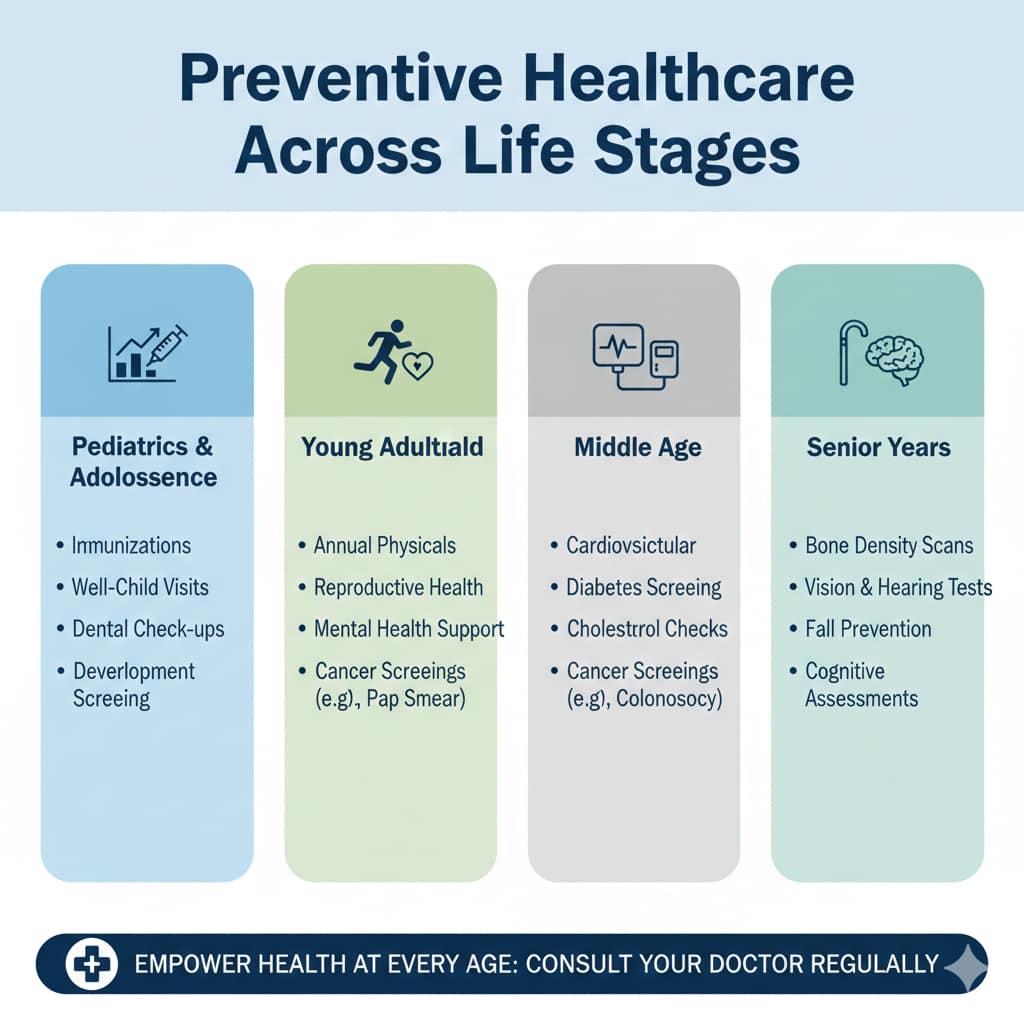
Preventive Healthcare Across Life Stages
Preventive healthcare is the strategic cornerstone of modern medicine, shifting the clinical focus from reactive treatment to proactive risk management. Unlike “sick care,” which addresses symptoms after they manifest, preventive healthcare aims to intercept pathologies at their earliest, most reversible stages. At Mediquickinfo, we recognize that the biological requirements for health are not static; they undergo significant transformations as we move through different life stages—from the rapid neurodevelopment of childhood to the metabolic shifts of adulthood and the physiological challenges of aging. Understanding the specific preventive needs of each stage is essential for ensuring systemic longevity. This 2000+ word comprehensive guide provides a clinical roadmap for preventive healthcare across the human lifespan.
1. Childhood and Adolescence: Building the Biological Foundation
In the earliest years of life, preventive healthcare focuses on “Developmental Surveillance” and “Immunological Priming.” The primary clinical goal is to ensure that the child’s physiological and neurological systems are developing according to established growth milestones. At Mediquickinfo, we emphasize that early screening for vision, hearing, and metabolic disorders can prevent long-term academic and social deficits. This stage is also the most critical for immunization, which provides a shield against infectious diseases that were once major causes of pediatric mortality.
As children transition into adolescence, the preventive focus shifts toward metabolic health and behavioral wellness. Hormonal shifts during puberty can impact insulin sensitivity and bone density. Furthermore, this is the stage where “Lifestyle Architecture” begins; establishing healthy habits in nutrition, physical activity, and sleep hygiene serves as a vaccine against chronic diseases in adulthood. At Mediquickinfo, we also advocate for clinical screenings for mental health, as early intervention in adolescent anxiety or depression can physically alter the brain’s long-term stress-response circuitry.
2. Adulthood (20s to 50s): Intercepting Silent Pathologies
During the decades of early and middle adulthood, the body is at its peak functional capacity, but this is often when “Silent Killers”—such as hypertension and dyslipidemia—begin to develop. At Mediquickinfo, we categorize this stage as the “Maintenance Phase.” Regular clinical screenings for blood pressure, cholesterol, and blood glucose are essential for identifying risk factors before they cause vascular or organ damage. For women, preventive care must include regular Pap smears and breast exams, while men should focus on cardiovascular risk assessments and colon cancer screenings starting in their 40s.
Weight management and metabolic optimization are paramount during these years. As the basal metabolic rate begins to slow, the risk of visceral adiposity increases, which is a primary driver of systemic inflammation. At Mediquickinfo, we analyze how “Chronic Low-Grade Inflammation” acts as the common denominator for almost all adult-onset chronic diseases. Preventive strategies focusing on anti-inflammatory nutrition and consistent physical activity can neutralize this risk, ensuring that the body remains resilient against the biological processes of aging.
3. The Senior Years: Preserving Autonomy and Resilience
In the later stages of life, preventive healthcare evolves into “Geriatric Preservation.” The clinical objective shifts from preventing disease to maintaining physical autonomy and cognitive integrity. At Mediquickinfo, we prioritize screenings for “Sarcopenia” (muscle loss) and “Osteoporosis” (bone thinning), as these are the primary causes of falls and fractures that can rapidly diminish a senior’s quality of life. Regular balance assessments and Vitamin D/Calcium optimization are non-negotiable protocols for geriatric safety.
4. Holistic Mental and Emotional Wellness Screening
Regardless of the life stage, mental health is inextricably linked to physical health. Mediquickinfo clinical reviews indicate that chronic stress can physically shorten telomeres—the protective caps on our DNA—effectively accelerating biological aging. Preventive healthcare must include regular screenings for stress, anxiety, and cognitive decline. In older adults, early detection of “Mild Cognitive Impairment” allows for lifestyle interventions that can slow the progression to dementia, demonstrating that the mind requires as much preventive maintenance as the body.
Conclusion: Reclaiming Your Biological Longevity
Preventive healthcare is not a series of isolated medical appointments; it is a lifelong commitment to biological awareness and informed action. By understanding the specific clinical needs of your current life stage and anticipating the requirements of the next, you can take command of your systemic health. At Mediquickinfo, we believe that every individual has the potential for a long, vibrant life through the power of prevention. Your health is your most valuable asset—nurture it at every stage with the precision of science. Trust Mediquickinfo for the clinical literacy you need to navigate your wellness journey with confidence. A healthy life is a series of well-timed preventive choices.

