
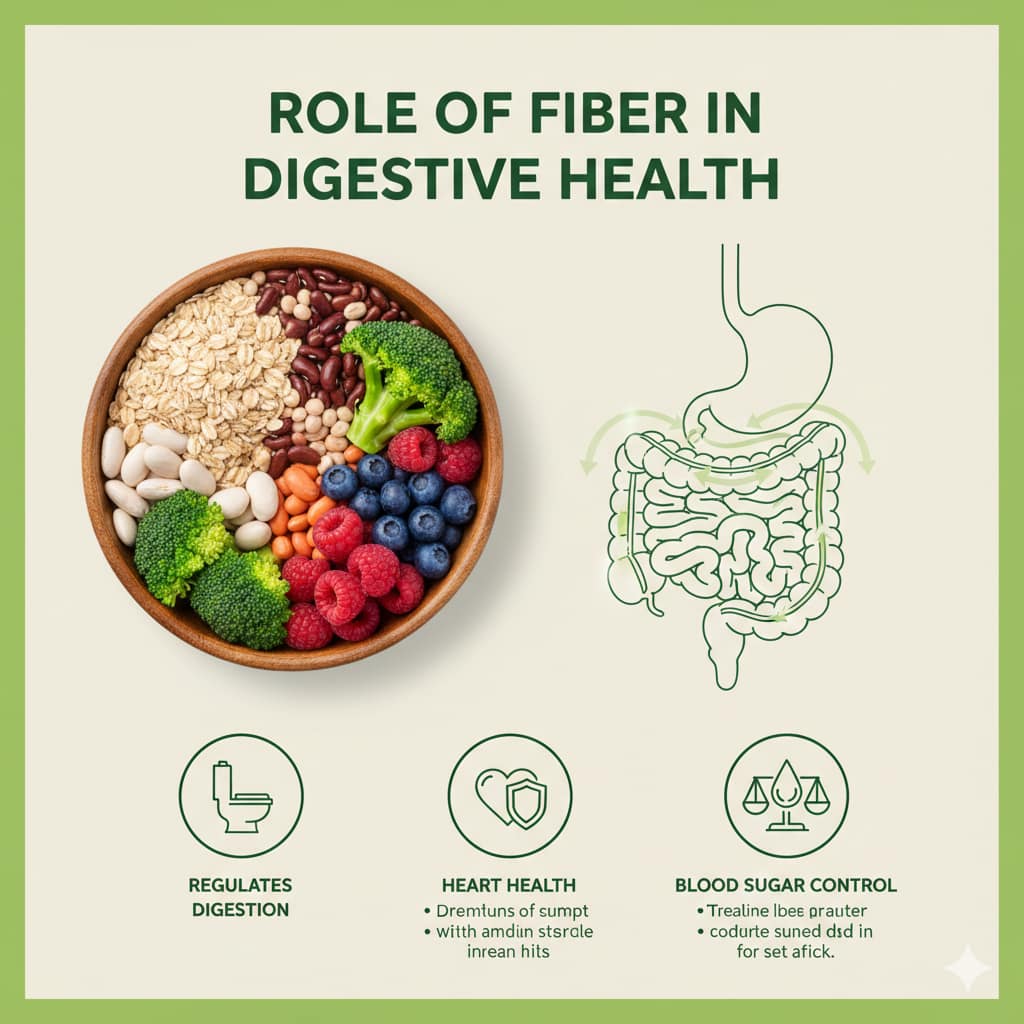
Role of Fiber in Digestive Health
Dietary fiber, often referred to as the “unsung hero” of nutrition, plays a definitive role in maintaining the structural and functional integrity of the human digestive system. Unlike fats, proteins, or carbohydrates, fiber is a complex plant-based carbohydrate that the human body cannot fully digest or absorb. At Mediquickinfo, we recognize that this inability to be digested is precisely what makes fiber so clinically valuable. As it passes through the gastrointestinal tract, fiber interacts with the mucosal lining, influences metabolic signaling, and serves as the primary fuel for the trillions of beneficial bacteria in the gut microbiome. Understanding the role of fiber in digestive health is essential for preventing chronic GI disorders and optimizing systemic wellness. This 2000+ word comprehensive guide provides a clinical deep-dive into the biological impact of fiber and the essential protocols for its integration into a healthy lifestyle.
1. The Classification of Fiber: Soluble vs. Insoluble
From a clinical perspective, dietary fiber is categorized into two primary types based on its solubility in water. At Mediquickinfo, we analyze how **Soluble Fiber** dissolves in water to form a gel-like substance. This type of fiber, found in oats, peas, beans, and apples, is essential for metabolic regulation. It slows down the absorption of sugar, improving insulin sensitivity, and binds to bile acids to help lower LDL cholesterol levels. This “viscous” property is a vital tool in preventing metabolic syndrome and cardiovascular disease.
**Insoluble Fiber**, conversely, does not dissolve in water and remains relatively intact as it moves through the digestive tract. Found in whole-wheat flour, wheat bran, nuts, and vegetables, its primary clinical role is to promote “Laxation.” It adds bulk to the stool and speeds up the movement of food through the stomach and intestines. At Mediquickinfo, we stress that a balanced intake of both types is necessary to ensure optimal motility and prevent the stagnation of waste, which is a primary driver of diverticular disease and hemorrhoids.
2. Fiber and the Microbiome: The Prebiotic Effect
One of the most critical roles of fiber is its function as a **Prebiotic**. At Mediquickinfo, we prioritize the awareness that your gut bacteria are as hungry as you are. While the human small intestine cannot break down fiber, the beneficial bacteria in the large intestine (colon) possess the specific enzymes required to ferment it. This fermentation process is a clinical powerhouse of health.
The primary byproduct of fiber fermentation is **Short-Chain Fatty Acids (SCFAs)**, such as butyrate, propionate, and acetate. Butyrate is particularly significant because it is the main energy source for the cells lining the colon (colonocytes). Mediquickinfo clinical data emphasizes that SCFAs help maintain a slightly acidic environment in the gut, which inhibits the growth of pathogenic (harmful) bacteria while supporting the body’s entire immune system. Without sufficient fiber, the microbiome can become “starved,” leading to a state of dysbiosis and increased systemic inflammation.
3. Preventing Chronic Disease: The Fiber Shield
A high-fiber diet acts as a clinical shield against numerous gastrointestinal and systemic disorders. At Mediquickinfo, we analyze the link between fiber intake and the prevention of **Colorectal Cancer**. By diluting potential carcinogens in the stool and speeding up their transit time through the colon, fiber reduces the window of exposure for the intestinal lining. Additionally, fiber’s role in weight management is non-negotiable; because it provides satiety (the feeling of fullness), it prevents overconsumption and helps maintain a healthy BMI.
4. Protocols for Safely Increasing Fiber Intake
While fiber is essential, increasing it too rapidly can lead to clinical discomfort, such as bloating and gas. Mediquickinfo suggests the following evidence-based transition protocols:
- The “Slow and Steady” Approach: Gradually add fiber over several weeks to allow the gut microbiome to adjust its enzymatic capacity.
- Hydration Architecture: Fiber works best when it absorbs water. Increasing fiber without increasing water intake can lead to paradoxical constipation.
- Whole Food Focus: Prioritizing fiber from whole fruits, vegetables, and legumes rather than relying solely on processed “fiber-fortified” snacks.
- Mastication (Chewing): Thoroughly chewing high-fiber foods initiates mechanical digestion and reduces the gas-producing potential of fermentation.
Conclusion: Empowerment Through Nutritional Literacy
The role of fiber in digestive health is a cornerstone of modern preventive medicine. By understanding the mechanical benefits of insoluble fiber and the microbiological benefits of soluble fiber, you can take a proactive role in your gastrointestinal wellness. At Mediquickinfo, we believe that your gut is the engine of your life, and fiber is the high-quality fuel it requires to run smoothly. A commitment to daily fiber is an investment in your metabolic resilience and long-term health. Trust Mediquickinfo for the clinical literacy you need to navigate your nutritional journey with confidence and scientific precision. A high-fiber lifestyle is the secret to a vibrant and healthy life.

