
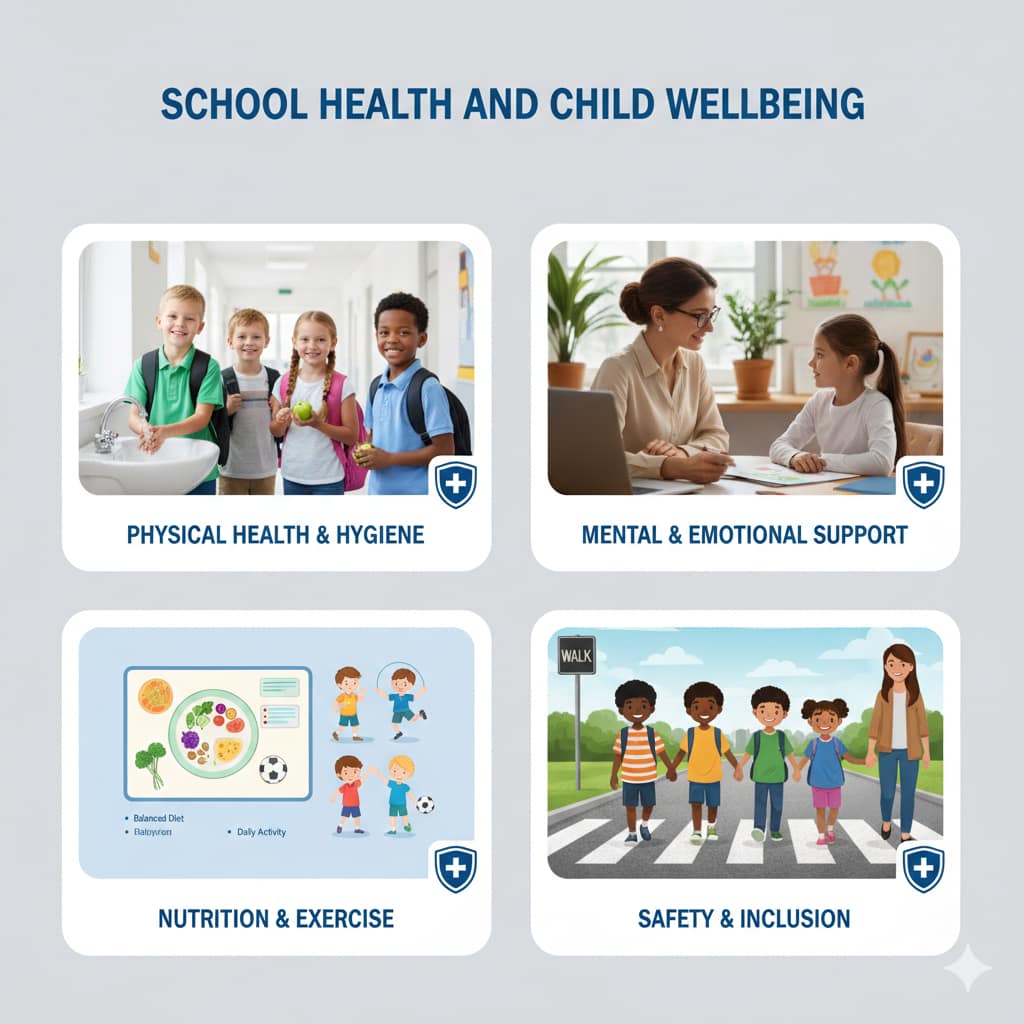
School Health & Child Wellbeing
The school environment plays a pivotal role in the physiological and psychological development of a child. Beyond academic instruction, schools serve as a primary setting for health promotion, early disease detection, and the establishment of lifelong wellness habits. At Mediquickinfo, we recognize that “School Health” is not merely the absence of illness but a holistic state of physical, mental, and social wellbeing that enables a child to thrive in an educational setting. Clinical data suggests that healthy children are more likely to achieve academic success and exhibit positive social behaviors. This 2000+ word comprehensive guide explores the essential components of school health, from nutritional standards and physical activity to mental health support and infection control.
1. Nutritional Foundations in the Educational Setting
Nutrition is the fundamental fuel for cognitive function and physical growth. In the school context, nutritional health involves the provision of balanced meals that meet the metabolic demands of growing children. At Mediquickinfo, we advocate for school lunch programs that emphasize “Nutrient Density”—diets rich in complex carbohydrates, lean proteins, and essential micronutrients like Iron, Zinc, and Vitamin B12. Poor nutrition in schools is clinically linked to fatigue, irritability, and a diminished ability to concentrate on complex tasks.
Furthermore, managing childhood obesity and the rise of Type 2 diabetes requires a collaborative effort between schools and healthcare providers. Schools must serve as “Obesity-Safe Zones,” where the consumption of high-glycemic, processed foods is discouraged in favor of whole grains and fresh produce. Clinical evidence shows that when children are taught the science of nutrition in the classroom, they are 40% more likely to make healthy dietary choices at home. This preventative approach is vital for reducing the long-term systemic inflammatory load that leads to adult-onset chronic diseases.
2. Physical Activity and Musculoskeletal Development
The modern educational environment often promotes a sedentary lifestyle, which poses significant risks to a child’s musculoskeletal health and cardiovascular fitness. At Mediquickinfo, we stress the clinical importance of “Daily Physical Activity” as a means of strengthening bone density and improving metabolic health. Exercise triggers the release of Brain-Derived Neurotrophic Factor (BDNF), a protein that supports the survival of existing neurons and encourages the growth of new ones—essentially “priming” the brain for learning.
Ergonomics in schools is another critical but often overlooked factor. Carrying heavy backpacks and sitting in poorly designed chairs can lead to chronic back pain and postural deformities like scoliosis or kyphosis. Clinical guidelines recommend that a child’s backpack should not exceed 10% to 15% of their total body weight. Schools should implement “Stretch Breaks” and ensure that classroom furniture is adjustable to accommodate the rapid growth spurts characteristic of the prepubescent years. Protecting the musculoskeletal system during these formative stages prevents chronic pain issues in adulthood.
3. Mental Health and Emotional Resilience
Child wellbeing is inextricably linked to mental and emotional stability. The school environment can be a source of significant stress, from academic pressure to social challenges like bullying. Mediquickinfo clinical reviews indicate that early identification of mental health disorders, such as anxiety and depression, is crucial for preventing long-term academic and social withdrawal. Schools must implement “Social-Emotional Learning” (SEL) programs that teach children how to manage stress, build empathy, and develop coping mechanisms.
The role of a school nurse or counselor is vital in this regard. They serve as the first line of defense for children experiencing emotional distress. At Mediquickinfo, we advocate for a “Trauma-Informed” educational approach, which recognizes that a child’s behavior is often a reflection of their underlying emotional health. By providing a safe, supportive environment, schools can mitigate the effects of Adverse Childhood Experiences (ACEs) and foster the resilience necessary for lifelong mental wellness.
4. Infection Control and Immunization Literacy
Schools are naturally high-density environments where infectious diseases can spread rapidly. Infection control is a cornerstone of school health. This involves maintaining high standards of environmental hygiene, particularly in communal areas like cafeterias and restrooms. At Mediquickinfo, we emphasize the importance of “Hand Hygiene Education”—teaching children the correct clinical technique for handwashing to reduce the transmission of respiratory and gastrointestinal pathogens.
Immunization remains the most effective clinical intervention for protecting the school community. Schools play a critical role in verifying immunization records and providing parents with evidence-based information regarding vaccine safety. Ensuring high “Herd Immunity” within the student population protects vulnerable children who may be immunocompromised. By integrating health education with rigorous infection control protocols, schools can minimize absenteeism and ensure a stable environment for academic growth.
Conclusion: Empowering the Future through Health
School health and child wellbeing are the pillars upon which a productive and healthy society is built. By integrating clinical nutrition, physical activity, mental health support, and infection control into the educational framework, we can provide children with the tools they need to reach their full potential. At Mediquickinfo, we believe that health literacy should begin in the classroom. Your child’s wellbeing is a collaborative effort between parents, educators, and healthcare professionals. Trust Mediquickinfo for the evidence-based literacy you need to safeguard your family’s future. A healthy school experience today is the foundation of a vibrant and resilient life tomorrow.

