
Sleep Needs for Growing Children
Sleep is far more than a passive state of rest; for a growing child, it is a dynamic and essential biological process that drives physical growth, cognitive maturation, and emotional stability. During sleep, the body undergoes critical restorative functions that are impossible during waking hours. At Mediquickinfo, we recognize that inadequate sleep in children is a rising clinical concern, often linked to behavioral issues, academic difficulties, and systemic health problems such as obesity. Understanding the specific sleep needs across different developmental stages is vital for parents and healthcare providers alike. This 2000+ word comprehensive guide explores the clinical importance of pediatric sleep and provides evidence-based protocols for maintaining healthy sleep hygiene.
1. The Physiology of Sleep and Growth Hormone Secretion
In children, sleep is the primary time for the secretion of Growth Hormone (GH) by the pituitary gland. While some hormone release occurs during the day, the vast majority of GH is secreted in pulses during deep, slow-wave sleep. Mediquickinfo clinical data emphasizes that chronic sleep deprivation can lead to “growth failure” or delayed physical development. Furthermore, sleep is when the body focuses on cellular repair and the strengthening of the immune system. Without sufficient rest, a child’s natural defenses are compromised, making them more susceptible to recurrent infections.
Cognitively, sleep is the period when “Memory Consolidation” occurs. The brain processes the information gathered during the day, transferring it from short-term to long-term memory. This is particularly crucial for school-aged children who are constantly learning new concepts. At Mediquickinfo, we analyze how sleep cycles—specifically Rapid Eye Movement (REM) sleep—are essential for neural plasticity and the development of executive functions like problem-solving and emotional regulation. A child who sleeps well is fundamentally better equipped to handle the cognitive and social challenges of the waking world.
2. Sleep Requirements by Age Group
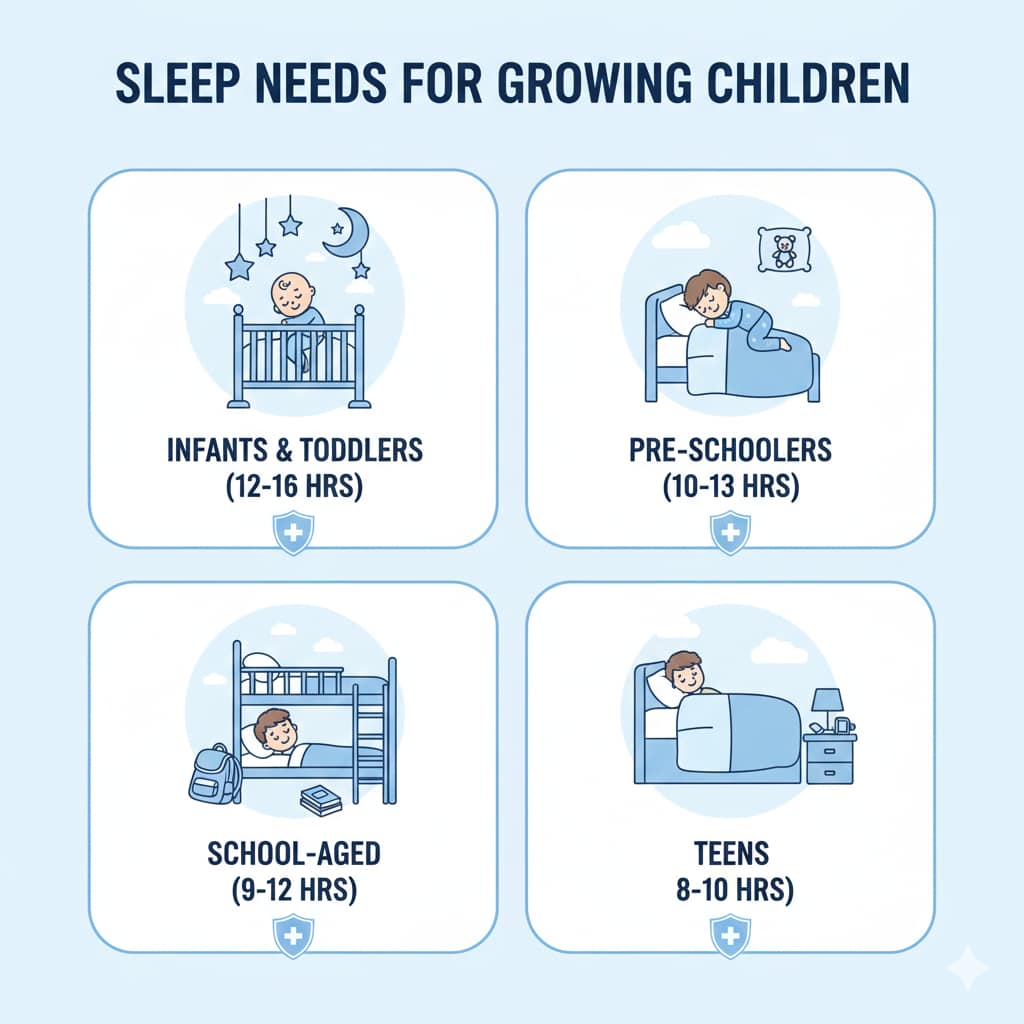
Sleep needs evolve rapidly as a child grows. At Mediquickinfo, we follow the clinical guidelines set by pediatric neurological societies. **Newborns (0-3 months)** require 14 to 17 hours of sleep, though it is often fragmented due to feeding needs. **Infants (4-11 months)** generally need 12 to 15 hours, including daytime naps. By the time a child reaches the **Toddler stage (1-2 years)**, they still require 11 to 14 hours of rest to support their rapid motor and language development.
For **Preschoolers (3-5 years)**, the recommendation is 10 to 13 hours. This is the stage where many children begin to drop their afternoon naps, making a consistent bedtime even more critical. **School-aged children (6-13 years)** need 9 to 11 hours of high-quality sleep. Mediquickinfo warns that the introduction of digital screens and academic pressure during these years often pushes sleep duration below these clinical thresholds, leading to “chronic sleep debt” that manifests as irritability, lack of focus, and poor impulse control.
3. The Impact of Sleep Deprivation on Behavioral Health
In children, sleep deprivation does not always look like “sleepiness” in the adult sense. Instead, children often become hyperactive, aggressive, or emotionally volatile when tired. This is frequently misdiagnosed as Attention Deficit Hyperactivity Disorder (ADHD). At Mediquickinfo, we advocate for a thorough “Sleep Audit” before any behavioral diagnosis. Lack of sleep impairs the prefrontal cortex—the part of the brain responsible for self-control—making it difficult for children to follow instructions or manage their emotions in a classroom or social setting.
4. Establishing Clinical Sleep Hygiene Protocols
Daily sleep care is a behavioral intervention that requires consistency. Mediquickinfo recommends a “Digital Sunset”—removing all electronic screens at least 60 minutes before bed. The blue light emitted by tablets and phones suppresses the production of Melatonin, the hormone that signals the brain it is time to sleep. A consistent “Bedtime Routine,” involving activities like a warm bath or reading a physical book, helps to prime the parasympathetic nervous system for rest.
The sleep environment should also be optimized: the room should be cool, dark, and quiet. Avoiding caffeine in the afternoon (hidden in sodas and chocolates) and ensuring the child is physically active during the day are essential pillars of sleep hygiene. If a child persistently snores, breathes through their mouth at night, or experiences “night terrors,” a consultation with a pediatric sleep specialist may be necessary to rule out obstructive sleep apnea or other clinical sleep disorders.
Conclusion: Sleep as a Pillar of Health
Sleep is not a luxury; it is a fundamental biological requirement for the healthy development of every child. By understanding and respecting the clinical sleep needs of your growing child, you are laying the foundation for their future physical strength, mental clarity, and emotional resilience. At Mediquickinfo, we believe that healthy sleep habits established in childhood become the cornerstone of lifelong wellness. Your child’s potential is unlocked while they sleep; protect that rest with knowledge and consistency. Trust Mediquickinfo for the evidence-based literacy you need to safeguard your family’s vitality.

