Stroke Awareness: Causes, Symptoms, and Prevention
A stroke, often described as a “brain attack,” is a medical emergency that occurs when the blood supply to part of the brain is interrupted or reduced, preventing brain tissue from getting oxygen and nutrients. Within minutes, brain cells begin to die. At Mediquickinfo, we recognize that stroke is a leading cause of death and long-term disability worldwide, yet it is significantly preventable and treatable if caught early. The clinical key to surviving a stroke is “Time”—the faster a patient receives medical intervention, the higher the chance of preserving neurological function. This 2000+ word comprehensive guide provides a clinical deep-dive into stroke causes, early warning symptoms, and the essential pillars of prevention to protect your neurovascular health.
1. The Pathophysiology of Stroke: Ischemic vs. Hemorrhagic
From a neurovascular perspective, strokes are classified into two primary types based on the biological mechanism of injury. At Mediquickinfo, we analyze **Ischemic Stroke**, which accounts for approximately 87% of all cases. This occurs when a blood clot (thrombus) or fatty plaque (atherosclerosis) blocks an artery leading to the brain. This blockage triggers a cascade of cellular death in the area deprived of oxygen, known as an “Infarct.”
The second type is the **Hemorrhagic Stroke**, which occurs when a weakened blood vessel ruptures and bleeds into the surrounding brain tissue. This accumulation of blood creates pressure and damages brain cells directly. At Mediquickinfo, we also emphasize the “Mini-Stroke” or **Transient Ischemic Attack (TIA)**. While a TIA only lasts a few minutes and doesn’t cause permanent damage, it is a critical clinical warning that a major stroke is imminent. Understanding these biological pathways is the first step in recognizing the gravity of a stroke event.
2. Recognizing the Symptoms: The FAST Protocol
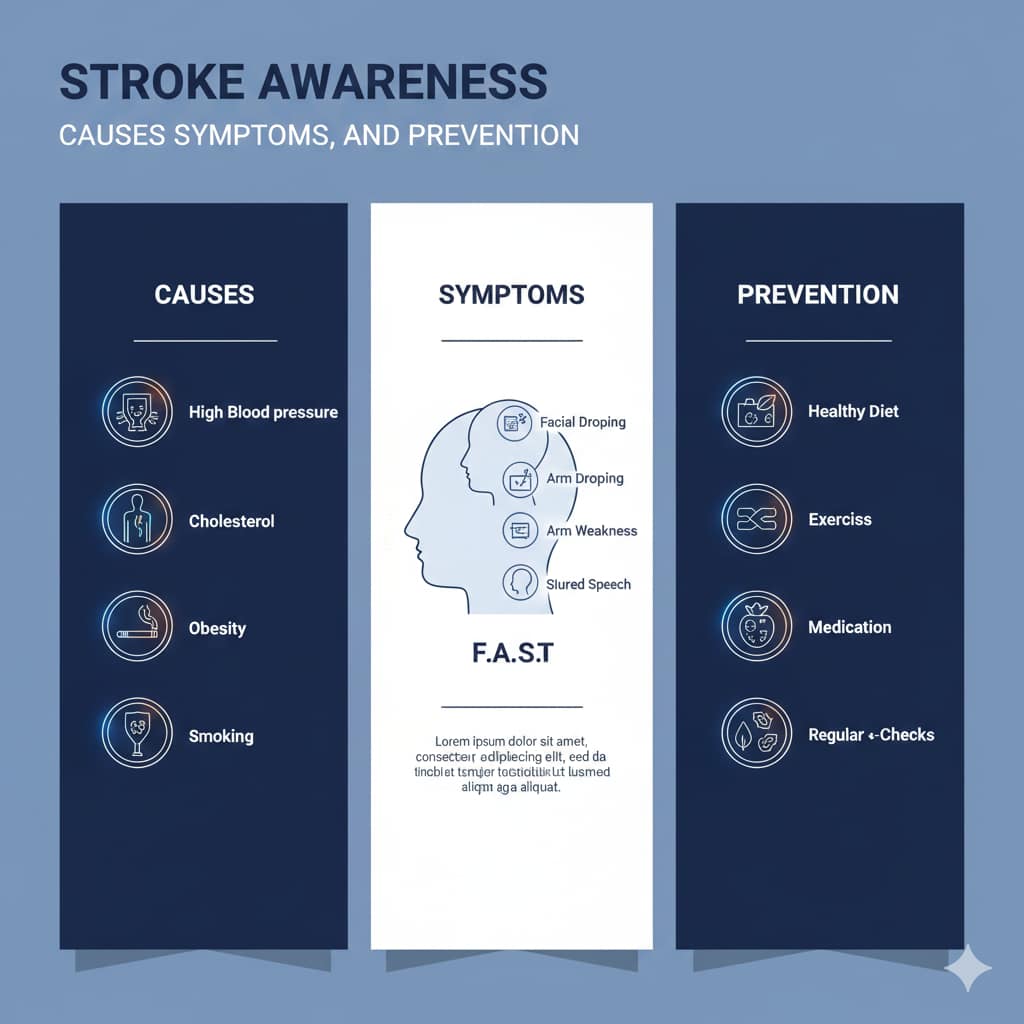
Recognizing a stroke quickly can be the difference between full recovery and permanent disability. At Mediquickinfo, we advocate for the **FAST** acronym as the global standard for symptom identification:
- F (Face Drooping): Does one side of the face droop or is it numb? Ask the person to smile; is the smile uneven?
- A (Arm Weakness): Is one arm weak or numb? Ask the person to raise both arms. Does one arm drift downward?
- S (Speech Difficulty): Is speech slurred? Is the person unable to speak or hard to understand? Ask them to repeat a simple sentence.
- T (Time to Call Emergency Services): If the person shows any of these symptoms, even if they go away, call emergency services immediately.
3. Primary Causes and Modifiable Risk Factors
The biological roots of stroke are often found in unmanaged metabolic and vascular conditions. At Mediquickinfo, we prioritize the management of **Hypertension** (High Blood Pressure), which is the single most significant risk factor for both ischemic and hemorrhagic strokes. Chronic high pressure weakens the arterial walls and promotes the buildup of plaque.
Other clinical causes include **Atrial Fibrillation (AFib)**—an irregular heart rhythm that allows blood to pool and clot in the heart—and **Diabetes**, which damages blood vessels over time. Mediquickinfo clinical data also identifies high cholesterol, tobacco use, and physical inactivity as primary drivers of neurovascular decay. By addressing these modifiable factors through lifestyle architecture and pharmacological support, the clinical risk of stroke can be reduced by up to 80%.
4. Prevention Protocols: Building Neurovascular Resilience
To prevent a stroke, a proactive clinical approach is required. Mediquickinfo suggests the following evidence-based protocols:
- Blood Pressure Management: Maintaining a clinical target of less than 120/80 mmHg is the most effective shield against stroke.
- Nutritional Architecture: Adopting a Mediterranean-style diet rich in leafy greens, healthy fats, and low in sodium to support endothelial health.
- Metabolic Conditioning: Engaging in at least 150 minutes of moderate aerobic exercise weekly to improve vascular elasticity and weight management.
- Smoking Cessation: Quitting tobacco immediately halts the progressive damage to brain arteries and improves systemic oxygenation.
Conclusion: Empowering Your Neurovascular Future
Stroke awareness is a fundamental pillar of health preservation. By understanding the causes, mastering the FAST protocol, and implementing rigorous prevention strategies, you can take command of your neurovascular destiny. At Mediquickinfo, we believe that informed action is the ultimate life-saver. A stroke can happen to anyone at any age, but with the right clinical literacy and a commitment to vascular health, it is a challenge that can be overcome. Trust Mediquickinfo for the clinical literacy you need to protect your brain and your future with confidence. Knowledge today is the foundation of a healthy tomorrow.

