
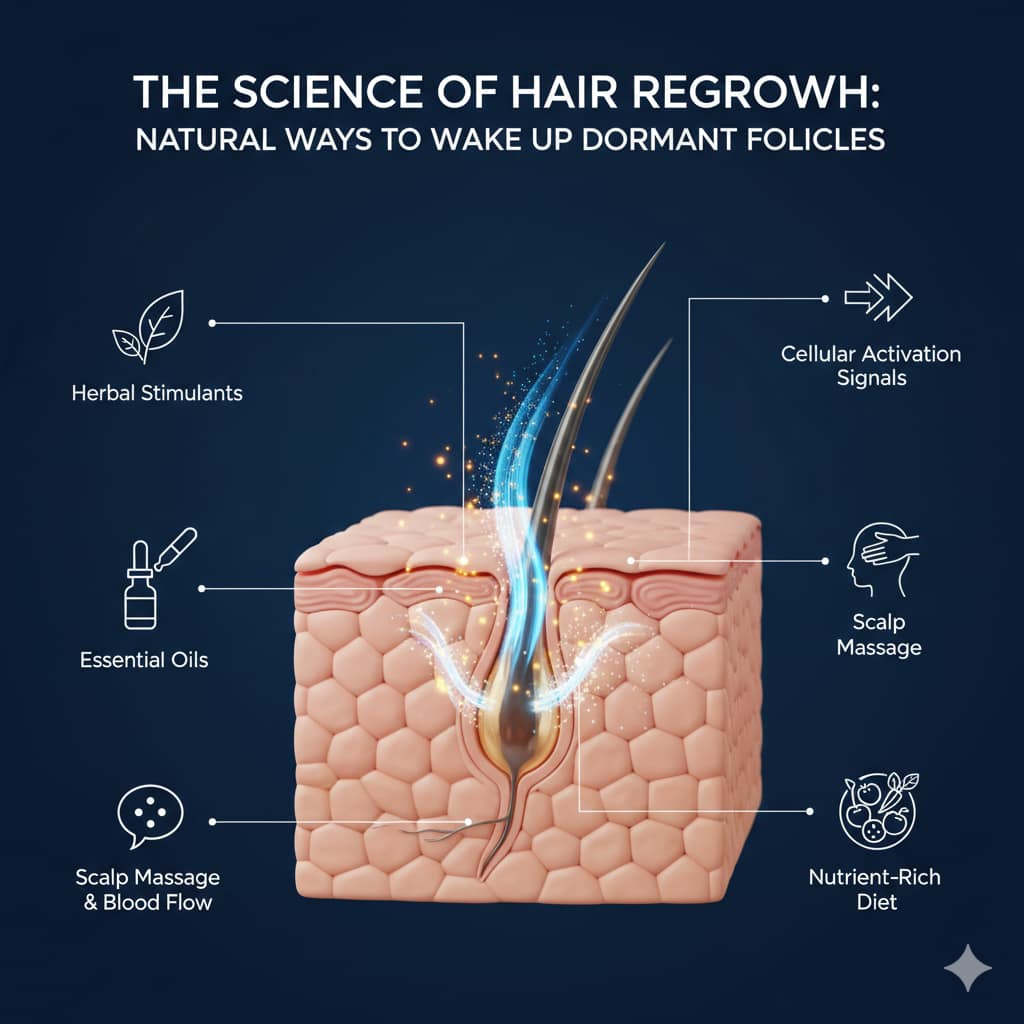
Advanced Follicular Recovery: The Science of Hair Regrowth
Hair loss is a universal concern that transcends culture and age, affecting millions of individuals worldwide. For many, the thinning of hair or the appearance of bald patches is not merely a cosmetic issue but a deeply emotional journey that impacts self-esteem and identity. However, modern science has begun to shed light on a fascinating biological reality: many follicles that have stopped producing hair are not actually “dead,” but are simply in a dormant or resting state. Understanding the science of hair regrowth involves diving deep into the cellular mechanics of the scalp and identifying natural interventions that can effectively “wake up” these sleeping follicles.
The Biological Cycle of the Hair Follicle
To understand regrowth, we must first understand the life cycle of a hair strand. Every follicle on your scalp operates independently and undergoes three distinct phases: the Anagen phase, the Catagen phase, and the Telogen phase. The Anagen phase is the active growth stage, which can last anywhere from two to seven years. During this time, cells in the root of the hair divide rapidly, adding to the hair shaft. The Catagen phase is a short transitional stage that lasts about two to three weeks, where growth stops and the outer root sheath shrinks. Finally, the Telogen phase is the resting stage, lasting around three months.
In a healthy scalp, approximately 85% to 90% of hair follicles are in the growth phase at any given time. However, various factors—ranging from hormonal imbalances and nutritional deficiencies to chronic stress—can prematurely push follicles into the Telogen phase or, worse, keep them there indefinitely. When a follicle stays in the resting phase for too long without cycling back into Anagen, it is considered dormant. The goal of natural regrowth strategies is to trigger the biological signals necessary to move these follicles back into the active growth stage. This biological “reset” requires a shift in the local environment of the scalp, moving it from a state of inflammation or depletion to one of abundance and stimulation.
Nutritional Foundations for Follicle Activation
The hair follicle is one of the most metabolically active parts of the human body. Consequently, nutritional status plays a pivotal role in its ability to function. Without the correct building blocks, the body prioritizes essential organ functions over hair production. To wake up dormant follicles, one must focus on specific micronutrients that support keratin synthesis and scalp health. The metabolic demand for hair production is so high that even minor deficiencies in key vitamins and minerals can cause the body to “shunt” energy away from the scalp, resulting in an extended Telogen phase.
The Role of Biotin and B-Vitamins
Biotin, also known as Vitamin B7, is perhaps the most well-known nutrient for hair health. It serves as a coenzyme in the metabolism of fatty acids and amino acids, which are the building blocks of protein. Since hair is primarily composed of a protein called keratin, a steady supply of biotin is essential. Furthermore, other B-vitamins help create red blood cells, which carry oxygen and nutrients to the scalp and hair follicles. B12 and Folate are particularly important, as they assist in the rapid cell division required for the Anagen phase. Without these, the follicular “machinery” lacks the spark needed to ignite new growth after a period of dormancy.
Zinc and Iron: The Minerals of Growth
Iron deficiency, even in the absence of anemia, is a leading cause of hair thinning, particularly in women. Iron helps red blood cells carry oxygen to your cells, making it a vital mineral for many bodily functions, including hair growth. When iron levels are low, the oxygen supply to the hair bulb is restricted, forcing the follicle to enter a “power-saving” dormant mode. Zinc, on the other hand, plays a crucial role in hair tissue growth and repair. It also helps keep the oil glands around the follicles working properly. Natural sources such as pumpkin seeds, lentils, and leafy greens are excellent ways to bolster these levels. Proper mineral balance ensures that the structural integrity of the newly grown hair is strong from the very first micron of growth.
Scalp Microcirculation and Mechanical Stimulation
One of the primary reasons follicles become dormant is a lack of adequate blood flow. Blood delivers the oxygen and nutrients required for the high-energy process of hair production. When microcirculation to the scalp is compromised—whether due to age, tension, or environmental factors—the follicles “starve” and enter a protective resting state. Improving blood flow is a cornerstone of natural hair regrowth, effectively “flushing” the follicle with the life-sustaining elements it needs to resume activity.
The Power of Scalp Massage
Scientific studies have shown that regular scalp massage can increase hair thickness by stretching the cells of hair follicles. This mechanical stretching (known as mechanotransduction) stimulates the dermal papilla cells to increase hair thickness and prolong the growth phase. Furthermore, massage aids in vasodilation—the widening of blood vessels—ensuring that the root of each hair receives a surge of nutrient-rich blood. Incorporating a daily five-minute massage using the fingertips in circular motions can significantly alter the environment of the scalp, reducing tension that can physically constrict blood vessels and limit the reach of the circulatory system.
Dermarolling and Microneedling
While it may sound intense, microneedling has gained massive popularity in the scientific community for its ability to revive dormant follicles. By creating microscopic “injuries” in the scalp, the body’s natural healing response is triggered. This process releases growth factors and stimulates stem cells in the hair follicle, often forcing a dormant follicle back into the Anagen phase. The micro-channels created also allow for better absorption of topical treatments. When done correctly and hygienically, this can be a powerful catalyst for regrowth, as the localized inflammation produced is actually a “pro-growth” signal that wakes up the follicular stem cells from their slumber.
Essential Oils: Nature’s Chemical Messengers
Plant-based extracts have been used for centuries to treat scalp ailments, but recent research has validated their efficacy. Certain essential oils contain compounds that mimic the effects of pharmaceutical growth stimulants without the associated side effects. These oils act as chemical messengers, signaling the follicle to transition from rest to activity by altering the hormonal and inflammatory landscape of the scalp.
Rosemary Oil: A Natural Powerhouse
In clinical trials, rosemary oil has performed similarly to minoxidil in increasing hair count over a six-month period. Rosemary oil works by improving circulation and possessing anti-inflammatory properties that soothe the scalp. It also helps in inhibiting DHT (dihydrotestosterone), a hormone that is primarily responsible for shrinking hair follicles in androgenetic alopecia. By clearing out oxidative stress and improving the “soil” of the scalp, rosemary oil allows the dormant “seed” of the follicle to sprout once again. It is particularly effective when massaged into the scalp, combining mechanical and chemical stimulation.
Peppermint Oil for Cooling Stimulation
Peppermint oil provides a cooling sensation that is more than just refreshing. The menthol in peppermint oil is a potent vasodilator. By increasing blood flow to the area where it is applied, it can encourage follicles that have “shut down” due to poor circulation to begin the growth process again. Research on peppermint oil has shown it can increase the number of follicles, follicle depth, and overall hair growth. It is important to always dilute these oils with a carrier oil, such as jojoba or coconut oil, to prevent irritation, as the high concentration of active compounds can be sensitizing to the skin if used in pure form.
Managing DHT and Hormonal Balance
For many, particularly those dealing with male or female pattern baldness, the primary enemy is DHT. This hormone binds to receptors in the scalp follicles, causing them to shrink (miniaturize) until they eventually stop producing hair altogether. While genetics play a role, natural DHT blockers can help mitigate this process, preventing the “suffocation” of the follicle. Once the DHT pressure is removed, many follicles that were previously dormant or miniaturized can begin to recover their original size and function.
Saw Palmetto is a widely studied natural extract that may block the enzyme 5-alpha reductase, which converts testosterone into DHT. Similarly, consuming green tea, which is rich in EGCG (epigallocatechin gallate), can help stimulate growth and inhibit the hormones that lead to hair loss. By reducing the hormonal pressure on the follicles, we create a “safe space” for them to return to their active state. Furthermore, managing insulin levels through a low-glycemic diet can also help keep systemic inflammation low, which in turn keeps the scalp environment conducive to long-term hair retention and regrowth.
The Impact of Stress and Cortisol
The connection between the mind and the scalp is profound. High levels of cortisol, the body’s primary stress hormone, can disrupt the hair cycle. Telogen Effluvium is a condition where significant stress pushes a large number of follicles into the resting phase simultaneously. To wake these follicles up, one must address the underlying stress. Techniques such as meditation, adequate sleep, and regular physical exercise are not just good for the soul; they are biological necessities for a healthy head of hair. When the body feels “safe” and nourished, it can afford to expend energy on non-essential functions like hair growth. Chronic stress essentially tells the body that it is in a survival situation, and in a survival situation, luxurious hair is a luxury the body cannot afford.
Conclusion and Long-Term Consistency
Waking up dormant follicles is not an overnight process. Because of the natural timing of the hair growth cycle, most natural interventions require at least three to six months of consistent application before visible results appear. It is a holistic endeavor that requires patience, proper nutrition, mechanical stimulation, and a healthy environment for the scalp. You are essentially retraining your body to prioritize the health of your hair, which involves addressing both internal chemistry and external care routines.
By combining these natural methods—optimizing your diet, stimulating blood flow through massage, utilizing the power of essential oils, and managing stress—you provide your dormant follicles with everything they need to transition back into the Anagen phase. The science of hair regrowth proves that with the right approach, the journey from thinning to thriving is possible. Each small step, from the vitamins you take to the oils you apply, works synergistically to create a powerful momentum toward restoration.
In summary, the journey to restoring your hair involves a multifaceted approach. You must nourish the body from within, treat the scalp with care, and remain persistent. Your hair follicles are resilient biological units; they are often just waiting for the right signal to begin their growth journey once more. Stay dedicated to the process, listen to your body’s needs, and nature will often reward your efforts with renewed vitality, strength, and a healthy, vibrant head of hair that reflects your internal well-being.

