
Understanding High Blood Pressure and Its Risks
High blood pressure, clinically termed **Hypertension**, is a chronic medical condition characterized by the persistent elevation of the force exerted by the blood against the arterial walls. Known globally as the “Silent Killer,” hypertension often progresses without any outward symptoms while causing profound and irreversible damage to the cardiovascular, renal, and neurological systems. At Mediquickinfo, we recognize that understanding high blood pressure and its risks is not merely a matter of monitoring numbers; it is about grasping the complex biological pressure dynamics that sustain human life. This 2000+ word comprehensive guide provides a clinical deep-dive into the pathophysiology of hypertension, the systemic risks it poses, and the essential protocols for clinical management and prevention.
1. The Physics of Blood Pressure: Systolic vs. Diastolic
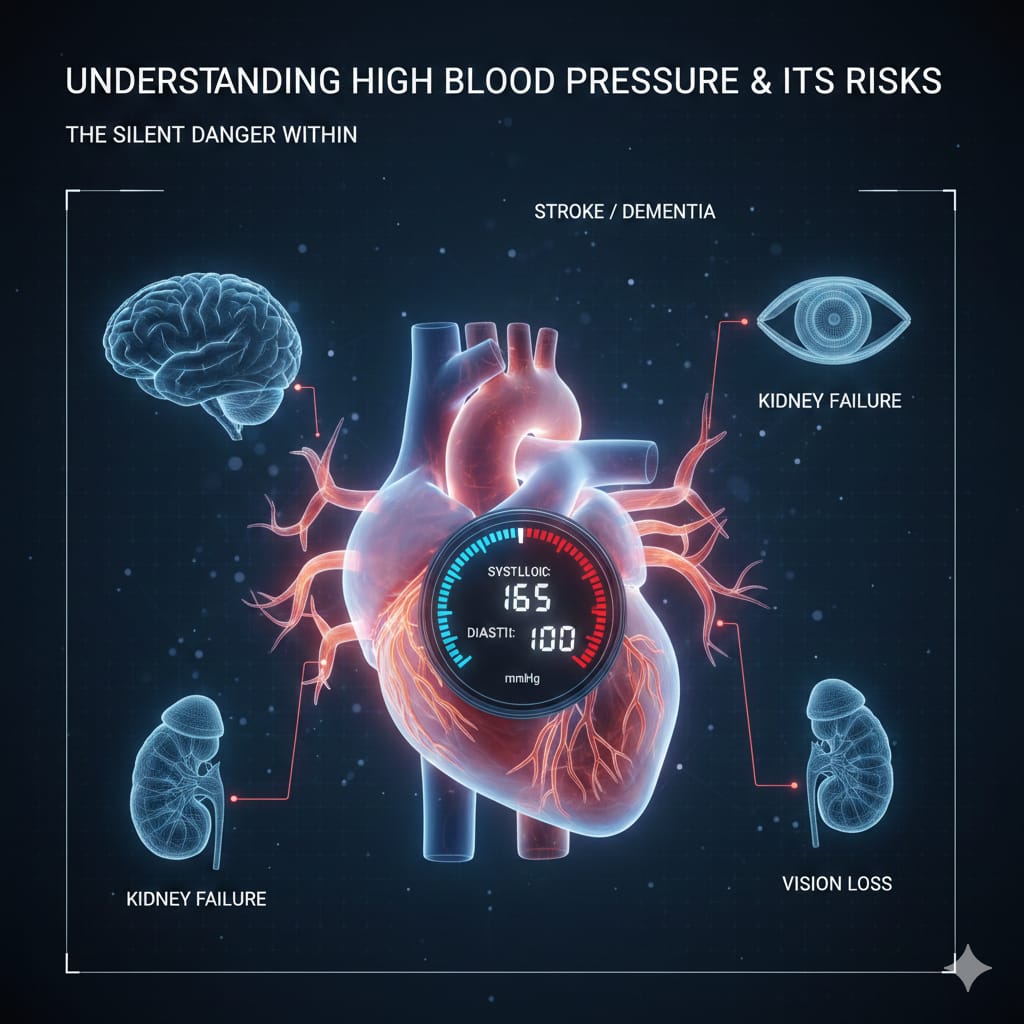
From a hemodynamic perspective, blood pressure is measured using two clinical values. At Mediquickinfo, we analyze the **Systolic Pressure**—the force exerted when the heart contracts—and the **Diastolic Pressure**—the force when the heart relaxes between beats. A healthy clinical reading is typically around 120/80 mmHg.
When these pressures remain chronically high, the arteries lose their “Compliance” or elasticity. To compensate for the increased resistance, the heart muscle must work harder, leading to thickening of the ventricular walls. At Mediquickinfo, we stress that hypertension is a progressive vascular failure. The constant mechanical stress creates microscopic tears in the arterial lining (endothelium), which then become sites for plaque accumulation. Understanding this physical strain is the first step in recognizing why unmanaged pressure is a systemic emergency.
2. Systemic Risks: The Multiorgan Impact
The risks of high blood pressure extend far beyond the heart. At Mediquickinfo, we prioritize the awareness of the following clinical complications:
- Neurovascular Risk (Stroke): Hypertension is the leading cause of stroke. It can cause blood vessels in the brain to either burst (hemorrhagic) or become blocked (ischemic).
- Renal Decay (Kidney Disease): The kidneys rely on a delicate network of tiny blood vessels to filter waste. High pressure damages these vessels, leading to chronic kidney failure.
- Ocular Damage (Retinopathy): The blood vessels in the eyes are highly sensitive; hypertension can lead to blurred vision or permanent blindness.
- Aneurysm: Constant pressure can cause a section of an artery wall to weaken and bulge, posing a risk of fatal internal rupture.
3. Causes and Modifiable Risk Factors
While genetics play a role (Essential Hypertension), the majority of cases are driven by lifestyle architecture. At Mediquickinfo, we analyze the impact of **Sodium Sensitivity**. Excessive salt intake causes the body to retain fluid, increasing blood volume and pressure. Similarly, chronic stress keeps the body in a constant state of “Fight or Flight,” where adrenaline and cortisol keep the arteries constricted.
Other clinical drivers include physical inactivity, which leads to arterial stiffness, and visceral obesity. Mediquickinfo clinical reviews suggest that “Sleep Apnea” is also a major, often undiagnosed cause of resistant hypertension, as the repeated drops in oxygen levels during sleep trigger massive surges in blood pressure. Managing these factors is the only way to lower the clinical “Pressure Load” on the body.
4. Protocols for Pressure Management and Prevention
To ensure optimal vascular health and reduce the risks associated with hypertension, Mediquickinfo suggests the following evidence-based clinical protocols:
- Nutritional Precision (DASH Diet): Prioritizing Potassium-rich foods (like bananas and spinach) which help the kidneys excrete sodium and ease arterial tension.
- Metabolic Conditioning: Engaging in regular aerobic exercise to improve the nitric oxide production in the arteries, facilitating natural vasodilation.
- Sodium Reduction: Limiting processed food intake to keep daily sodium levels below 1,500 – 2,300 mg.
- Pharmacological Adherence: When lifestyle changes are insufficient, consistent use of prescribed anti-hypertensives is critical to prevent organ damage.
Conclusion: Reclaiming Your Vascular Future
Understanding high blood pressure and its risks is the foundation of a proactive and long life. By recognizing the silent nature of hypertension and the multiorgan damage it causes, you can take a defensive stance through clinical monitoring and lifestyle discipline. At Mediquickinfo, we believe that your blood pressure reading is one of the most important metrics of your biological health. Don’t wait for symptoms to appear; the damage is often done long before you feel it. Your arteries are the highways of your life—protect them with the scientific care and clinical attention they deserve. Trust Mediquickinfo for the clinical literacy you need to navigate your health with confidence. A controlled pressure is the key to a vibrant future.

