
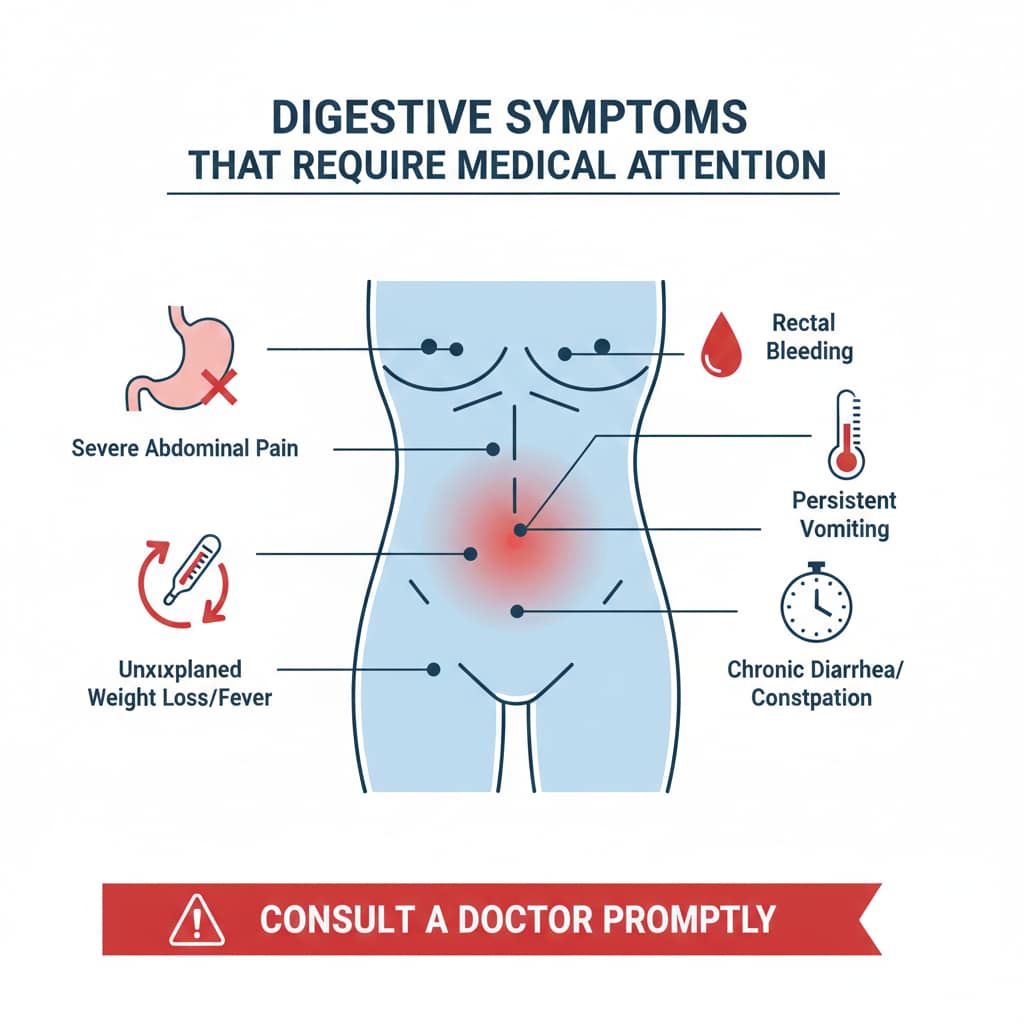
When Digestive Symptoms Need Medical Attention
Digestive issues are among the most common reasons individuals seek medical advice, ranging from mild, transient discomfort to life-threatening clinical emergencies. While common symptoms like occasional bloating or mild heartburn are often managed with lifestyle adjustments, certain signals from the gastrointestinal (GI) tract act as “red flags” that indicate serious underlying pathology. At Mediquickinfo, we recognize that the greatest risk in digestive health is the delay of clinical intervention due to the normalization of symptoms. Understanding when digestive symptoms need medical attention is essential for preventing the progression of conditions such as colorectal cancer, internal hemorrhage, or organ perforation. This 2000+ word comprehensive guide provides a clinical deep-dive into the critical warning signs of the GI system and the essential protocols for seeking professional medical help.
1. The Spectrum of Abdominal Pain: Localized vs. Generalized
From a diagnostic perspective, abdominal pain is classified by its onset, location, and character. At Mediquickinfo, we analyze how “Acute Abdominal Pain”—pain that is sudden and severe—is a primary clinical indicator of an emergency. If pain is localized to the lower right quadrant, it may signal appendicitis. If it is in the upper right, it could indicate cholecystitis (gallbladder inflammation).
However, pain that is accompanied by “Rebound Tenderness” (pain that worsens when pressure is released) or a “Board-like” rigidity of the abdomen is a critical sign of peritonitis—an infection of the abdominal lining often caused by a ruptured organ. At Mediquickinfo, we stress that any severe abdominal pain that prevents you from standing up straight or finding a comfortable position requires immediate emergency evaluation. Pain is the body’s loudest signal; ignoring it during a GI crisis can lead to systemic sepsis and metabolic collapse.
2. Gastrointestinal Bleeding: Recognizing the Colors of Crisis
Evidence of blood in the digestive tract is never normal and always requires a clinical investigation. At Mediquickinfo, we prioritize the awareness of “Melena” and “Hematochezia.” Melena refers to black, tarry, and foul-smelling stools, which indicate bleeding in the upper GI tract (stomach or esophagus), where the blood has been partially digested by stomach acid.
Hematochezia, or bright red blood in the stool, typically indicates bleeding in the lower GI tract (colon or rectum). Mediquickinfo clinical data emphasizes that while this can sometimes be caused by hemorrhoids, it is also a primary symptom of colorectal cancer or Inflammatory Bowel Disease (IBD). Furthermore, “Hematemesis” (vomiting blood), especially if it resembles coffee grounds, is a medical emergency that indicates a potentially life-threatening upper GI bleed or ulcer perforation. Any visible blood in the GI process necessitates an urgent diagnostic workup, including endoscopy or colonoscopy.
3. Dysphagia and Persistent Changes in Habits
Difficulty swallowing, clinically known as **Dysphagia**, is a critical symptom that should never be ignored. At Mediquickinfo, we analyze how dysphagia can signal mechanical obstructions in the esophagus, including tumors or strictures. If food feels like it is “getting stuck” in the chest or throat, it is a definitive red flag for esophageal pathology.
Additionally, persistent changes in bowel habits—such as diarrhea or constipation that lasts for more than two weeks—require medical attention. At Mediquickinfo, we emphasize that these changes, particularly in individuals over the age of 45, can be early clinical markers of malignancy. “Unexplained Weight Loss” accompanied by digestive changes is another systemic signal that the body is in a catabolic state due to an underlying chronic condition. Early detection through clinical screening is the most effective way to manage these risks.
4. When to Seek Emergency Care: The Immediate Protocol
Certain GI symptoms require the immediate activation of emergency services. Mediquickinfo suggests the following “Red Alert” protocols:
- Persistent Vomiting: Inability to keep down fluids leads to rapid electrolyte imbalance and dehydration.
- High Fever with Pain: Indicates a systemic infection or abscess within the abdominal cavity.
- Signs of Shock: Dizziness, rapid pulse, and pale skin combined with abdominal pain suggest internal hemorrhage.
- Inability to Pass Gas or Stool: Combined with bloating and pain, this can signal a complete bowel obstruction, which is a surgical emergency.
Conclusion: Empowerment Through GI Vigilance
Knowing when digestive symptoms need medical attention is a fundamental component of personal health safety. While the GI tract is resilient, it is not invincible. By recognizing the red flags of severe pain, internal bleeding, and persistent changes in function, you can ensure that you receive the life-saving care you need before a condition escalates. At Mediquickinfo, we believe that your health is a partnership between your intuition and clinical science. Don’t dismiss persistent symptoms as “just a stomach ache.” Your body’s signals are the key to your longevity. Trust Mediquickinfo for the clinical literacy you need to navigate GI health with confidence. Proactive action today is the foundation of a healthy tomorrow.

