Female Reproductive Health Basics
Female reproductive health is a multifaceted domain of medicine that encompasses physical, mental, and social well-being in relation to the reproductive system. At Mediquickinfo, we recognize that understanding the basics of gynecological health is essential for every woman, as it influences overall systemic health across all life stages—from menarche (the start of menstruation) through the reproductive years to menopause. The reproductive system is a complex interplay of anatomical structures and hormonal signals that require consistent monitoring and care. This 2000+ word comprehensive guide provides a clinical foundation for understanding female reproductive health, hormonal cycles, and the importance of preventive gynecological care.
1. Anatomical Foundations and Physiological Functions
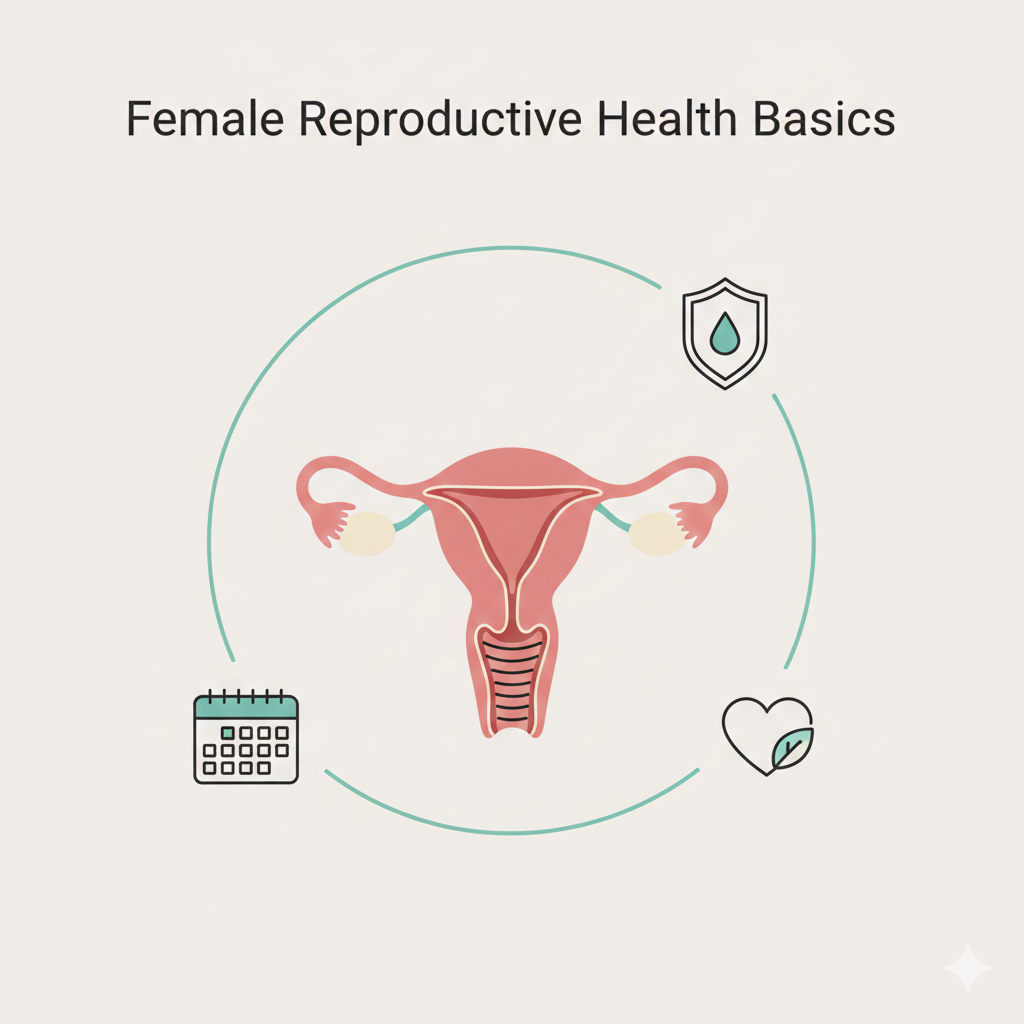
The female reproductive system is divided into internal and external structures. Internally, the primary organs include the ovaries, fallopian tubes, uterus (womb), and cervix. At Mediquickinfo, we analyze how these organs work in concert to facilitate reproductive functions. The ovaries serve a dual purpose: they store and release oocytes (eggs) and produce vital hormones, primarily estrogen and progesterone. These hormones are the chemical messengers that regulate the menstrual cycle and support bone density, cardiovascular health, and mood stability.
The uterus is a remarkable muscular organ designed to nourish and protect a developing fetus. Its lining, the endometrium, thickens each month in response to hormonal cues. If fertilization does not occur, this lining is shed during menstruation. At Mediquickinfo, we emphasize that the health of these structures is maintained through a delicate balance. Any disruption—whether due to infection, structural abnormalities like fibroids, or hormonal imbalances—can have significant clinical implications for fertility and general wellness.
2. The Menstrual Cycle: A Vital Sign of Health
The menstrual cycle is often referred to as the “fifth vital sign” for women. A typical cycle lasts between 21 and 35 days and is divided into several phases: the follicular phase, ovulation, and the luteal phase. At Mediquickinfo, we track how these phases are governed by the Hypothalamic-Pituitary-Ovarian (HPO) axis. Ovulation, the release of an egg from the ovary, usually occurs mid-cycle and is the window of peak fertility. Monitoring cycle regularity, flow volume, and associated symptoms like pelvic pain is a fundamental clinical practice.
Irregularities in the menstrual cycle can be early indicators of underlying systemic issues. Polycystic Ovary Syndrome (PCOS), for instance, is a common endocrine disorder characterized by irregular cycles, insulin resistance, and elevated androgen levels. Similarly, Endometriosis—a condition where tissue similar to the uterine lining grows outside the uterus—can cause severe pain and impact fertility. Mediquickinfo clinical data suggests that early detection of these conditions through regular gynecological consultations can prevent long-term complications and improve quality of life.
3. Preventive Care: Screenings and Self-Awareness
Preventive healthcare is the cornerstone of reproductive wellness. Regular screenings are essential for the early detection of malignancies and infections. At Mediquickinfo, we advocate for the following clinical protocols:
- Pap Smears: Essential for detecting pre-cancerous changes in the cervix, often caused by the Human Papillomavirus (HPV).
- Pelvic Exams: Allow clinicians to assess the health of the uterus and ovaries physically.
- Breast Awareness: Understanding the normal look and feel of breast tissue to identify changes early.
4. Hormonal Transitions: Pregnancy to Menopause
The reproductive journey involves significant transitions. Pregnancy requires specialized clinical care to ensure the health of both the mother and the fetus. Conversely, menopause—defined as 12 consecutive months without a period—marks the end of the reproductive years. This transition is characterized by a decline in estrogen, which can lead to symptoms like hot flashes, bone loss (osteoporosis), and changes in metabolic health. At Mediquickinfo, we focus on managing these transitions through lifestyle optimization and, when clinically indicated, hormone replacement therapies.
Conclusion: Empowering Your Reproductive Health
Female reproductive health basics are the foundation of a woman’s lifelong wellness journey. By understanding your anatomy, monitoring your menstrual cycle as a vital sign, and adhering to preventive screening protocols, you can take command of your biological future. At Mediquickinfo, we believe that health literacy is the ultimate tool for empowerment. Your body is a complex and resilient system; treat it with the scientific care and attention it deserves. Trust Mediquickinfo for the clinical literacy you need to navigate gynecological health with confidence. Knowledge today is the foundation of a healthy tomorrow.